
Utilities, industry and environmental groups clash over CARB’s Cap and Invest draft amid concern over rates and ambition
Get AI-powered insights, summaries, and transcripts
Subscribe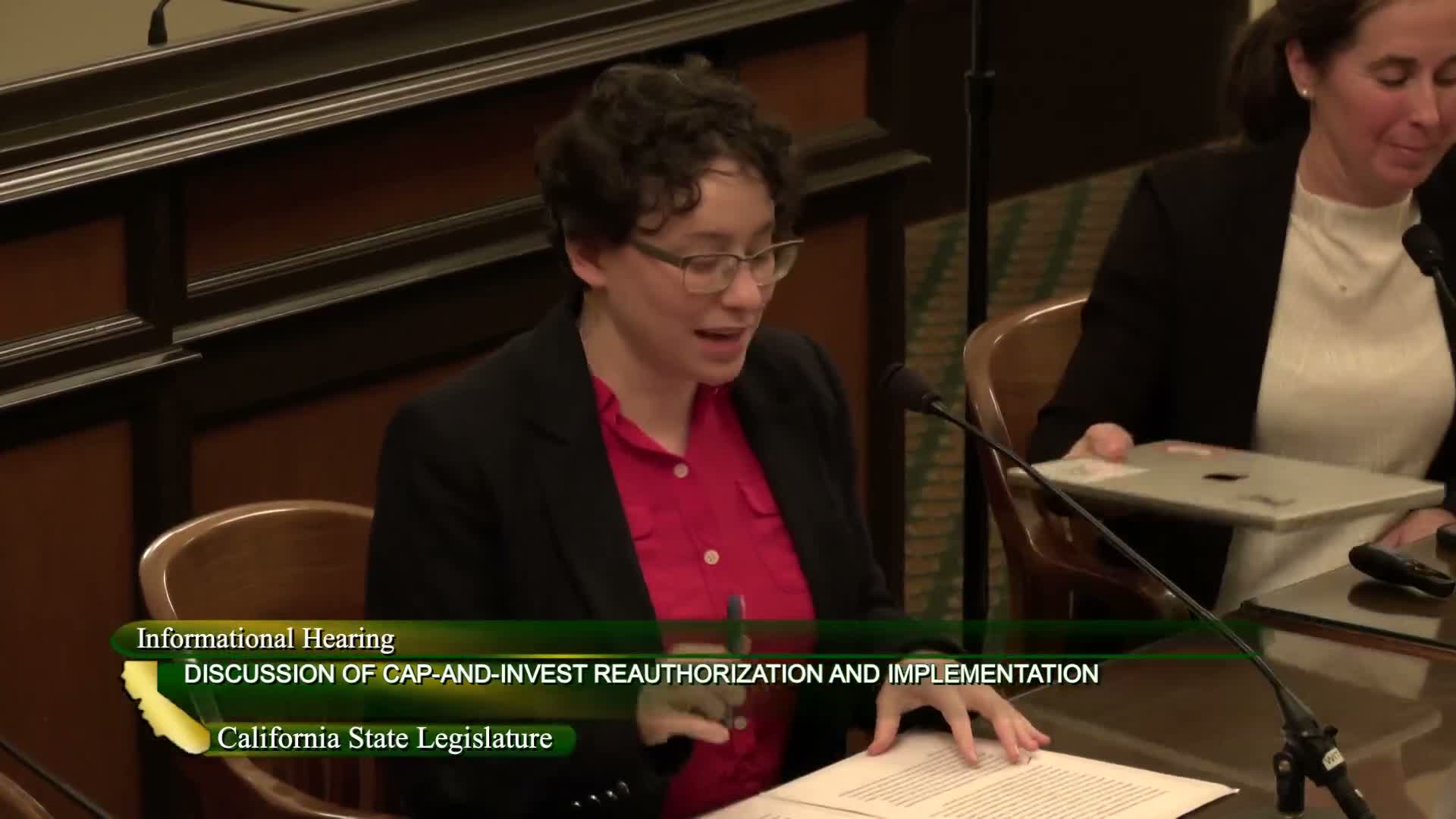
Summary
Public commenters and panelists at the joint hearing disagreed on CARB’s draft: utilities and POUs warned of lost allowances and rate shocks, industry urged caution on leakage risk and competitiveness, while environmental and community groups pushed for tighter near-term caps and faster transition of the climate credit to electricity.
Public comments and expert testimony at the Feb. 25 joint legislative hearing showed sharp differences over CARB’s proposed Cap and Invest amendments.
Public power representatives and municipal utilities said the draft reduces allowances for publicly owned utilities (POUs) in the near term and erodes long-term certainty that underpinned earlier decarbonization investments. Natalie Seitzman, government affairs manager for the Southern California Public Power Authority, said SCAPA members ‘‘stand to lose 9,000,000 allowances from 2027 through 2030,’’ and that shifting allowances midstream threatens infrastructure planning and could lead to higher rates for customers.
Industry trade groups and some labor representatives warned the committee about potential competitiveness and employment impacts if the regulatory package is finalized without adequate leakage protections. The Western States Petroleum Association told the committee the draft could impose billions of dollars in compliance costs on in-state refiners over the next decade and risk accelerating closures.
At the same time, environmental advocates and academic analysts urged CARB and the legislature to prioritize climate ambition and near-term emissions reductions. The Environmental Defense Fund’s Caitlin Rodner Sutter said delays and a relatively small near-term allowance reduction (staff-proposed scenarios cited removing roughly 118 million allowances in near-term scenarios) have depressed auction prices and GGRF revenues, limiting funds for climate investments in disadvantaged communities.
Meredith Foley of UC Berkeley and the Independent Emissions Market Advisory Committee emphasized trade-offs: allocating more allowances to industry reduces money available for the Greenhouse Gas Reduction Fund and for ratepayer benefits; giving too many free allowances dilutes the carbon price signal and can raise the program’s net abatement costs.
Advocates also asked CARB to accelerate the transition of the gas climate credit toward electricity by 2031 as directed in AB 1207, and to ensure any industry assistance factors are updated to reflect current leakage risks. Community and environmental-justice groups cautioned against continued subsidies to high-polluting sectors and raised concerns about dairy methane projects and the public-health risks of some CCUS pathways.
CARB and panelists agreed on the need for more data and transparency. CARB asked stakeholders to submit detailed information during the public-comment window to substantiate requests for additional allowances or smoothing mechanisms.
Next steps: Stakeholders will submit comments by March 9. The committee may request further briefings; CARB plans to present the rule package to the board in May.