Citizen Portal
Sign In

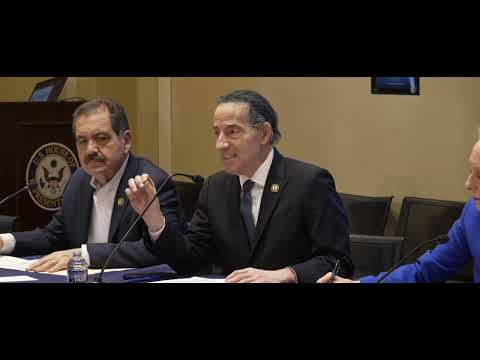
Representative Raskin Blames Administration for Widespread Attacks on Free Expression in Judiciary Hearing

Judiciary: House Committee · February 23, 2026

Loading...

AI-Generated Content: All content on this page was generated by AI to highlight key points from the meeting. For complete details and context, we recommend watching the full video. so we can fix them.

Summary

In an opening statement to the House Judiciary committee, Representative Raskin accused the Trump administration of repeated assaults on free speech, the press, universities and civil-society groups, citing specific incidents and historical parallels and calling for continued oversight.

Representative Raskin, a representative from Maryland, opened the House Judiciary committee hearing with a forceful critique of what he described as systematic attacks on free expression by the Trump administration. Quoting Alexei Navalny, Raskin urged officials and citizens "to tell the truth every day" as a corrective to what he called authoritarian tendencies in government.

Raskin framed his remarks around the First Amendment, saying the administration had sought to "stamp out the truth" by pressuring institutions that exercise independent judgment. He cited historical parallels — the Alien and Sedition Act of 1798 and Andrew Jackson’s use of the postmaster general — and invoked Nixon-era COINTELPRO as precedent for state efforts to disrupt political opposition. "They do whatever they can to crush it," Raskin said of authoritarians in general, adding that his view was the current administration had transformed federal agencies into instruments of political pressure.

Raskin alleged several recent actions he said exemplify that pattern. He said federal immigration agents from U.S. Immigration and Customs Enforcement and Customs and Border Protection have harassed and in some cases used deadly force against people observing or protesting enforcement actions; he named two people, Renee Goode and Alex Pretti, as examples of U.S. citizens who he said were killed while peacefully observing federal actions. He also recounted protest injuries in California and Oregon and said the Department of Justice had, in his view, discredited rather than investigated victims.

On the press and media, Raskin described a pattern of lawsuits and regulatory pressure aimed at news organizations, saying that the administration sued a program associated with CBS and used the Federal Communications Commission (FCC) as leverage in merger reviews. He said universities faced threats to their grants, financial aid and student visas as pressure to alter admissions and curricula. Raskin described executive orders he said targeted law firms adverse to the administration, and he warned of punitive moves against nonprofits that criticize the government.

Raskin also raised the issue of book removals in Department of Defense–run schools, naming titles such as To Kill a Mockingbird and The Kite Runner as examples he said were removed from curricula, and he criticized an executive order that he said sought to label Antifa a domestic terrorist organization despite the absence of a clear organizational structure.

To illustrate widespread pushback, Raskin cited what he called the "No Kings" movement and said millions of people had taken consumer actions in protest, including a statement in his remarks that "an astounding 3,000,000 people canceled their Disney and Hulu subscriptions." He closed by thanking Representative Scanlon for convening the hearing and saying he looked forward to the panel's testimony and the committee's continued work.

Raskin’s opening was framed as an appeal for oversight and public resistance to what he characterized as threats to democratic freedoms. The committee then moved into the scheduled panel testimony and discussion.