Get Full Government Meeting Transcripts, Videos, & Alerts Forever!
Get email alerts on the Family Law topic
No spam. Unsubscribe anytime.
Opponents tell Judiciary Committee Senate Bill 174 would give courts broad discretion over parental rights
Summary
Witnesses including Elizabeth McNees and Nicole Amell testified in opposition to Senate Bill 174, saying the bill centers court authority over parental rights, allows decisions on a preponderance of evidence, and lacks guardrails or oversight for guardian ad litem conduct.
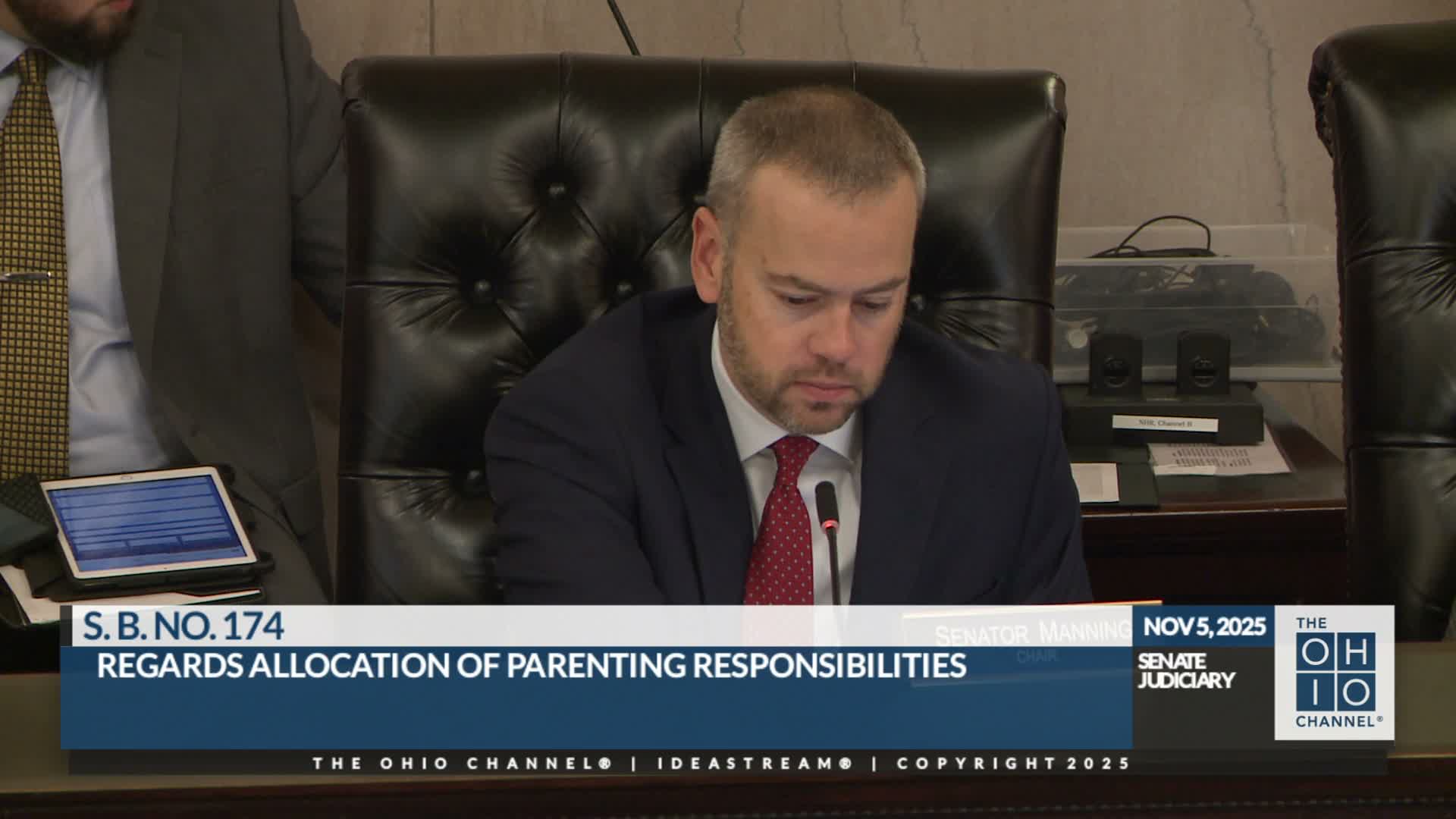
Several opponents testified against Senate Bill 174 at its sixth committee hearing, arguing the bill shifts decision‑making power from fit parents to courts and creates broad judicial discretion without adequate safeguards.
Elizabeth McNees, speaking for the Ohio National Parents Organization, said the bill "remains court centered and not child centered," criticized provisions that grant courts authority to "order anything they feel is best," and objected to allowing courts to transfer custody on a preponderance‑of‑the‑evidence standard. "These ambiguous blank check statutes are riddled throughout the bill," McNees said, and she urged the committee to ask hard questions and not “skate this bill through quickly.”
Anthony Slosser argued the legislation would not change family‑court culture and called expanded best‑interest factors largely cosmetic, saying previous reforms "have been tried and failed." He urged rejection of the bill and said it would increase litigation and family conflict.
Nicole Amell, a Lorain County mother, described a personal domestic relations case in which she alleged conflicts of interest and misconduct by a guardian ad litem (GAL), saying SB 174 would "give judges and GALs even more unchecked power" and make it harder for parents to hold biased actors accountable.
After opposition testimony, Senator Gabbardone moved to favorably report SB 174 to the committee on rules and reference; the clerk conducted a roll call in which members present answered in the affirmative and the chair announced the bill was favorably reported to Rules. The committee recorded that the hearing would stand as the sixth on the measure.