Get Full Government Meeting Transcripts, Videos, & Alerts Forever!
Get email alerts on the Child Enticement topic
No spam. Unsubscribe anytime.
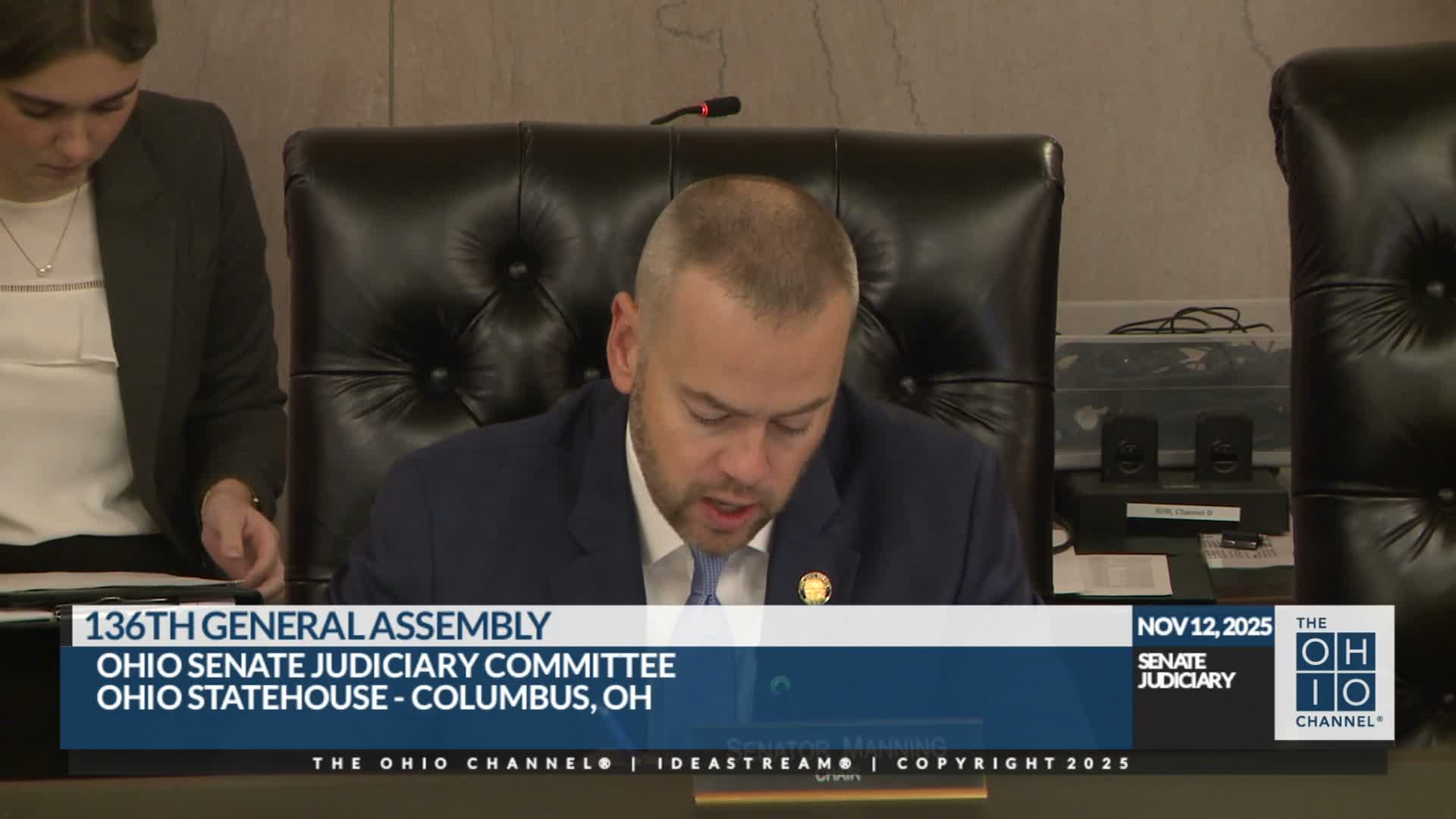
Senate Judiciary Committee holds first hearing on bill to revise Ohio child-enticing statute
Summary
Representatives Williams and Brennan testified in support of House Bill 168, saying it narrows Ohio Revised Code 2905.05(a) to require an unlawful purpose or wrongful motivation for child enticement, restoring an enforceable deterrent while aiming to avoid unconstitutional overbreadth.
Representatives Williams and Brennan testified before the Senate Judiciary Committee in the first hearing on House Bill 168, which would revise Ohio's child-enticement statute to conform to constitutional limits identified by the Ohio Supreme Court.
Proponents told the committee the 2014 Ramage decision left the existing Ohio Revised Code 2905.05(a) overly broad and difficult to enforce. Representative Williams said the statute “prohibited too much constitutionally protected activity,” and that HB168 would restore an enforceable offense by requiring the offender to act with either an unlawful purpose or wrongful motivation when enticing a child under 14.
Representative Brennan detailed how the bill would operate in practice, saying the measure would apply “by any means and without privilege” to knowingly solicit, coax, entice or lure a child under age 14 to accompany the offender, including by entering a vehicle, but only when one of the statutory mental-state conditions applies. Brennan also said the bill would allow prosecution under other sections of law while prohibiting sentence-stacking on the same conduct.
Supporters argued the change is needed to give law enforcement a usable tool to prevent abductions and human trafficking. Representative Williams told the committee that “child enticement statutes are the first line of defense against kidnapping, abduction, and human trafficking,” and cited a recent civil settlement in an Amherst case as an example of enforcement gaps under the current law.
Committee members did not offer questions during the sponsor presentations. Chair Manning closed the item by recording HB168 as having its first hearing and thanking the sponsors.
The bill remains under consideration; no committee vote on HB168 was recorded at this hearing.