Get Full Government Meeting Transcripts, Videos, & Alerts Forever!
Get email alerts on the Conservatorship Sb43 topic
No spam. Unsubscribe anytime.
Sonoma County health officials say SB 43 will sharply increase conservatorship demand and strain local services
Summary
County health and human services officials told the Board that SB 43'which expands the definition of grave disability to include severe substance use disorder'is likely to raise conservatorship caseloads two ozen percent and create significant unfunded costs for placements and staffing.
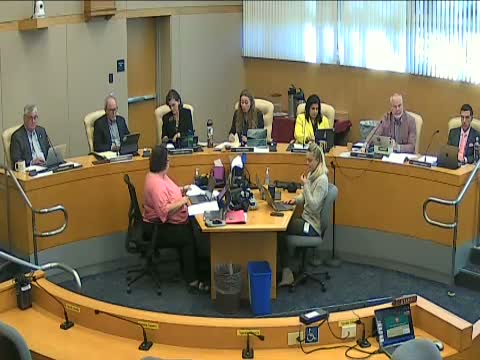
Sonoma County officials warned supervisors that the state's Senate Bill 43, which expands the definition of "grave disability" to include severe substance use disorder, will increase the county's conservatorship workload and costs while providing no new state funding. "SB 43 goes into play on 01/01/2026," Department of Health Services Director Nolan Sullivan said during a staff briefing, and he urged supervisors to be prepared for hard budget choices.
The presentation, led by Nolan Sullivan and county behavioral-health staff, laid out the practical impacts county leaders will face. "SB 43 is a change in the LPS Act... it will affect those with severe substance use disorders," David Evans, a Health Services speaker, told the board. Staff said Sonoma currently has about 197 people on conservatorship, including 12 who meet the Murphy conservatorship criteria; placing the county's conservatees in fiscal year 2024'025 cost about $11.7 million, an average of roughly $60,000 per person, while Murphy conservatee placements can cost $150,000'$300,000 per person because of the higher level of locked care required.
Why it matters: SB 43 widens the group of people who can be held involuntarily for care, potentially shepherding more people into conservatorship or care-court alternatives. But county staff emphasized that the change is unfunded locally. "SB 43 comes with massive costs, and these costs are not reimbursed by the state," Sullivan told the board. He said existing behavioral-health realignment funds are largely exhausted and Medi-Cal cannot be used for most conservatorship activities.
Key details from staff: Sonoma County has only four Department of State Hospital beds in system allocation at present and has limited out-of-county contracted placements. Staff noted a $67 million grant aimed at building a 16-bed MHRC (mental health rehabilitation center) and expanding substance-use disorder beds, but they said that facility likely will not come online until around 2030. In the near term, staff estimated a possible 20'29 percent increase in conservatorship cases based on early adopter counties'experience, which could mean dozens more conservatees and many millions in additional annual costs countywide.
Questions and responses: Supervisors pressed staff about alternatives, including expanding contracted Murphy placements, augmenting jail behavioral-health services, and repurposing existing county sites. Sullivan acknowledged the trade-offs: "If we had our b-chip facility today, that $1,000,000 could run the facility for an entire year for 14 patients," and he added that any expansion will require choices such as cutting other programs or asking voters for revenue measures.
What county will do next: Staff said they will continue stakeholder and community engagement through the end of the calendar year and begin planning midyear budget proposals that may include cuts and re-prioritization of county services. Supervisors asked staff to work with CSAC (California State Association of Counties) and federal and state representatives to press for relief and to quantify county-level fiscal impacts.
The board did not take a final policy vote on SB 43 implementation at this meeting; staff returned to the board with informational recommendations and said they will bring concrete budget options back for the midyear review. "This is one of those areas that probably on my top five issues that keep a director of health services up at night," Sullivan said, summarizing the dilemma facing county leaders.