Get Full Government Meeting Transcripts, Videos, & Alerts Forever!
Get email alerts on the Marinas topic
No spam. Unsubscribe anytime.
Sonoma County to consolidate Bodega Bay marinas' funds, expand advisory committee and update code
Summary
After an assessment showing high berth occupancy but volatile, season‑dependent revenues, the Sonoma County Board of Supervisors voted unanimously to merge three marina enterprise funds into a single county Marinas enterprise fund, expand the advisory committee from five to seven members and introduce an ordinance to modernize marina operations and revenue tools.
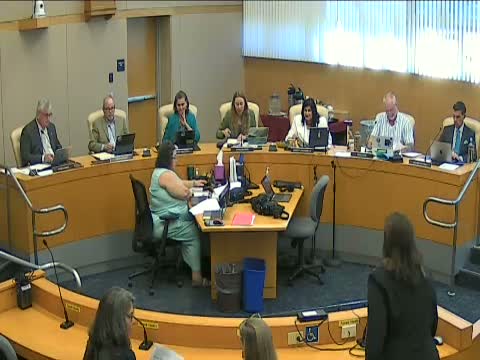
The Sonoma County Board of Supervisors voted unanimously Sept. 23 to consolidate three separate marina enterprise funds—Spud Point Marina, Mason’s Marina and the Sport Fishing Center—into a single county Marinas enterprise fund and to introduce an ordinance to update county code governing marina operations.
County staff presented an assessment showing the marinas operate at about 98% berth occupancy but face a ‘‘boom‑or‑bust’’ revenue pattern tightly tied to commercial fishing seasons. David Robinson, park manager and guest manager of the marinas, said Spud Point is ‘‘the economic heart of Bodega Bay’s fishing industry’’ but that revenue swings tied to crab and salmon seasons have left the facilities with deferred maintenance and an unstable funding model. Robinson said Spud Point supports 78 active commercial vessels and sustained high occupancy but cannot reliably cover capital needs during weak seasons.
The staff recommendation would pool revenues and expenses across the three facilities to create a more resilient, shared fund for maintenance and capital work. The board also approved changes to the Marinas Advisory Committee: increasing membership from five (four commercial fishers and one at‑large member) to seven, with seats for four commercial representatives, one recreational representative, one charter representative and one at‑large member. County staff said the change is intended to reflect the marinas’ evolving mix of commercial, recreational and charter users.
Board members and commercial fishers who testified in support praised recent measures including a temporary slip‑fee waiver and said consolidation and updated ordinances would help the county pursue grants for infrastructure improvements. Staff described grant applications in progress, including a Coastal Conservancy pre‑application and a refrigerant conversion grant to the state (CARB) that would help replace outdated ice‑making and refrigeration systems.
The motion approved on Sept. 23 directed staff to bring back an ordinance amending chapter 20, article 9 of the Sonoma County Code and to schedule the ordinance for consideration on Oct. 28, 2025. Supervisors and advisory‑committee members emphasized the goal of preserving the working waterfront while allowing modest new visitor‑serving revenue opportunities to fund maintenance.
What’s next: staff will prepare the ordinance and follow up on funding and grant applications. The board’s action does not itself change operating rates or fees; it restructures governance and fund flows and asks staff to return with ordinance language and implementation steps.