
House passes bill adding election hand‑count rules; $300,000 training amendment adopted
Get AI-powered insights, summaries, and transcripts
Subscribe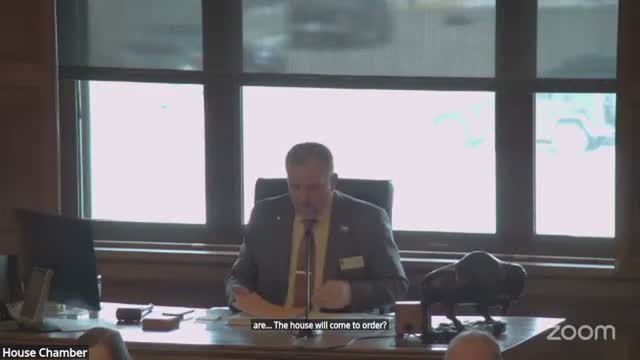
Summary
Lawmakers debated new rules for post‑election precinct hand counts and whether to require paper ballots. An amendment to fund clerk and volunteer training with $300,000 passed; final passage of House Bill 52 was 49–9 with 4 excused.
The Wyoming House on third reading approved House Bill 52 after a day of amendments and floor debate over post‑election hand counts and implementation costs. Representative Brady introduced an amendment intended to define precinct‑level hand‑count procedures and said the purpose was to create a uniform audit process; that amendment was not adopted. Representative Harrelson’s amendment, which included a $300,000 appropriation to the Secretary of State for county clerk training and volunteer hand‑count crews, was adopted on a roll‑call vote.
Why it matters: HB52 addresses how hand counts, when used as an audit, will be handled at the precinct level. Supporters argued the changes fill a statutory gap — Wyoming law, they said, has detailed rules for voting machines but lacked a uniform process for hand counts. Opponents pressed practical concerns: whether clerks had been consulted, whether counties have the capacity to finish hand counts on election night, and whether a statewide mandate could be implemented quickly and uniformly.
Key developments: Representative Brady argued the amendment was necessary to ensure audits are uniform and transparent, saying the amendment “ensures that if we are going to do a hand count, we do it the same way in all 23 counties” and that it would create bipartisan counting teams and public observation. That proposal (third‑reading amendment number 2) was debated and ultimately not adopted. Representative Harrelson then offered third‑reading amendment number 3, explaining the $300,000 figure came from discussions with county clerks and prior training budgets; he said funds would flow to the Secretary of State and be distributed county‑by‑county. The House adopted amendment #3 by roll call. Representative Riggins later offered amendment #4 to require paper and pen ballots for in‑person voting (with a delayed effective date of Jan. 1, 2028); members raised ADA and procurement concerns and the amendment was not adopted after a division/standing count.
Quotes from the floor: Representative Brady said the amendment would “fill that gap” in state law and provide “a single uniform standard for ballot security, bipartisan counting teams, and public observation.” Representative Harrelson described the $300,000 as an attempt to avoid asking counties to implement hand counts without financial support: the item, he said, “goes to the Secretary of State where then they are divvied into county by county.”
Formal actions and outcome: The House rejected third‑reading amendment number 2 (voice vote/announced as not adopted), adopted third‑reading amendment number 3 (roll call; recorded 39 aye, 19 no, 4 excused on the amendment roll call), rejected amendment number 4 on division/standing count (announced as not adopted), and recorded final passage of House Bill 52 on third reading by roll call (49 aye, 9 no, 4 excused). The bill will proceed according to legislative process toward the other chamber.
What’s next: With the training appropriation added, proponents said the Secretary of State and county clerks are expected to develop the training and implementation plan. Opponents pressed for more time and local consultation before further procedural mandates are enacted.