Get Full Government Meeting Transcripts, Videos, & Alerts Forever!
Get email alerts on the Committee Votes topic
No spam. Unsubscribe anytime.
Senate Appropriations advances long slate of House bills; many placed on consent calendar, a few pass by narrow margins
Summary
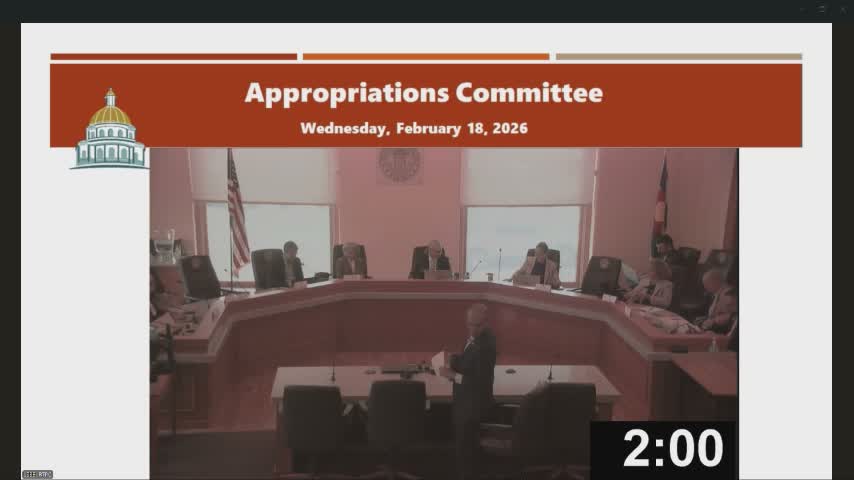
The Senate Committee on Appropriations moved dozens of House bills, placing many on the consent calendar and approving contested measures on narrow 4–3 margins; several measures passed unanimously and others had brief sponsor-led discussion only.
The Senate Committee on Appropriations considered a large slate of House bills and supplemental items on the calendar. Sponsors moved a sequence of House measures (numbered in the transcript primarily as House Bill 11-50 through House Bill 11-79). Many bills received no public testimony and were placed on the committee consent calendar at the request of sponsors; dozens passed on unanimous roll-call results.
Several bills drew contested votes. Early in the hearing the committee polled on adoption of J001 (a reappropriation item discussed during fund‑composition questions) and approved it 4–3. A Senate bill considered out of reference passed 4–3 as amended. Later, House Bill 11-55 (a supplemental that included Medicaid payment provisions) passed the committee on a 4–3 vote after testimony from medical groups. House Bill 11-65 also passed 4–3, while House Bill 11-67 passed 6–1. The committee chair concluded the hearing after placing many measures on the consent calendar for floor consideration.
The committee routinely called on the clerk, Mr. Catlett, to poll members and recorded each roll-call result in the record. Sponsors frequently asked that individual bills be placed on the consent calendar; where members indicated no objection the chair agreed.
Next steps: measures advanced by the committee will move to the full Senate under the chamber’s calendar; measures placed on the consent calendar are typically bundled for expedited floor consideration unless a senator requests separate consideration.