Lifetime Citizen Portal Access — AI Briefings, Alerts & Unlimited Follows
Opponents and local boards warn House Bill 309 could let budget commissions override voter levies; health departments ask for presentation rights
Loading...
Summary
Witnesses testifying on House Bill 309 said provisions could allow county budget commissions to reduce or overturn voter-approved renewal levies and urged safeguards; health and developmental-disability boards sought guaranteed opportunity to present evidence and requested protections for restricted funds and five-year projections.
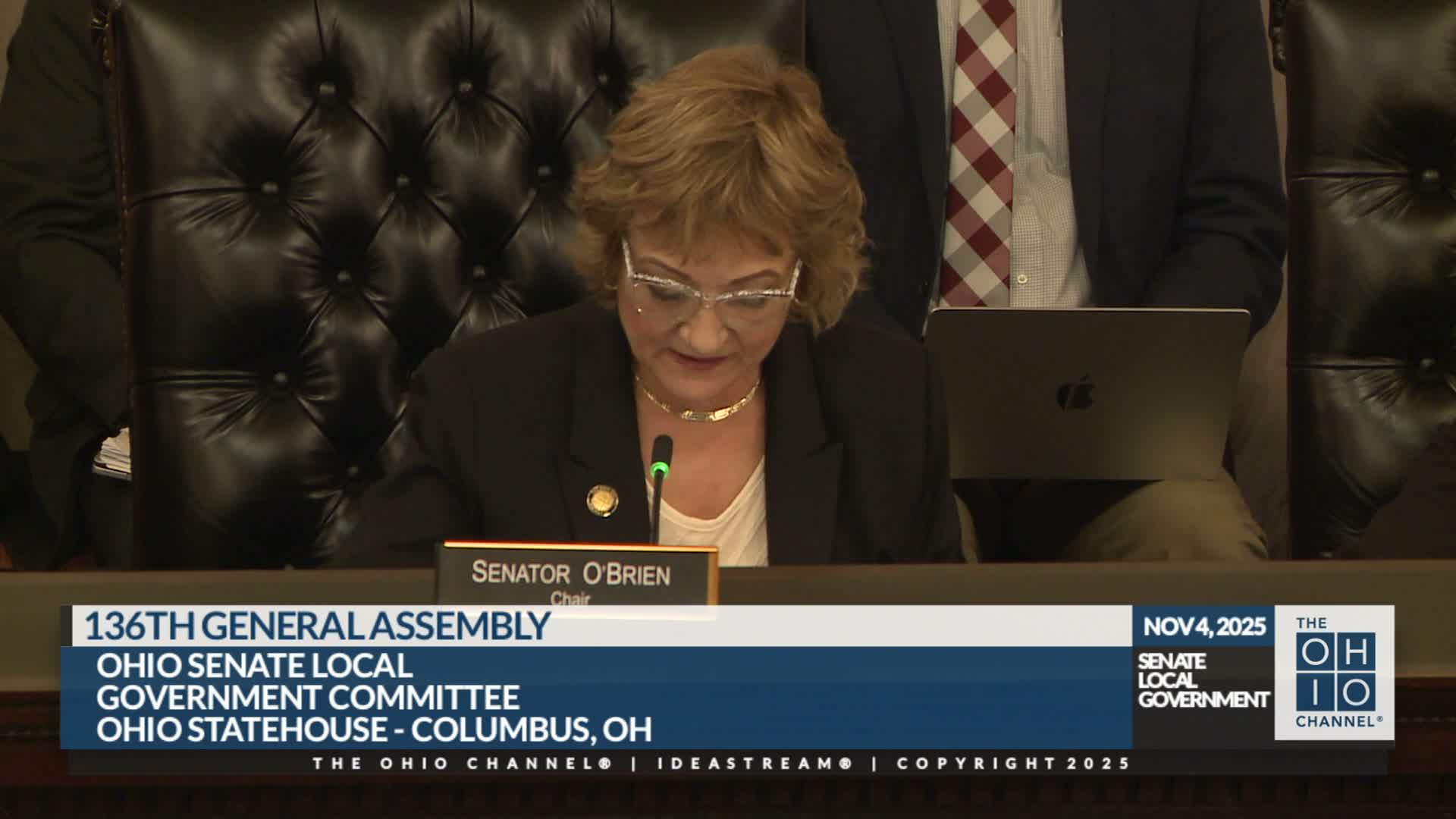
Zach Schiller, research director at Policy Matters Ohio, testified in opposition to Substitute House Bill 309, telling the Senate Local Government Committee that the bill—while amended from earlier versions—"remains flawed" and that it could allow county budget commissions to override voter-approved renewal levies. Schiller called that outcome "fundamentally undemocratic" and said the bill places the burden of proof on taxing jurisdictions rather than the budget commission.
"If the general assembly respects the voters, should that not be reversed?" Schiller asked, arguing that renewal levies are common and deserve protection from immediate reversal by a budget commission. He also noted that while the bill provides a five-year limit for reductions of newly voted levies, the same limitation does not apply to renewal levies.
Jacob Dowling, speaking for the Ohio Association of County Boards of Developmental Disabilities, described the fiscal reliance of DD boards on local property-tax levies and warned that arbitrary reductions could destabilize Medicaid-funded services. Dowling urged the Senate to amend HB 309 so that no levy reduction could occur if it would affect a county board’s statutorily required, independently reviewed five-year expenditure and revenue projection; he offered to provide county-specific hold-harmless numbers to the committee.
Jason Orsena of the Association of Ohio Health Commissioners said the bill could bring needed uniformity across 88 counties but recommended two targeted changes: allow the impacted taxing unit (for example, a local health department) to present information to the budget commission when reductions are considered, and exclude restricted-purpose funds and certain grant carryovers from a budget commission’s "available funds" calculation to avoid misrepresenting operational capacity.
Committee members asked follow-up questions about how budget commissions operate, the role of elected county commissioners and the composition of budget commissions. The hearing was recorded as the third hearing on HB 309; no committee vote occurred during the session.