Get Full Government Meeting Transcripts, Videos, & Alerts Forever!
Get email alerts on the Property Tax topic
No spam. Unsubscribe anytime.
School groups tell Senate panel House Bill 129 needs fixes to avoid homeowner tax hikes, funding gaps for districts
Summary
Representatives of Ohio school administrators, business officials and school boards urged changes to House Bill 129 so substitute and emergency levies retain reasonable renewal authority; they warned current draft could force districts to seek new money levies and cited a $96,000,000 estimate tied to stated assumptions.
Representatives introduced as interested parties from the Buckeye Association of School Administrators, the Ohio Association of School Business Officials, and the Ohio School Boards Association told the Senate Local Government Committee that Substitute House Bill 129 includes provisions to count emergency and substitute levies toward the 20-mill floor but needs amendments to avoid unintended consequences for schools and homeowners.
The witnesses said the main components of HB 129 would include emergency and substitute levy millage in the calculation of the 20-mill floor. They recommended three changes: allow substitute levies to be renewed once as fixed-sum levies (parallel to the renewal authority the bill affords some emergency levies), remove a one-time renewal limit on certain fixed-sum levies so voters could decide on renewals every five years, and adjust the bill’s timing so districts and counties have sufficient planning time before changes take effect.
A representative for the school organizations said an analysis of Department of Taxation data estimated that, under one set of assumptions, Ohio homeowners could face an additional $96,000,000 in taxes if existing revenue sources cannot be renewed and districts put replacement "new money" levies on the ballot.
Committee members probed the assumptions behind the calculation and implementation challenges for multi-county districts. Senator Kaler asked whether the $96 million figure assumed districts would replace expiring fixed-sum or emergency levies with current-expense levies and the witnesses confirmed that was an assumption behind the estimate. The witnesses explained that a fixed-sum renewal does not grow with new construction, while a current-expense levy does, and that the state’s 12.5% rollback payment affects the taxpayer-facing presentation of a renewal versus a new levy.
The testimony noted local examples of districts where substitute or emergency levies comprise a substantial share of revenue (for example, substitute levies representing 35% of Barberton City Schools’ budget) and argued that forcing widespread new-money levies would risk both taxpayer backlash and threats to school funding. The committee asked follow-up questions and the witnesses offered to provide further district-specific numbers.
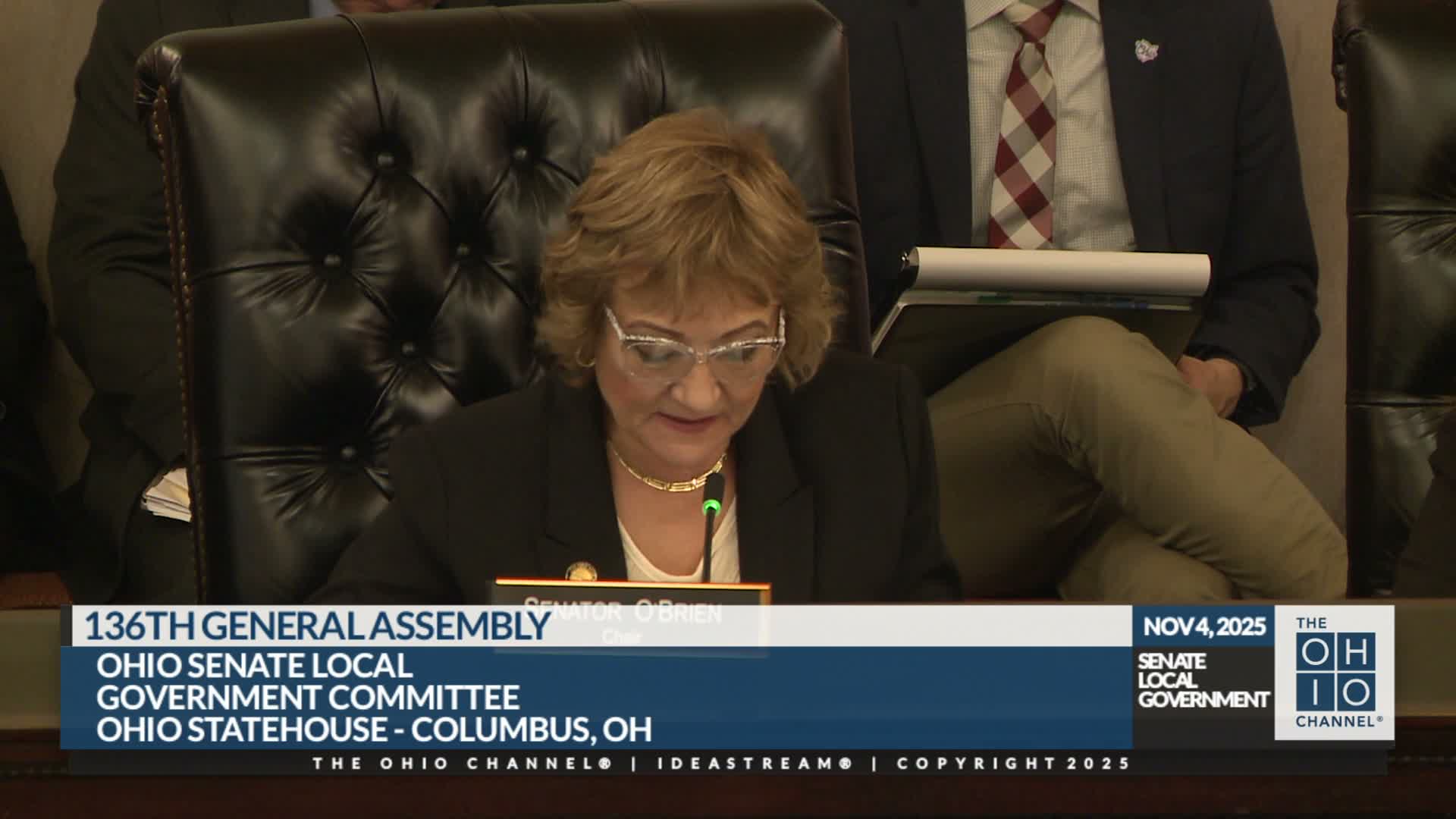
Chair O'Brien closed the hearing on Substitute House Bill 129 after members’ questions; no committee action or vote occurred during the session.