Get Full Government Meeting Transcripts, Videos, & Alerts Forever!
Get email alerts on the Transit Franchising topic
No spam. Unsubscribe anytime.
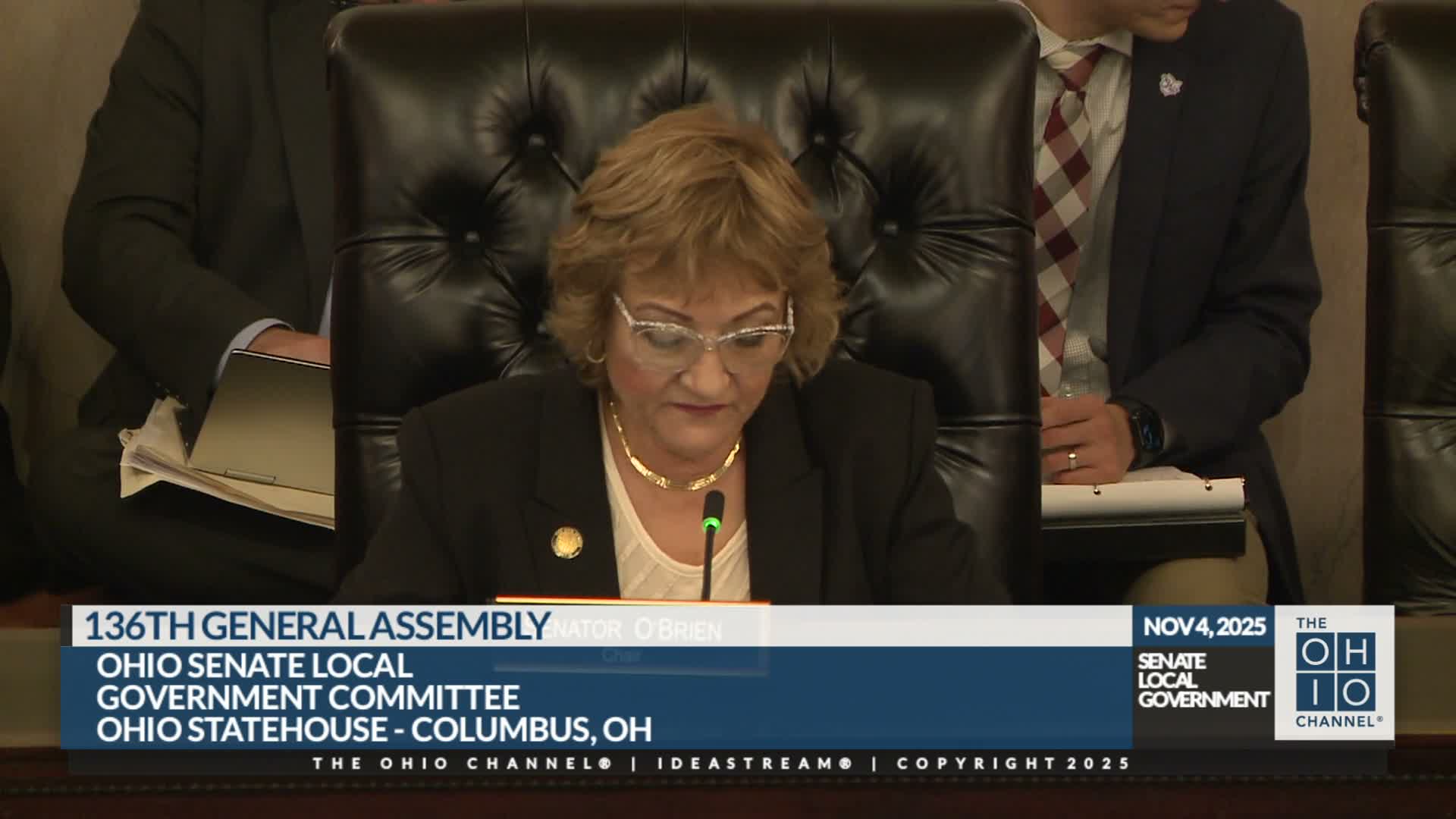
Senate committee hears testimony on bill letting county commissioners award transit franchises
Summary
Sponsors and transportation contractors told the Senate Local Government Committee that Senate Bill 281 would clarify that a board of county commissioners may directly award a franchise to operate a public transit system, removing ambiguity and speeding up local transit launches, especially in smaller counties.
Senator Roebner told the Senate Local Government Committee that Senate Bill 281 would explicitly authorize a board of county commissioners to award a franchise for the operation of a public transit system, removing what he described as a legal "gray area" that currently can require creation of a separate county transit board before awarding such a franchise.
"Since the Board of County Commissioners has authority regarding county transit systems, it should also be clear and not just implied that the Board of County Commissioners has the authority to award a franchise for the operation of a public transit system," Senator Roebner said in sponsor testimony.
Terrance Thomas, representing Community Bus Services and speaking as a long-time private contractor, testified in support of the bill. He said Ohio law (he cited chapter 306 and related sections of the Ohio Revised Code) has allowed commissioners to operate or appoint transit boards, but a 2014 amendment removed explicit language allowing a board of county commissioners to enter franchise agreements. Thomas described franchising as a model that transfers much of the financial and operational risk to a private operator and can bring private investment, vehicles and technical expertise without immediate public capital outlay.
"Franchising of an operation of a public transportation system is not new," Thomas said, describing previous work operating neighborhood circulators and a 17-year turnkey contract in Trumbull County. He said franchising "incentivizes the private operator to bring additional resources and funding sources to the table" and that franchise agreements should include oversight and termination provisions to protect the public interest.
Committee members asked whether the issue prompting the bill was primarily a small-county concern. Ranking Member Smith and others noted that many counties operate public transit systems and sought clarity on where the problem had arisen. Thomas described examples in Trumbull and Medina counties and said his company had operated both full systems and segments under different contractual arrangements.
Supporters told the committee franchising can speed up local responses for rural and small counties, reduce administrative cost and allow commissioners to manage contracts directly. No formal action was taken during the hearing; Chair O'Brien closed the first hearing on SB 281 with no further questions.