
Bill Would Change Rural-County Definition to Protect Small Counties from Losing Eligibility
Get AI-powered insights, summaries, and transcripts
Subscribe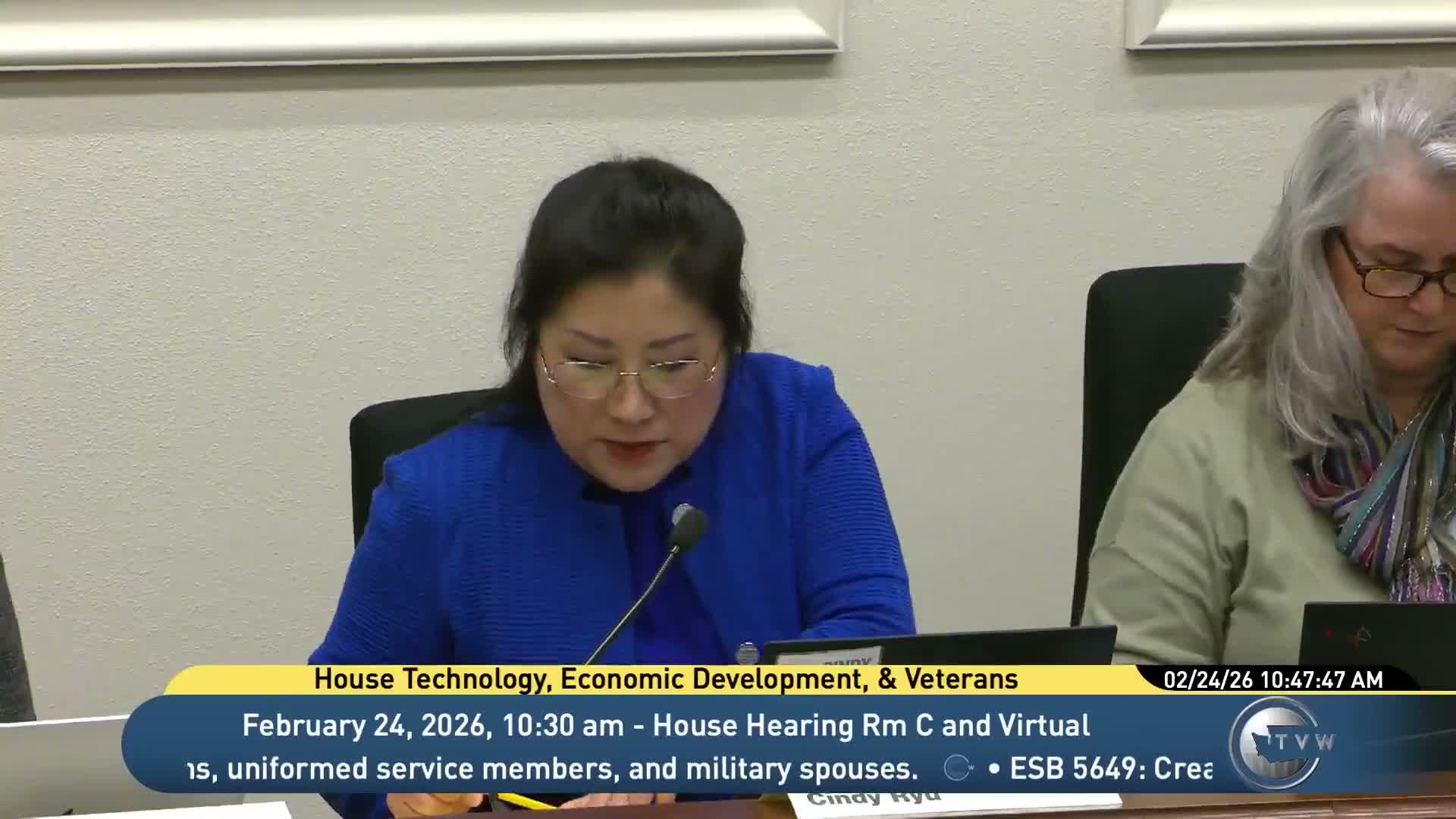
Summary
Sen. Jeff Wilson told the committee Substitute Senate Bill 6,149 would allow counties with population density near 100 people per square mile to retain a rural designation so long as they have no city larger than 45,000, a change proponents say preserves access to economic grants and funding.
Senator Jeff Wilson (19th Legislative District) sponsored Substitute Senate Bill 6,149, which would broaden the statutory definition of a "rural county" for purposes that include public facilities loans and grants. Emily Poole, staff to the committee, briefed the bill and said the current test defines a rural county as having fewer than 100 people per square mile or being smaller than 225 square miles; as of 2025 there are 29 rural counties under existing definitions.
Under Wilson’s proposal, a county could retain rural status if it has a population density of about 100 persons per square mile or greater but contains no city with more than 45,000 residents. "This bill says at 45,000, which isn't very big," Wilson said, explaining the cap is intended to preserve grant eligibility for counties whose overall population density masks large undeveloped areas and small downtowns.
Members asked about which counties would be added or removed under the new threshold and how urban growth areas might affect the measure; staff offered to provide a county-by-county list. Representative Thomas and others requested follow-up to capture unique geographies such as islands or pockets of rural character inside larger counties.
The hearing closed without a committee vote; staff and the sponsor said they would follow up with additional data requested by members.