Get AI Briefings, Transcripts & Alerts on Local & National Government Meetings — Forever.
Committee hears bill to extend Working Connections childcare to graduate and professional students
Summary
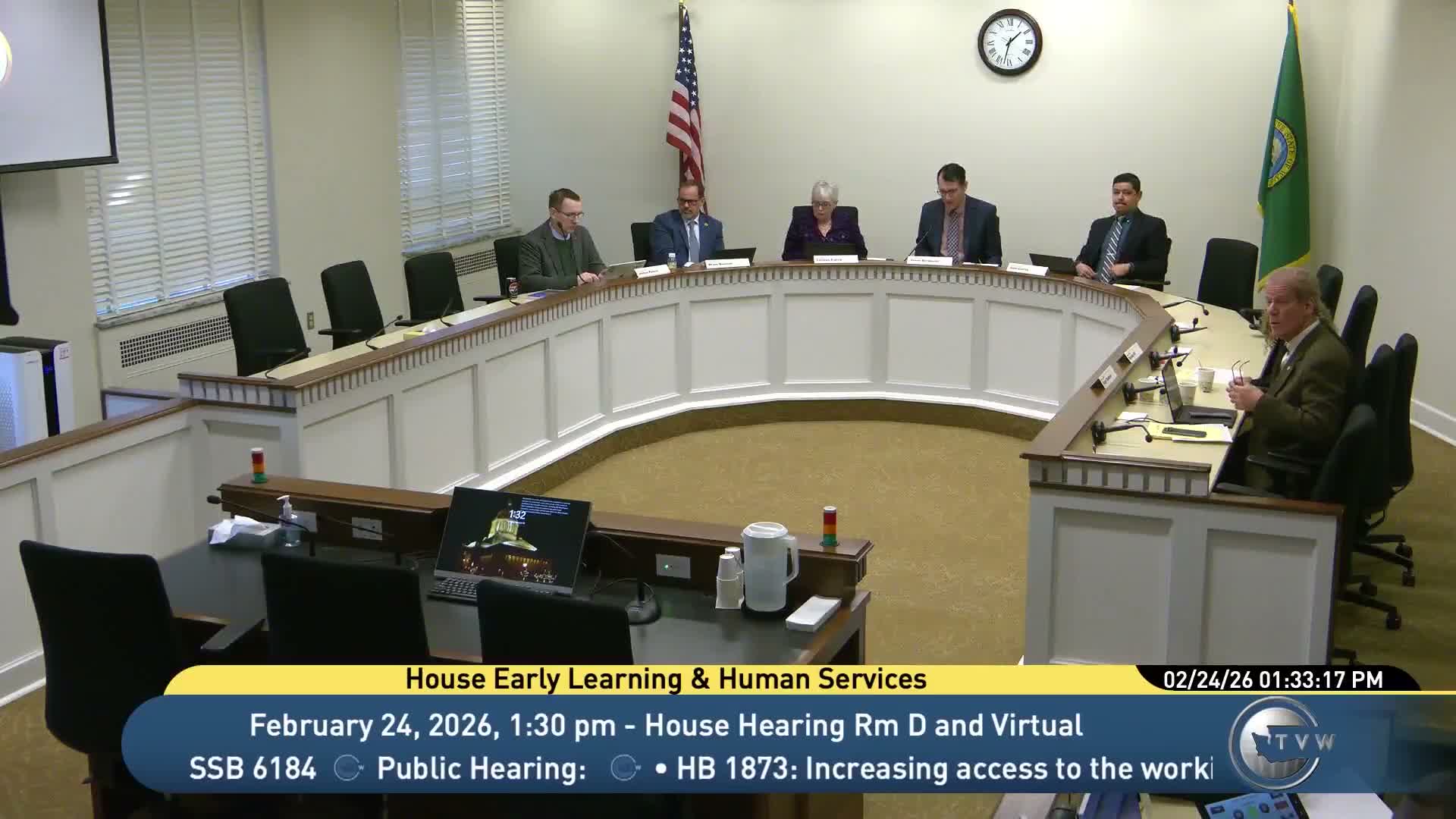
Lawmakers and student advocates urged the House Early Learning & Human Services Committee to expand Working Connections childcare eligibility to full‑time graduate and professional students, saying high child‑care costs and reduced aid force some parents to choose between family and finishing a degree.
Representative Janice Zahn introduced House Bill 18-73 at a courtesy hearing, saying the bill would allow full‑time graduate and professional students at higher‑education institutions to qualify for the Working Connections child care subsidy when household income is at or below 85% of the state median income and all other program requirements are met.
"It isn't a choice between going to graduate school or having children," Zahn said, arguing the change would remove a barrier for student parents who otherwise might delay or forego degree completion. O'Meara Harrington, committee staff, told the committee that Working Connections is a federally and state‑funded DCYF program with income eligibility generally tied to a percentage of the state median income and with some special‑eligibility rules already in place.
Student witnesses told the committee the change is needed. Annika Pearson, student lobbyist for 17,000 graduate and professional students at the University of Washington, said childcare costs in Washington are among the highest in the country and cuts to graduate aid make it difficult for student parents to afford both tuition and care. "Expecting students to juggle those costs without assistance actually forced them to choose between the two," she said.
Ali Malecki, vice president for legislative affairs at Washington State University's graduate association, said many graduate students teach, run labs and perform clinical training while living on stipends that do not cover childcare. "This is a basic needs bill and a smart investment in Washington's future," he said.
Desmond Abouaje, president of the Graduate and Professional Student Association, described his own situation as a PhD student and parent and said he could not currently qualify for Working Connections. Committee members pressed for data on how many graduate students would likely qualify and the possible fiscal impact. Zahn said the information is not yet available but that the interim offers an opportunity to collect parenting‑student data and refine the bill for the next session.
The committee closed the public hearing on HB 18-73 after testimony and suggested staff compile participation and fiscal data during the interim so members can weigh program cost and potential uptake.