
Bill would expand records exemptions for survivors and student surveys; supporters and transparency advocates clash
Get AI-powered insights, summaries, and transcripts
Subscribe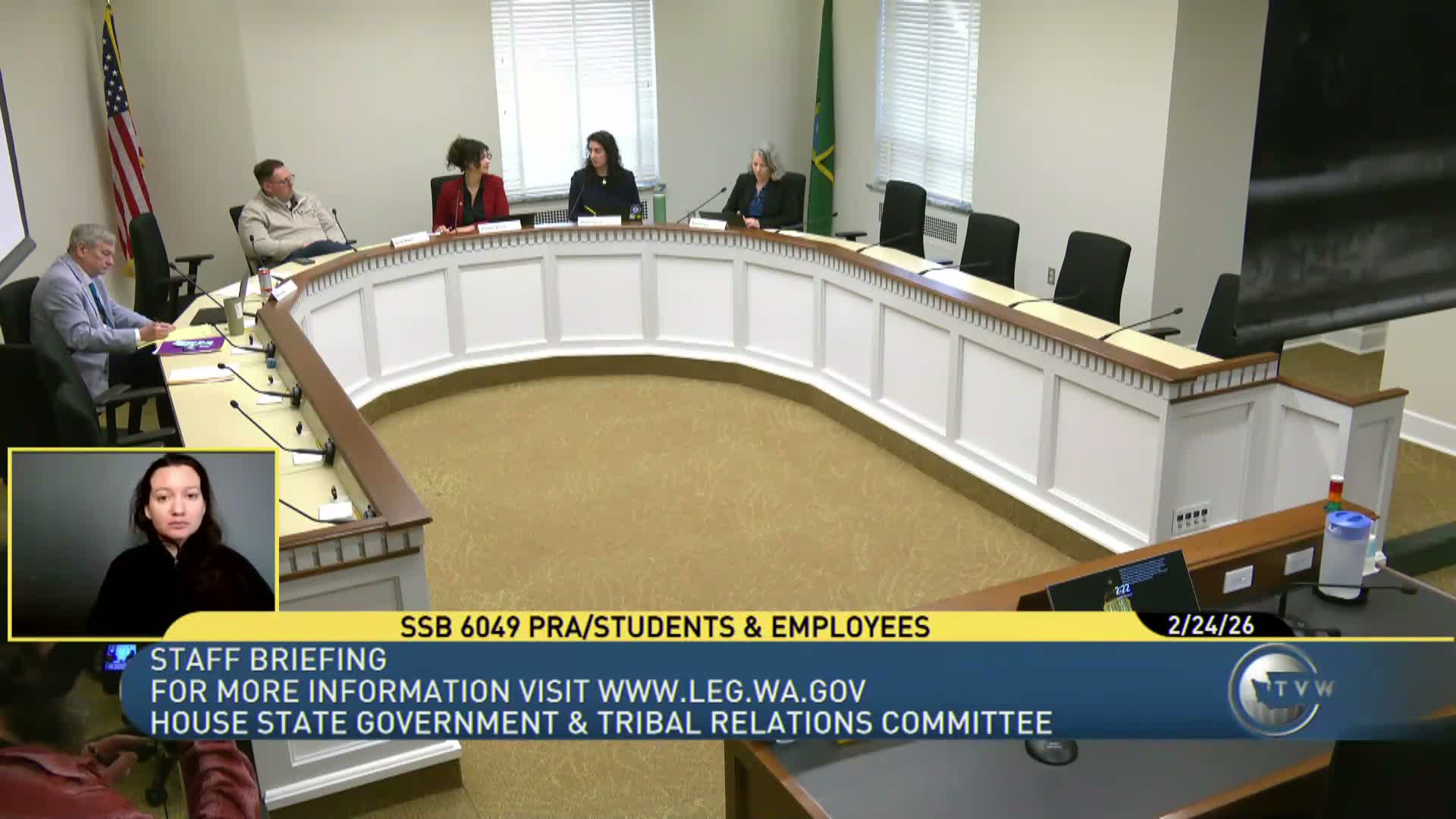
Summary
Substitute Senate Bill 6049 would expand exemptions under the Public Records Act to include certain survivors and anonymous student survey responses; the Office of Financial Management supported the privacy protections while open-government advocates urged caution and opposed additional exemptions.
A hearing on substitute Senate Bill 6049 on Feb. 25 focused on expanding exemptions under the Public Records Act and on protections for survey data.
Staff explained three main changes: expanding employment-information exemptions to include survivors of hate crimes when the employee or a dependent provides a sworn statement and indicates continuing risk; permitting disclosure of anonymized demographic survey data (versus de-identified data), and creating a new exemption for individual-level responses to the Healthy Youth Survey (a voluntary survey of grades 6–12 used for policy purposes, with individual responses currently anonymized for sharing under data- sharing agreements).
The Office of Financial Management said the bill balances the need for agencies to gather information to improve services and protects individuals from modern re-identification risks. "It allows agencies to gather the information they need to improve public services...and protects employees and students from modern re-identification risks," said Sherry Sawyer.
Open-government witnesses opposed additional exemptions. Jill Kunzler argued the Public Records Act is already burdened with exemptions and urged the committee to vote no on 6049, asking for bipartisan clarity on open-records purpose and limits on exemptions.
Key details
- Employment information exemption would extend to survivors of hate crimes if the employee or dependent provides a sworn statement confirming the crime and ongoing risk. - Voluntary demographic survey responses would be subject to disclosure if the data are anonymized so individuals cannot be reidentified; de-identified or aggregated data remain exempt. - New exemption proposed for individual-level Healthy Youth Survey responses; data sets can remain available to certain researchers under data-sharing agreements, but the bill creates a new exemption for public-requests for individual responses.
Committee outcome
Committee testimony concluded with no final vote recorded in this session. Members may consider fiscal and transparency implications as the bill moves forward.