
Lawmakers hear case for funding pay parity for contingent college faculty
Get AI-powered insights, summaries, and transcripts
Subscribe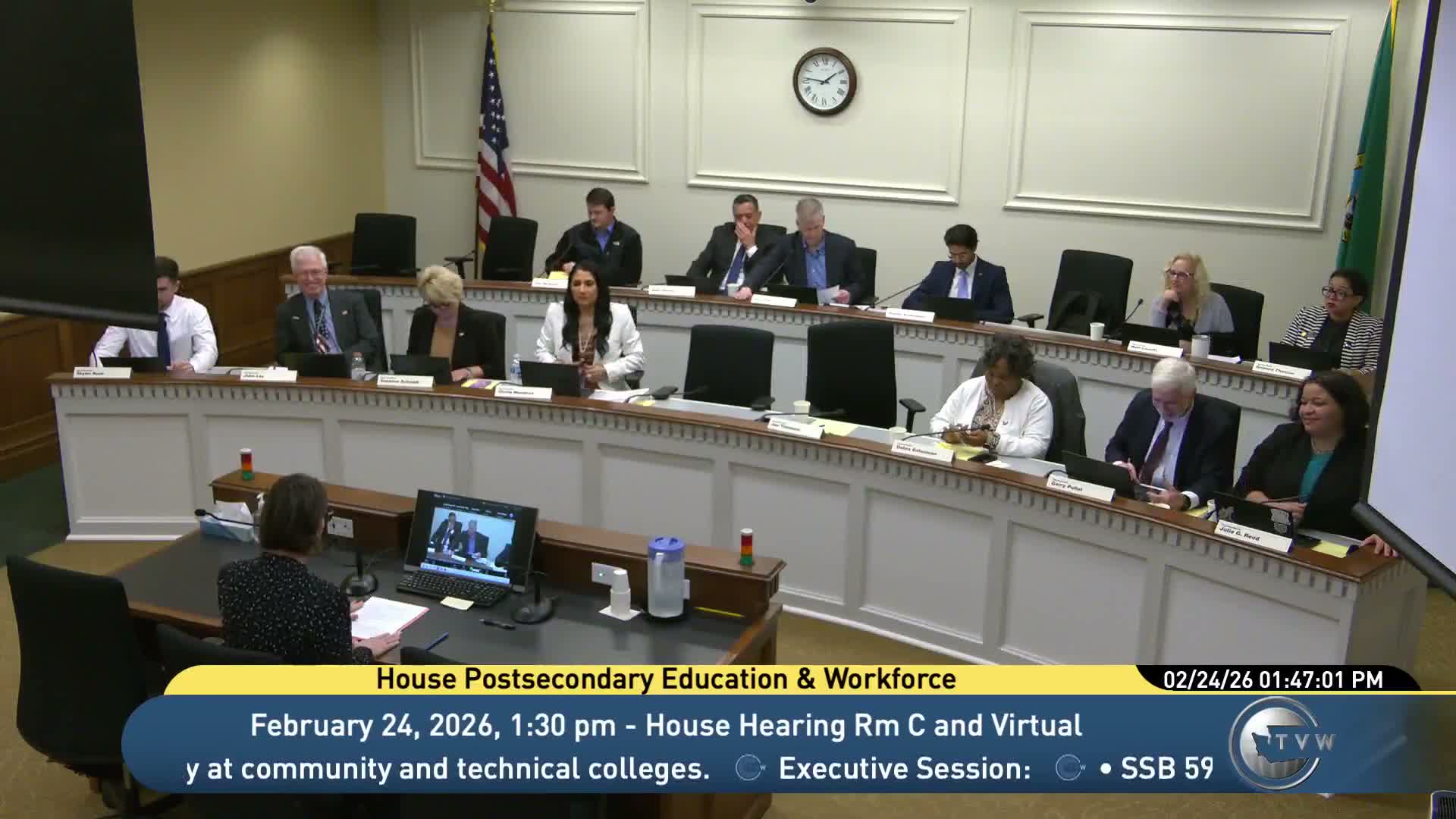
Summary
AFT Washington and community college representatives told the committee contingent faculty average about 61.5% of full‑time pay and that bringing pay to an 85% parity target would cost about $75.1 million systemwide; panelists urged legislature to fund phased increases under HB 2538.
The House Postsecondary Education & Workforce Committee held a work session on Feb. 24 focused on the role, pay and working conditions of contingent (adjunct/part‑time) faculty in the State Board for Community and Technical Colleges (SBCTC) system and considered a legislative approach to move pay toward an 85% parity target.
Julie Hess, Director of Human Resources for the SBCTC, said the system’s 34 colleges serve about 300,000 students and employ roughly 10,600 faculty by head count across full‑ and part‑time positions. Hess reviewed the history of state work on adjunct best practices and highlighted a July 2024 SBCTC plan that found contingent faculty earn on average about 61.5% of the compensation of full‑time faculty on a full‑time equivalent basis. The SBCTC estimated it would cost approximately $75,100,000 to raise contingent faculty pay to 85% across the system.
Jackie Kane, president of AFT Washington and a former contingent faculty member, said the union represents contingent instructors across many college districts and framed pay parity as an equity and student‑success issue. "This is an issue our union has been fighting to address for decades, and we will continue this effort," Kane said.
Contingent faculty who testified — Renee Hernandez Greenfield, Aaron/Dr. Gibbons (transcript appears as "Doctor. Gibbons"), and Jean Fallow — described unstable work schedules, limited or uneven compensation for advising, course development and committee work, and examples of pay and scheduling that make it difficult to earn a living wage. Fallow said some contingent faculty receive only a few pay periods per year despite teaching year‑round, making household budgeting difficult.
Panelists and legislators discussed implementation questions: AFT and SBCTC representatives said the 85% target would be implemented at the campus level through collective bargaining, funded by a legislative appropriation, because each college’s salary schedules and bargaining outcomes differ. Committee members asked about cross‑campus health benefit coordination for faculty teaching at multiple colleges; panelists described existing "leveling" practices used in other states and noted health benefit access varies by district.
The panel summarized HB 2538 (prime sponsor identified in the presentation as Representative Jerry Pollet), which would fund an infusion to move contingent faculty pay toward the 85% target over four years beginning in 2028 and require SBCTC reports to the governor and higher education committees on specified dates. No formal committee vote on HB 2538 took place in the Feb. 24 session; lawmakers followed with questions and discussion about local bargaining, funding design, and comparisons with K‑12 teacher pay.
The work session ended with committee members encouraged to consult contingent faculty on their local campuses; SBCTC staff agreed to provide written testimony and additional data upon request.