Get Full Government Meeting Transcripts, Videos, & Alerts Forever!
Get email alerts on the House Bill 186 topic
No spam. Unsubscribe anytime.
Auditors and Business Groups Urge Senate to Back Bill Capping School Inside-Millage at Inflation
Summary
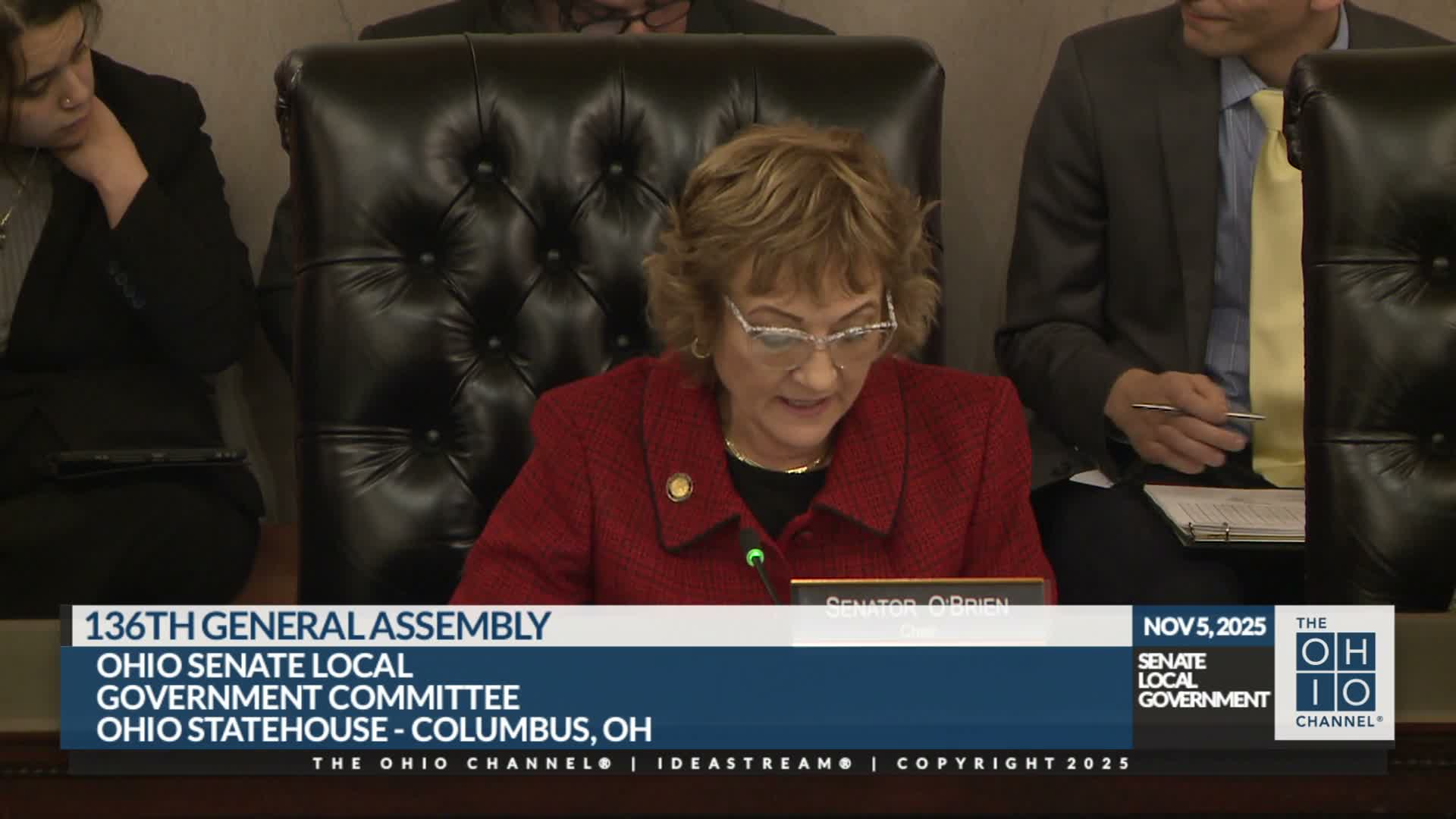
Proponents told the Senate Local Government Committee that substitute House Bill 186 would curb sudden, unvoted property tax increases by capping revenue growth for school districts at the 20-mill floor to inflation, provide retroactive relief in 2026 for those hit hardest by valuation spikes, and require county transparency measures.
Christopher Galloway, Lake County Auditor and second vice president of the County Auditors Association of Ohio, told the Senate Local Government Committee the group supports substitute House Bill 186 because it "eliminates the single largest unvoted tax increase in Ohio history" and caps allowable school-district property-tax increases at the rate of inflation rather than at appraisal-driven value growth. Galloway said the bill would immediately affect the roughly 483 school districts at the 20-mill floor and, through retroactivity provisions, would provide property-tax relief in 2026 for homeowners most affected by recent valuation spikes.
Hannah Cubbins, legislative director for Americans for Prosperity Ohio, also testified as a proponent, saying HB 186 "limits increases in school district property taxes to the rate of inflation," applies reductions across residential, agricultural and business properties, and preserves existing carve-outs while opposing new exemptions. Cubbins said the bill adds transparency requirements, directing county auditors and treasurers to publish effective tax rates and payment deadlines and mandating annual adjustments based on an objective measure of inflation.
Lynn (Liz) Baumgartner, director of economic development and tax policy at the Ohio Chamber of Commerce, cited a Chamber Research Foundation study (linked in her written testimony) finding property-tax burdens in Ohio exceed peer locations and argued HB 186 would limit revenue growth from levies at the 20-mill floor to the rate of inflation over the preceding three years while partially reimbursing school districts for revenue lost to the credit.
During questioning, several senators asked whether a circuit-breaker approach—targeted relief tied to household income—would better help lower-income taxpayers. Cubbins and witnesses replied they were concerned targeted carve-outs can shift costs to neighbors and that HB 186 instead targets districts at the 20-mill floor; they said circuit-breaker mechanics require different expertise and that further study might be needed. Testimony from former County Auditor Roger Reynolds explained the valuation history behind the current increases, saying auditors historically used a 36-month average and that a change in 2020 to using the single high year accelerated local valuations and produced uneven effects across districts.
Witnesses including Galloway and Reynolds urged the committee to act quickly, noting administrative steps county auditors and treasurers could take with the Department of Taxation to apply relief to first-half tax bills but warning of implementation trade-offs if deadlines are missed. The committee did not vote on HB 186 during the session; the item stood as a second hearing with several written testimonies available to members.