Get Full Government Meeting Transcripts, Videos, & Alerts Forever!
Get email alerts on the Board Procedure topic
No spam. Unsubscribe anytime.
Chino Valley Unified Board adjourns into closed session on litigation, student-discipline and negotiations
Summary
At its Feb. 19 meeting the Chino Valley Unified Board of Education immediately moved into closed session to consider anticipated and existing litigation, student readmission matters, labor negotiations listed as ACT and CSEA, and appointments to assistant principal positions; the transcript records no motion or vote on the record.
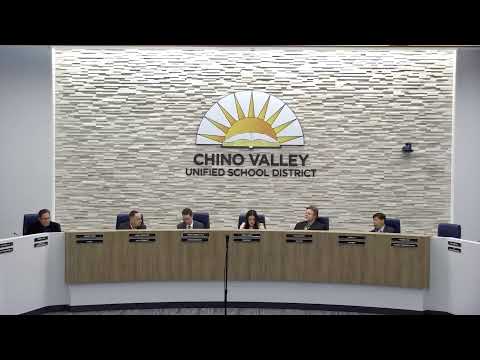
The Chino Valley Unified Board of Education convened its regular meeting at 4:30 p.m. on Feb. 19, 2026, and promptly adjourned into closed session to consider several confidential items listed on the printed agenda.
An unidentified meeting officer told those present, “We will now adjourn into closed session regarding the following matters, which are all described in detail on the printed agenda regarding conference with legal counsel anticipated litigation for possible cases, conference with legal counsel existing litigation 3 cases, student discipline matters student readmission, conference with labor negotiators ACT and CSEA negotiations, public employee appointments, elementary school assistant principals, and high school assistant principals,” reflecting the board’s stated reasons for moving out of open session.
The agenda items the officer listed were: anticipated litigation (possible cases); existing litigation (three cases); student-discipline matters, specifically student readmission; labor negotiations identified in the agenda as ACT and CSEA negotiations; and public-employee appointments for elementary and high school assistant principals. The record contains no further detail on any of those matters in open session and does not expand the acronyms ACT or CSEA; the transcript does not define those acronyms.
Before adjourning, the officer asked Patricia whether there were any requests from the public to speak on closed-session items; the transcript contains the question but does not include a response from Patricia or any on-the-record public request. The transcript likewise records the adjournment into closed session but does not include a motion, second, or recorded vote on the record.
Because the meeting moved into a closed session, the public record in the transcript does not disclose deliberations or outcomes for the listed items. The board did not return to on-the-record discussion of these matters in the portion of the transcript provided.