
Goose Creek CISD board declines district‑run daily prayer period under new law, citing logistics
Get AI-powered insights, summaries, and transcripts
Subscribe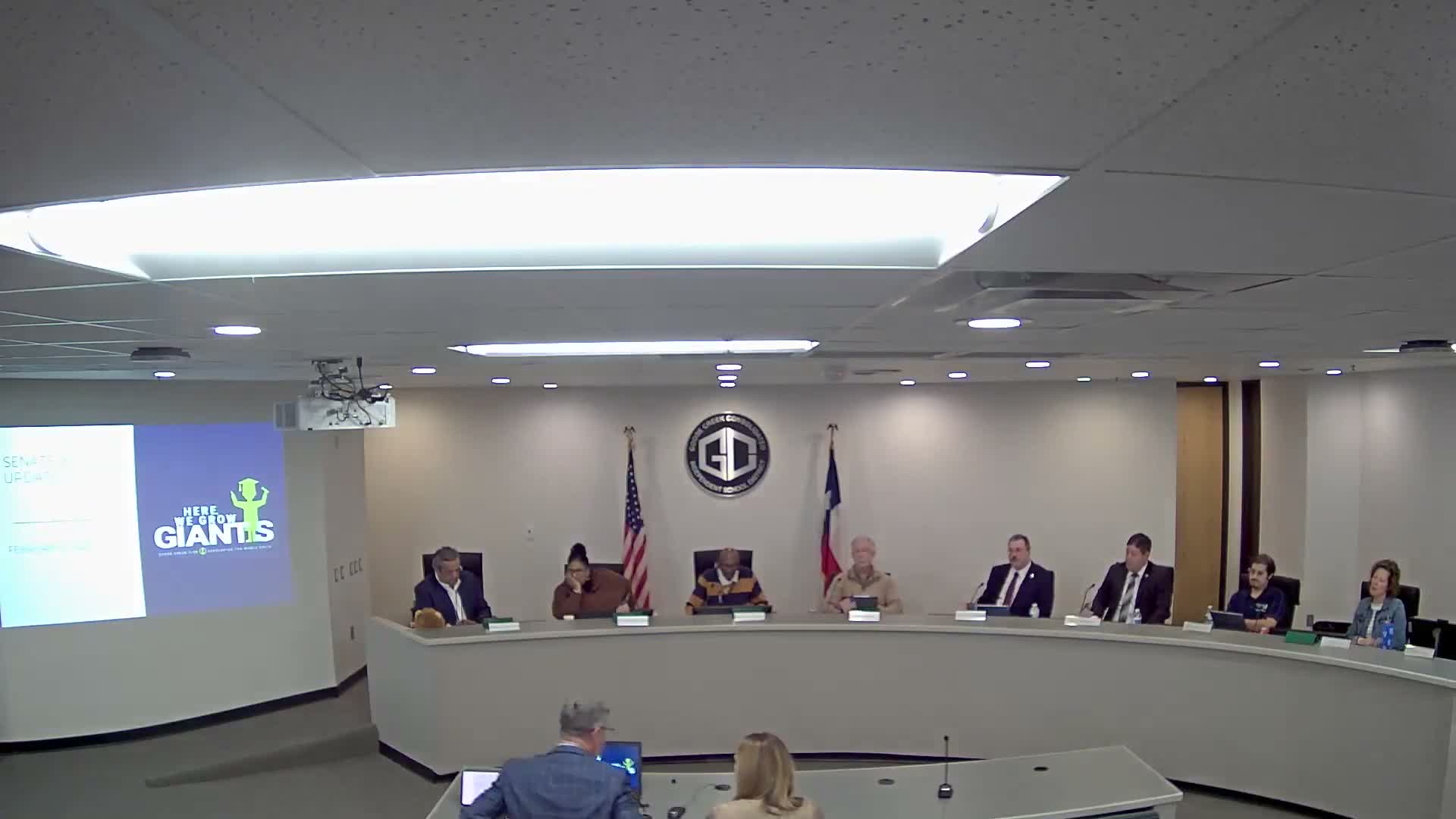
Summary
After debate about parental consent, supervision and out‑of‑voice requirements, the board adopted a resolution declining to adopt a district‑managed daily prayer period as described in newly enacted Senate Bill 11; administration recommended the resolution because of administrative burden and existing protections for voluntary prayer.
The Goose Creek CISD Board of Trustees considered whether to adopt a district‑managed daily prayer period authorized under newly enacted Senate Bill 11. Administration recommended the board decline the option, arguing the district already protects voluntary prayer, that managing formal daily periods would require consent‑forms, supervision and separate spaces so non‑consenting students would not hear or see prayers.
Doctor Bollinger (administration) explained the logistics administrators considered: required parental consent, out‑of‑voice/out‑of‑sight separation for non‑participants, scheduling outside of instructional time for managed periods, and the administrative burden of tracking consent and providing supervision across 29+ campuses. Board members debated whether volunteers could offset supervision costs and whether the vote meant the district was opposed to prayer (administrators clarified the vote concerned district management of the period, not the right to pray).
A trustee moved and a second was recorded for a resolution declining the option to adopt a district policy establishing a district‑wide prayer period as presented by administration. The transcript records debate on both sides and the motion being called; the meeting proceeded with subsequent consent agenda items. The transcript does not include a roll call tally for the prayer motion in the segments provided, but administrators recorded the motion and discussion in the action item portion of the agenda.
The administration asked the board to treat the matter as an operational decision — whether the district should take on the logistics and costs — not as a judgment about prayer itself. No next‑step implementation was ordered; the resolution as introduced by the administration was the motion before the board.