Get Full Government Meeting Transcripts, Videos, & Alerts Forever!
Get email alerts on the Banking Consumer Protection topic
No spam. Unsubscribe anytime.
Georgia bill would let banks place short fraud holds for seniors, set crypto-kiosk limits and tighten litigation-finance registration
Summary
House Bill 945, presented to the Rules Committee, would allow trained financial institutions to place holds of up to 15 days on suspicious transactions for customers 65 and older, require trusted-contact options, impose first-transaction limits and disclosures at cryptocurrency kiosks, and require annual registration for litigation financers.
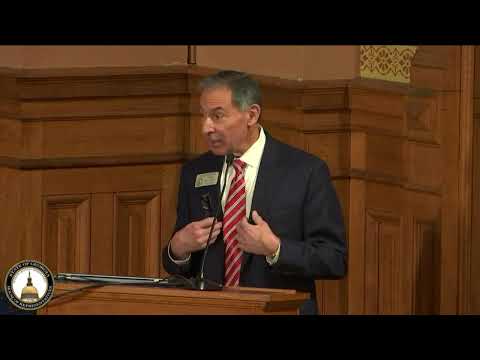
Unidentified Speaker 4, the author of House Bill 945, told the Rules Committee the measure is the Department of Banking and Finance’s annual housekeeping bill and highlighted three consumer protections.
The bill would allow institutions trained to spot financial fraud to “place a transaction hold of up to 15 days” on accounts of customers 65 and older when there are sufficient suspicions of exploitation, the author said. The proposal also authorizes banks and other regulated entities to request that senior customers name a trusted contact for use if exploitation is suspected.
The bill would create new protections for cryptocurrency kiosks that permit cash-to-crypto transactions. The author said first-time users would be limited to a $2,500 deposit on their initial transaction, with the daily limit rising to $10,000 for frequent users. The draft would require clear disclosures that such transactions are irreversible and carry a high fraud risk.
On litigation financing, the author proposed requiring annual registration of litigation financiers, rather than a one-time registration, so state regulators can track changes in ownership and identify whether new, undisclosed owners present risks.
Committee members pressed the author on practical safeguards. Chairlady Cooper asked whether the $2,500 first-transaction cap could be repeated or otherwise strengthened to prevent circumvention. The author replied that the bill also requires kiosk operators to refund a transaction “100% of the transaction” if suspected fraud is reported within five days, and emphasized the trusted-contact mechanism to expedite legitimate access to funds when needed.
Quip Parks asked whether there is a bypass for emergencies when seniors need immediate access to funds; the author said the trusted contact and escalation to management are intended to address such situations, adding the provision is meant to be a “first step” to protect consumers without denying legitimate access.
The committee did not take a vote on the bill during the meeting. Members were encouraged to follow up with the bill author offline for technical questions.
The committee is scheduled to reconvene after Appropriations completes its business and to set the calendar for Thursday’s session, when further consideration of pending measures is expected.