
Stone Mountain preservation bill advances out of committee; aims to protect original park footprint and increase oversight
Get AI-powered insights, summaries, and transcripts
Subscribe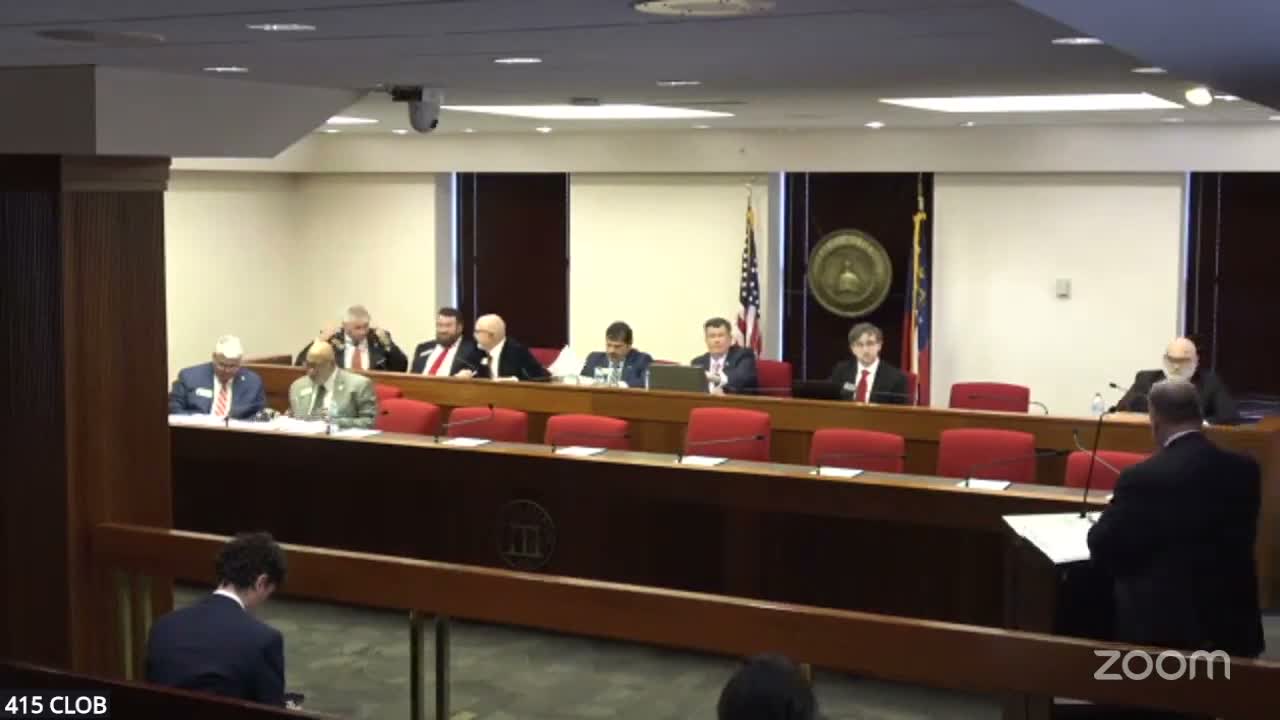
Summary
House Bill 1415 would preserve the Stone Mountain Park footprint assembled between 1959 and 1970, require inventory and State Properties Commission oversight of later-acquired noncore properties, and allow proceeds from potential sales of noncore parcels to support deferred maintenance; the committee passed the bill by voice vote.
An unnamed presenter, speaking on behalf of Governor Kemp, described House Bill 1415 as a ‘‘preservation-first, transparency-focused’’ bill that would fully protect the Stone Mountain Park footprint assembled between 1959 and 1970 while giving the association tools to manage noncore properties acquired later.
The presenter told the committee the park faces more than $40,000,000 in deferred maintenance and said the bill accomplishes three goals: preserve and protect the original park footprint; provide flexibility to manage noncore properties acquired in later decades; and bring the association’s real-property transactions under review and approval of the State Properties Commission for greater transparency and accountability.
A staff member identified in the transcript as Miss Cameron (agency/staff) explained that many deeds for properties acquired after 1988 are not currently in the State Properties Commission’s BLIP database and that the bill would require a full inventory and transfer of records to state properties. She told the committee that, under current practice, proceeds from sales of association-owned property would remain within the association; under the bill, proceeds remitted to the association would be used to address deferred maintenance instead of requiring additional state appropriations or bond funding.
Committee members asked whether the measure would affect other state authorities or parks, such as Jekyll Island. Miss Cameron said it would not: Jekyll Island is carved out in the applicable code section, is treated as a separate authority, and remains restricted from selling its land. Members discussed the extent and acreage of the park; staff noted discrepancies in public figures and said the original surveyed acreage is roughly 1,692 acres (the commonly quoted 3,200-acre figure comes from non-survey deed language and is not accurate for the historic footprint).
After discussion, the committee moved and passed House Bill 1415 by voice vote and thanked the presenters.
Next steps: HB 1415 was reported out of the committee as passed and will proceed to further consideration per the legislative calendar.