Senator Patton urges voter approval for municipal traffic-camera programs, cites consumer harms
Loading...
Summary
Senate Bill 340 would require a municipal corporation to obtain voter approval at the next regular election before operating an automated traffic-camera program; sponsor Senator Patton cited repeated ballot defeats nationwide, alleged revenue flows to out-of-state companies and effects on fixed-income residents.
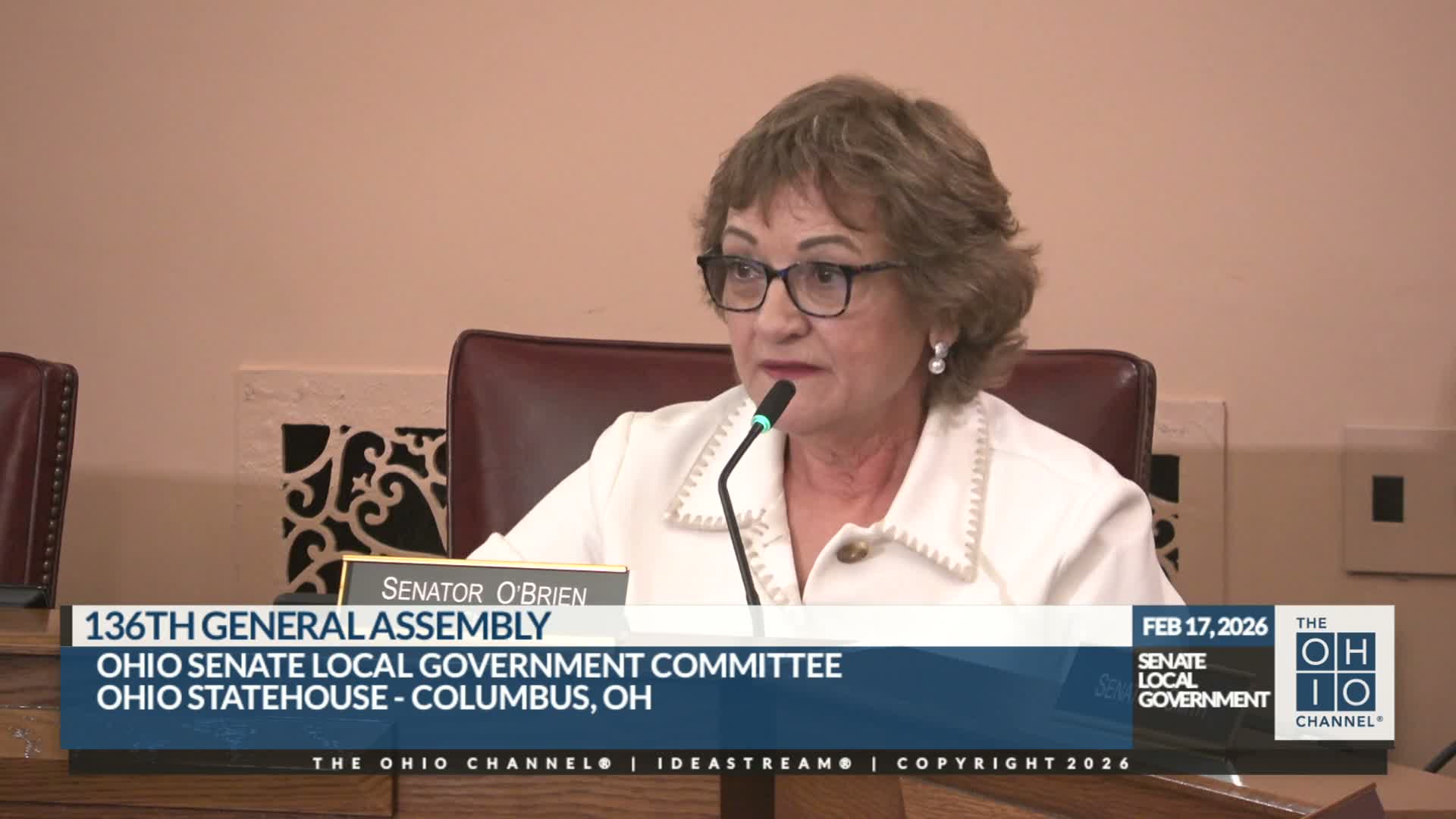
Senator Patton told the Senate Local Government Committee that Senate Bill 340 would require cities and villages to secure voter approval before establishing automated traffic-camera programs.
Patton said there have been 46 elections on camera programs nationwide (14 in Ohio) and that most measures failed, arguing that voters should decide whether their municipality adopts camera enforcement. He criticized private companies that install and operate camera systems, asserting that they often are out-of-state or foreign firms that process tickets and that a large share of revenue leaves the community.
Patton relayed examples and anecdotal impacts: he cited East Cleveland as an Ohio community that approved cameras in the past and referenced an NBC report alleging large payments associated with camera contracts; Patton also described an older Berea couple who received multiple tickets and faced a combined $350 expense, using the story to illustrate effects on residents on fixed incomes.
During questions, Senator Landis asked whether the bill would apply only to fixed, stationary cameras; Patton said SB 340 applies to all electronic cameras run by out-of-town, out-of-state or foreign corporations but not to an on-duty police officer using a radar gun. On drones, Patton said police-operated drones that result in an officer-issued ticket would be acceptable, but the bill aims to limit third-party corporate camera operations.
Patton said SB 340 would require approval at the next regular election rather than a special election, and he indicated interest in accompanying licensing and calibration requirements to ensure accuracy and to permit accounting for the number of cameras statewide.
No committee vote was recorded during the first hearing. Chair O’Brien closed the session after questions.