Get Full Government Meeting Transcripts, Videos, & Alerts Forever!
Get email alerts on the Eviction Record Sealing topic
No spam. Unsubscribe anytime.
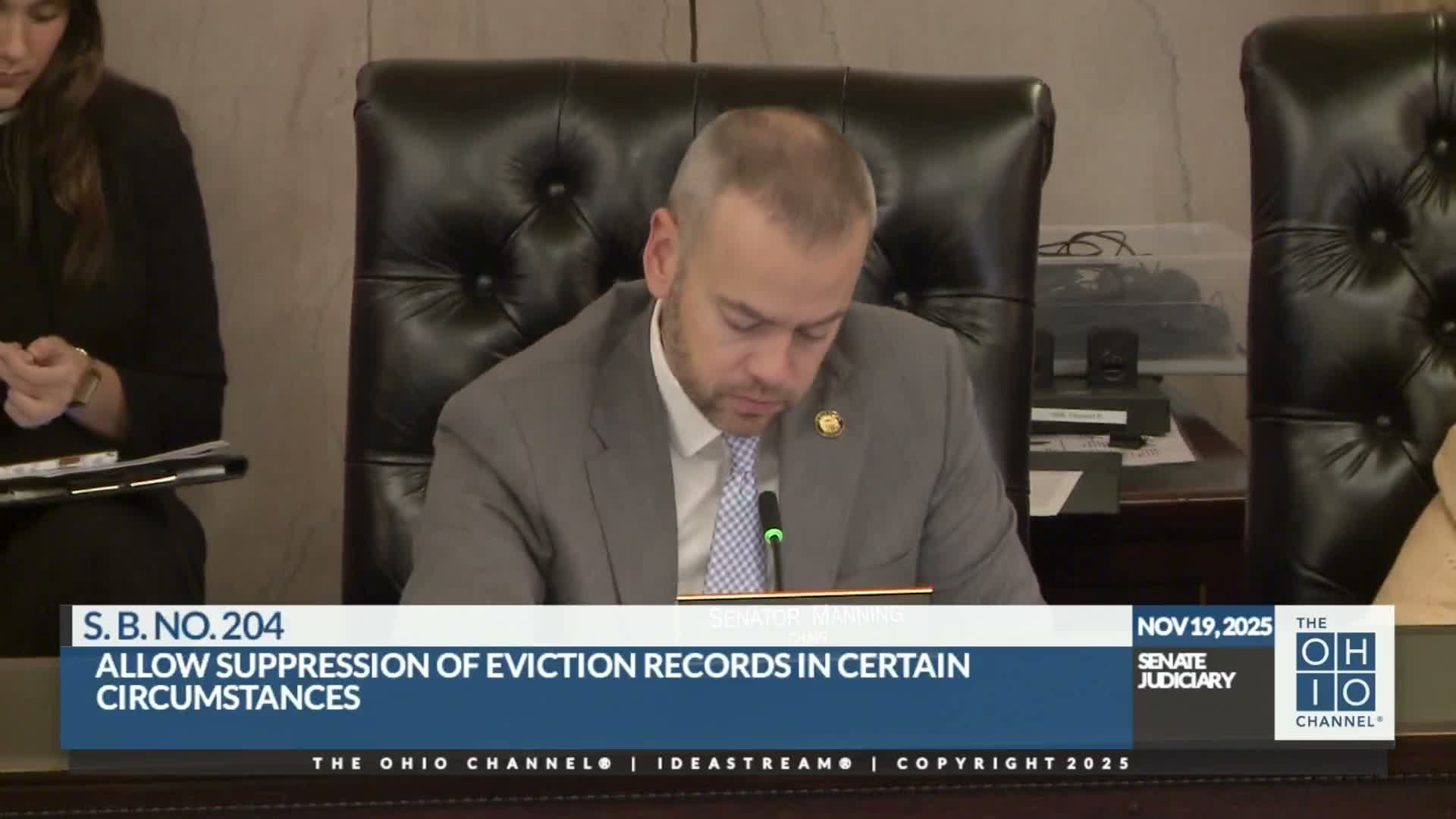
Committee hears broad support for Eviction Record Sealing Act to shield most eviction filings from public searches
Summary
Proponents at the Senate Judiciary Committee said Senate Bill 204 would make eviction filings hidden from public searches from filing until final judgment in most cases, keeping records sealed when tenants win or cases are dismissed and making them public only when landlords prevail; proponents argued uniform sealing will improve access to housing, especially for survivors and low-income renters.
Proponents across housing, legal-aid and survivor-services organizations told the Senate Judiciary Committee that Senate Bill 204 (the Eviction Record Sealing Act) would reduce barriers to housing by limiting public access to eviction filings while a case is pending and by keeping records sealed when tenants prevail or cases are dismissed.
Christie Ortiz of Advocates for Basic Legal Equality testified that sealing procedures are currently inconsistent across Ohio's 159 eviction courts and that Rule 45(E) motions are difficult for pro se tenants. "This bill will ensure that all Ohioans have the same opportunities under the law regardless of where this eviction occurs," Ortiz said, describing variable local practices and the difficulty for tenants to navigate sealing motions.
Alicia Williamson of the Ohio Domestic Violence Network said eviction filings often follow survivors of domestic violence and can block access to safe housing for years; she described national recommendations to seal eviction records for victims and supported SB204’s approach of hiding filings from public searches while preserving court access and making records public only when landlords prevail.
Zach Echols of the Ohio Poverty Law Center cited statewide statistics, saying Ohio averages about 110,000 eviction filings annually with roughly 49,000 dismissals. He said SB204 would allow sealing from filing through final judgment so dismissed or tenant-won cases remain sealed, and emphasized the measure would not slow fast-moving eviction dockets.
Hazel Remish of Enterprise Community Partners described court-level experience in Cleveland with local sealing rules that shifted bargaining and helped tenants access housing; she urged a uniform statewide process. Committee members asked about settlement scenarios and whether seals would be automatic; witnesses said sealing operates from filing through resolution and that a landlord-winning judgment becomes public while dismissals or tenant wins remain sealed. The transcript records the adoption of an amendment expanding sealing provisions to certain landlord-filed causes and naming the bill the "Eviction Record Sealing Act." No committee vote on final passage was taken.