Get Full Government Meeting Transcripts, Videos, & Alerts Forever!
Get email alerts on the Community Control topic
No spam. Unsubscribe anytime.
Sponsor says Senate Bill 291 will standardize community control terms and responses to technical violations
Summary
Vice Chair Reynolds told the committee SB291 aims to reduce variation in community control by imposing a 3-year presumptive cap for less serious felonies and misdemeanors while preserving judicial discretion and creating graduated, community-based responses to technical violations.
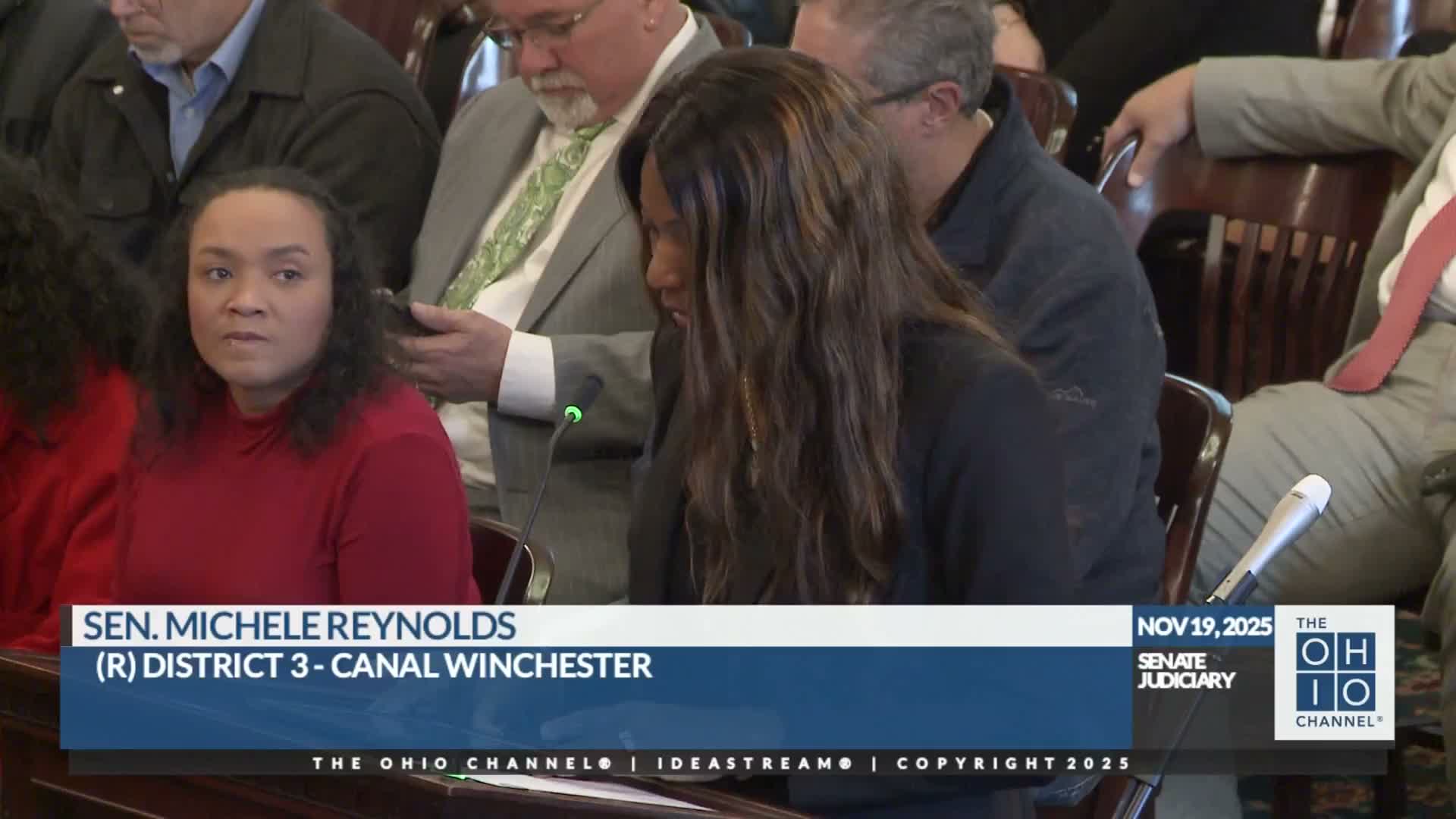
Vice Chair Reynolds provided sponsor testimony on Senate Bill 291, telling the Senate Judiciary Committee the measure addresses statewide inconsistencies in community control sanctions and supervised sanctions.
Reynolds said current law allows community control terms up to five years for a wide range of offenses and that judges’ discretion has produced uneven outcomes across counties. "Misdemeanors and low-level felonies should not be treated the same as a high-level felony when it comes to sentencing community control," he said. SB291 would set an initial presumptive cap of three years for less serious felonies and misdemeanors while retaining a five-year cap for the most serious offenses and preserving judicial discretion to extend terms after specific findings.
The bill also proposes restructured responses to technical violations, replacing immediate incarceration for some breaches with a series of increasingly serious community-based sanctions, Reynolds said. He argued the changes would better use probation resources, incentivize compliance and improve rehabilitation outcomes without eliminating judicial authority.
Ranking member Hicks Hudson sought clarification whether the three-year presumption is a floor or whether judges can impose shorter terms if probation officers report strong compliance; Reynolds confirmed the three-year presumption can be shortened in practice and judges retain discretion.
Chairman Manning closed the item and said SB291 will stand as its first hearing.