Get Full Government Meeting Transcripts, Videos, & Alerts Forever!
Get email alerts on the Parole Transparency topic
No spam. Unsubscribe anytime.
Sponsors urge recording option for parole hearings in first hearing on House Bill 31
Summary
Representatives Humphrey and Stewart presented House Bill 31 to require electronic recordings of parole board hearings upon request by entitled parties, arguing the change would improve transparency and provide victims, attorneys and the public a verifiable record while preserving confidentiality for institutional and revocation hearings.
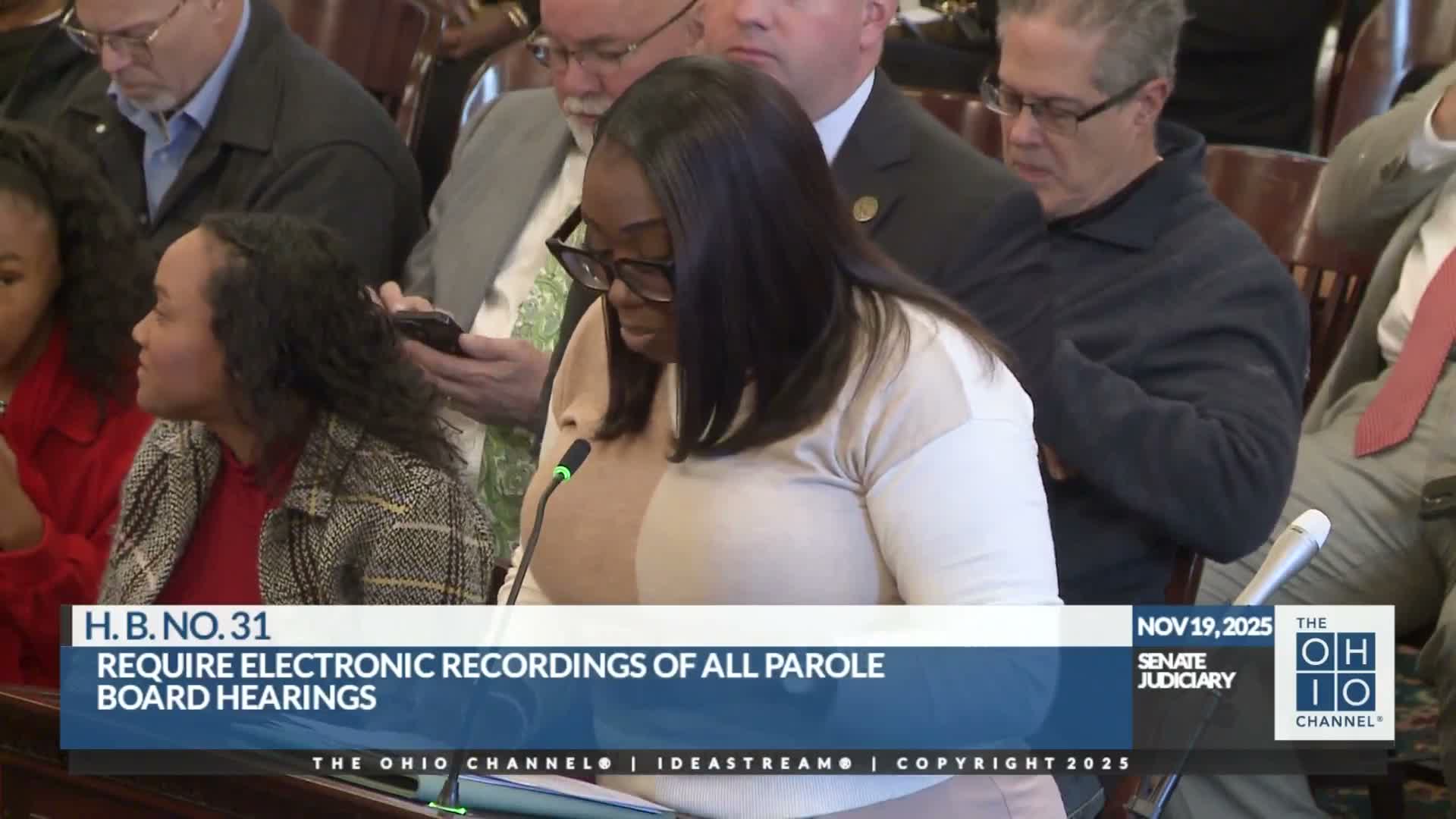
Representatives Humphrey and Stewart urged the Senate Judiciary Committee to support House Bill 31 during its first hearing, saying the bill would create a request-based right to electronic recordings of parole board hearings.
"Parole hearings in Ohio are not automatically recorded nor is there any requirement that transcripts be produced," Representative Humphrey told the committee, arguing that reliance on brief digests leaves victims, families and attorneys without a clear and verifiable record. The bill would let entitled parties—"the victim, the individual subject of the hearing, their attorney, and the prosecuting attorney"—request a recording in advance, she said.
Humphrey said the bill draws a distinction between types of parole proceedings: recordings of full-board hearings (when the entire parole board meets and announces a decision) could become public records if requested and subject to redaction for victim information; institutional, revocation and post-release control hearings would remain confidential and only available to legally entitled recipients. "This ensures transparency where appropriate while protecting sensitive information," Humphrey said.
Representative Stewart, the bill's joint sponsor, described the measure as an effort to bring "a little extra sunshine and transparency and accountability" to parole decisions. Stewart said the bill has been refined over two terms and won unanimous support in the Ohio House. Both sponsors said they are working with the Department of Rehabilitation and Correction on targeted amendments to improve implementation.
Chairman Manning asked why statutory change is necessary rather than administrative action. Stewart answered that agencies have had opportunities to adopt similar practices but, "if there was a willingness to do this without legislation, it would be done" and added that a legislative mandate ensures consistent practice across the state.
The committee did not take a vote; Chair Manning said HB31 "will stand as the first hearing."