Get Full Government Meeting Transcripts, Videos, & Alerts Forever!
Get email alerts on the Consumer Goods Recycling topic
No spam. Unsubscribe anytime.
REMA proponent says SB242 targets unlicensed catalytic-converter buyers behind thefts
Summary
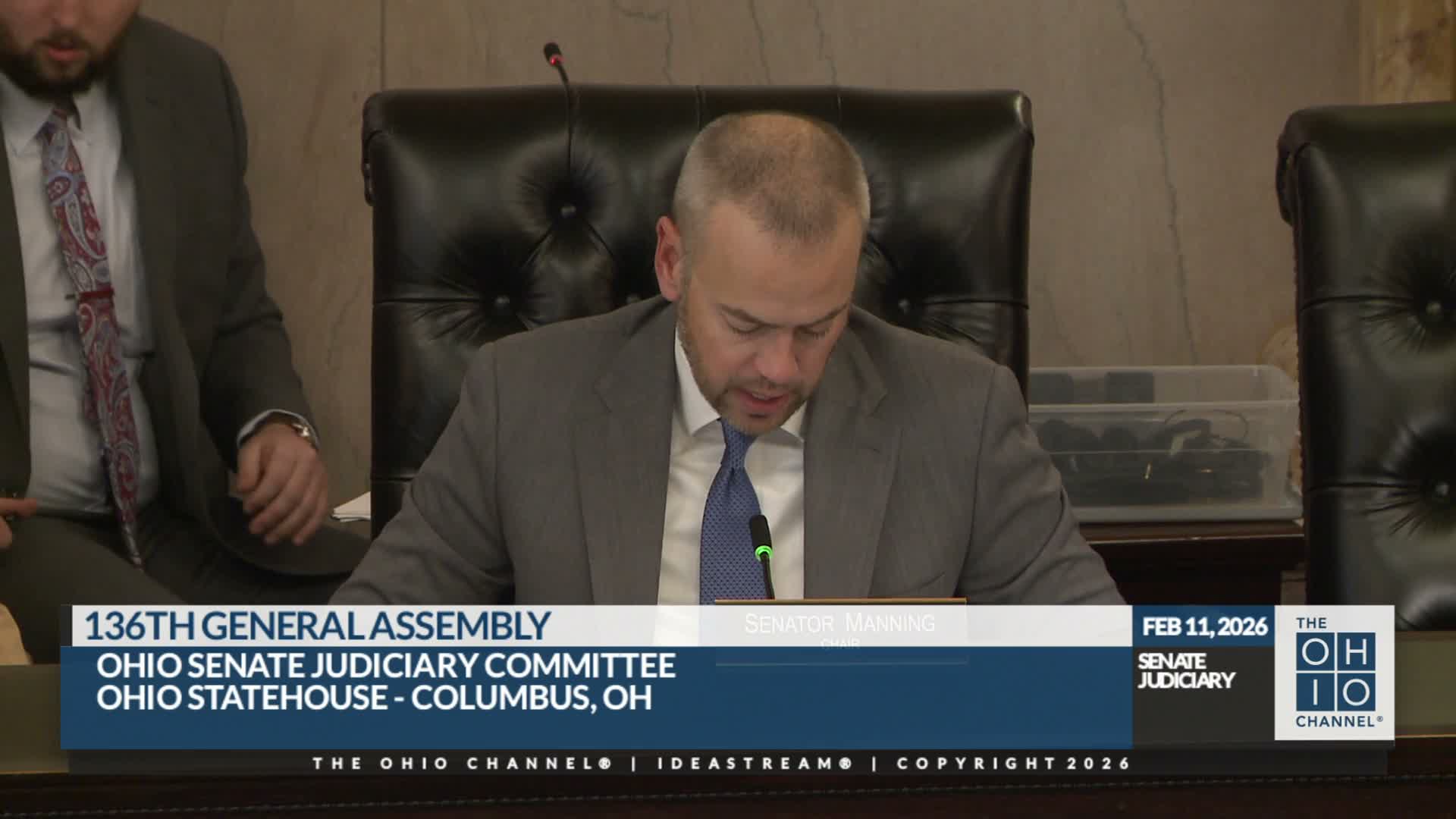
At a Senate Judiciary Committee hearing, Josh Joseph of the Recycled Materials Association told senators SB242 would close gaps that allow unlicensed buyers to fence stolen catalytic converters by requiring purchasers of individual converters to register and giving law enforcement broader investigatory authority.
A representative of Ohio’s recyclers urged the Senate Judiciary Committee on Wednesday to approve Senate Bill 242, saying the measure would close an enforcement gap that enables catalytic-converter thefts.
“My name is Josh Joseph. I am the president of Muskingum Iron And Metal … and owner of AmeriCats,” Joseph said in proponent testimony on behalf of the Recycled Materials Association (REMA). He told the committee licensed scrap dealers already comply with strict ID, reporting and transaction-upload requirements; the bill, he said, “appropriately builds on the existing regulatory structure by addressing the actual gap in enforcement, the presence of unlicensed buyers in the marketplace.”
Joseph described the unlicensed market as one that “does not collect identification, does not report transactions, and does not submit data to law enforcement,” and said SB242 would require that any person or entity purchasing individual catalytic converters be registered as a scrap metal dealer while preserving business-to-business exemptions. He also said the bill would enhance penalties for illegal catalytic-converter activity and give the Department of Public Safety and law enforcement greater authority to investigate noncompliant businesses.
Joseph highlighted operational burdens on licensed dealers, saying compliance “requires meaningful investment in employee training, surveillance systems, transaction tracking technology, and coordination with state regulators and law enforcement,” and argued the bill avoids imposing additional requirements on already licensed, law-abiding businesses.
The committee recorded numerous written proponent submissions and treated Wednesday as the second hearing on SB242. No committee questions were recorded during the in-person testimony.