
Doral council adopts resolutions to tighten enforcement of federal sanctions on Cuba-related business activity
Get AI-powered insights, summaries, and transcripts
Subscribe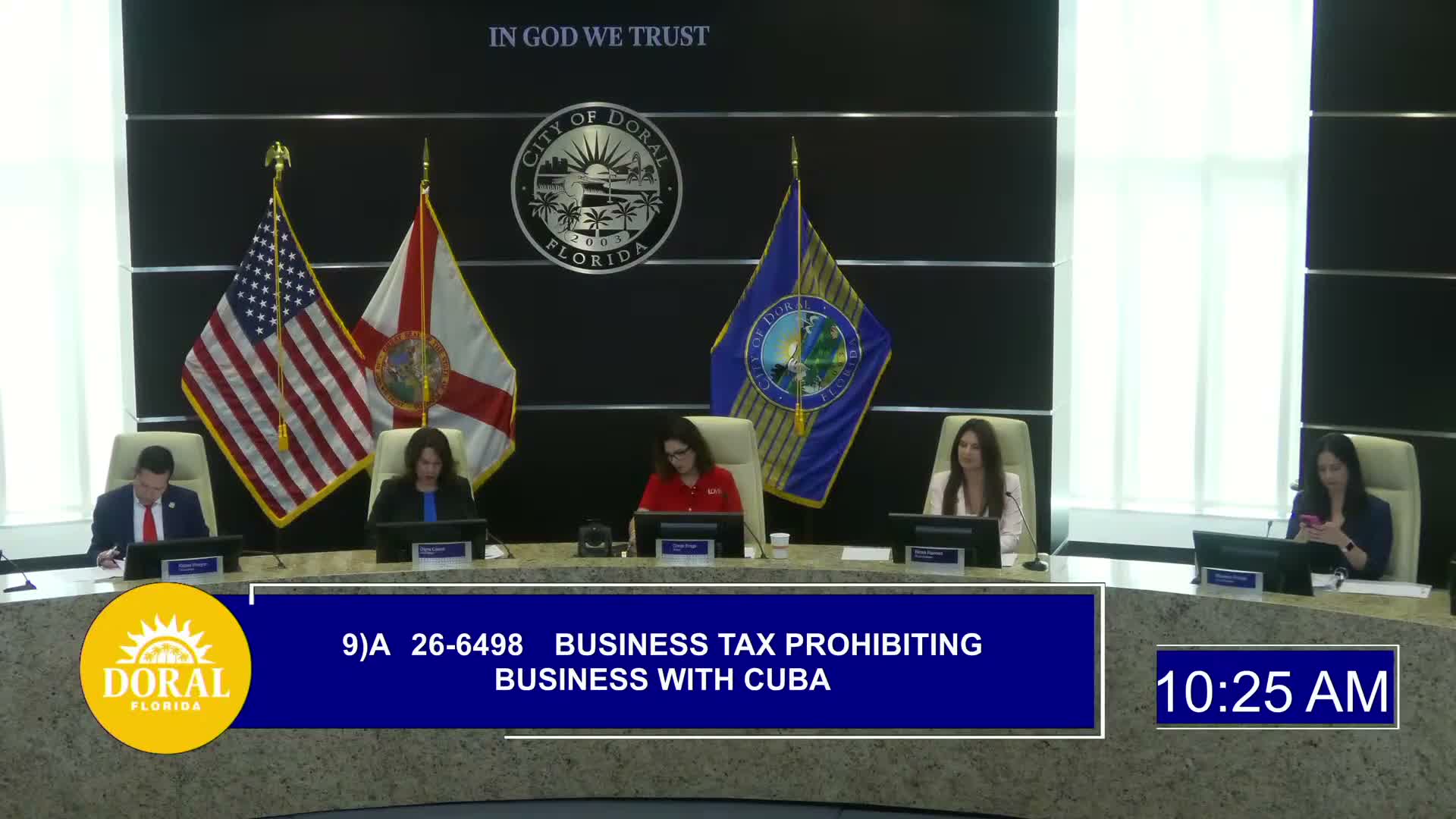
Summary
The Doral City Council unanimously approved two companion resolutions directing coordination with the Miami‑Dade tax collector and urging federal scrutiny of Cuba-related business authorizations to ensure compliance with the Office of Foreign Assets Control (OFAC).
The Doral City Council on Feb. 18 approved two resolutions intended to strengthen local enforcement and intergovernmental coordination around federal sanctions involving Cuba.
Mayor Kristy Fraga introduced the first measure, saying the item directs the city to work with the Miami‑Dade County tax collector to identify business tax receipt holders that might be in violation of OFAC rules and, after an investigative due‑diligence process, pursue license revocation when warranted. "We have decided that getting together and creating stronger regulations within our cities to make sure that companies are following OFAC regulations," the mayor said during the presentation.
Councilman Rafael Pinedo presented a companion resolution urging federal authorities to review Cuba‑related business authorizations and to support transparency in licensing tied to sanctioned entities. Pinedo said the county recently adopted similar legislation and characterized the city action as a way to protect residents — including many refugee and immigrant families — and to underline support for human rights and democratic values.
Both resolutions were supported on voice and roll‑call votes. Council members emphasized that any enforcement action would follow an investigative process; the mayor noted the city attorney had reviewed the language for legal sufficiency.
What happens next: The city will coordinate with the Miami‑Dade tax collector as directed by the resolution and transmit the council’s statements of support to county and federal partners, per the motion. The items resolve policy direction and do not, by themselves, impose new criminal penalties; staff said future administrative or licensing steps would proceed under existing code and after due process.