Get Full Government Meeting Transcripts, Videos, & Alerts Forever!
Get email alerts on the School Funding Levy topic
No spam. Unsubscribe anytime.
Pasco School Board to weigh April re-run after levy fails by narrow margin
Summary
After the Franklin County auditor reported a 49.73% yes vote, the Pasco School Board reviewed three date and rate scenarios for a replacement levy (April, August, November) and directed staff to prepare April‑ballot options — including $2.08 and $1.99 rates and two‑ and four‑year durations — for a Tuesday decision before the county filing deadline.
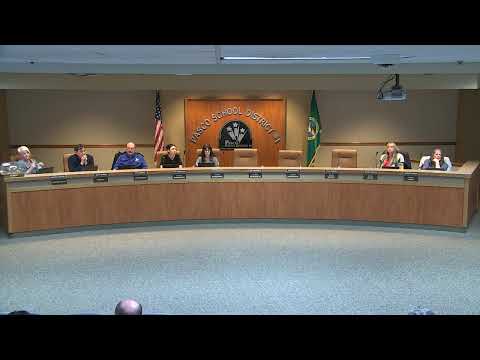
The Pasco School Board met in a special session to map a path forward after a replacement levy failed by a razor-thin margin.
Superintendent Whitney told the board that at 5:07 p.m. the Franklin County auditor’s office reported the most recent ballot count showed 49.73% voting yes and 50.27% voting no; the county is expected to certify results tomorrow. "These are the results of the last ballot count," Whitney said, and staff will use the outcome to guide future timing and messaging.
District staff outlined three possible ballot dates and three rate scenarios. An April 28 election offers the least disruption to staffing and budgeting but provides the shortest outreach runway; August and November dates give more time to communicate but require more disruptive staffing and budget actions if levy revenue is uncertain. The district estimated it would cost about $325,000 to place the levy on the April ballot, and noted prior special-election costs of roughly $78,000.
Joey Castilleja, the district’s business officer, presented three rate illustrations. At an estimated $2.08 per $1,000 in assessed value, the district’s projections show levy-funded programs can continue without additional cuts. A $1.99 rate would create an estimated annual shortfall of roughly $1.5 million to $1.9 million (about $6.7 million over four years), which Castilleja said would require reductions to levy-funded extracurriculars and similar programs — an amount he equated to roughly 21 full‑time staff equivalents when expressed as salaries and benefits. A $1.89 rate would increase the gap further and raise the risk the district could lose some LEA (levy equalization) funding if assessed-value trends change.
Board members split on tradeoffs between risk to programs and increasing passage odds. "We're asking for too many," one board member said in support of a lower rate; Dr. Kennedy and Director Brown said they favored $2.08 because it better protects programs and jobs. A student representative, Jessica, urged the board to preserve extracurricular opportunities: "I want students in the future to always have the opportunity to pursue the activities they want," she said.
After public comment from residents who both urged the board to ask for what it needs and urged a quicker, lower request to respond to voter concerns, the board agreed by majority to prepare options to bring back at the next meeting and study session. Staff were asked to prepare materials for an April ballot (two‑ and four‑year durations and at least $2.08 and $1.99 rate illustrations); the board noted it needs to make a decision before the county filing deadline for the April ballot (the district stated the county filing date is Feb. 27).
The meeting closed with the board asking staff for additional details on the recall process, an exact April‑ballot cost breakdown, and options for two‑year versus four‑year levies. No formal motion or vote to place a measure on the ballot was taken at this session; the board directed staff to return with the requested options at the next public meeting.