Get Full Government Meeting Transcripts, Videos, & Alerts Forever!
Get email alerts on the Zoning Nonconforming Intermodal topic
No spam. Unsubscribe anytime.
McHenry County Zoning Board: rail transload use deemed legal nonconforming; large trucking operations must seek review
Summary
The Zoning Board of Appeals voted 7–0 to modify a staff determination and find Seager’s Limited’s rail transload/intermodal activity at 25010 Illinois Route 173 a legal nonconforming use under the 2013 I-1 zoning, while affirming that long-term truck storage or maintenance that meets the UDO definition of a freight terminal would require a conditional use or rezoning.
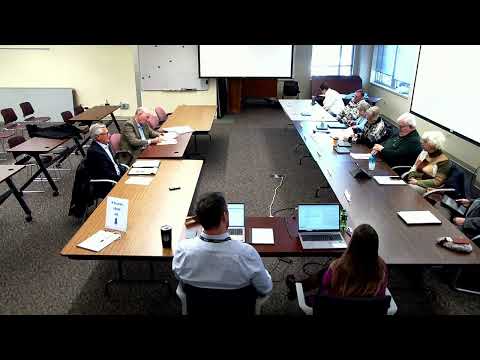
McHenry County Zoning Board of Appeals members voted unanimously on Jan. 7 to modify a zoning enforcement determination and confirm that Seager's Limited’s rail transload and short-term cargo-transfer activities at 25010 Illinois Route 173 qualify as a legal nonconforming use under its 2013 I-1 zoning, but the board also affirmed that larger-scale trucking and vehicle-storage operations meeting the Unified Development Ordinance definition of a freight terminal would require separate review.
The petition, filed by attorney Mark Saladin on behalf of Seager's Limited and Northeast Illinois Rail Truck Transfer Corporation, appealed a director of planning and development interpretation dated Oct. 30, 2025. Saladin told the board the property was rezoned to I-1 in 2013 with testimony describing a multimodal, rail-served operation and that the owners had made substantial investments — demolition, expanded stormwater detention, IDOT driveway work and a 900-foot rail siding — to support that business.
"Never abandon the use," Saladin said in arguing the owners had continued to pursue the transload operation and should retain nonconforming-use protection. Owner Robert Seager Jr. described decades in the grain business and the commercial case for local rail transload capacity, saying the project aimed to lower costs and draw industrial users to McHenry County. He testified that at one point Union Pacific had sought a $2,000,000 fee just to tie into the mainline, which had impeded development plans.
Adam Mullen, the county planning director, told the board that his office had initially issued an interpretation based on a prospective buyer who proposed substantial trucking activities on-site. After hearing testimony and reviewing on-the-record evidence of demolition, stormwater improvements and the existing rail siding, Mullen said staff would withdraw the portion of the determination premised on a presumed long-term trucking terminal and that the existing operation should be treated as a legal nonconforming use. "I think it is legal nonconforming," Mullen said.
Board member Mr. Eldridge moved to "modify the determination of the zoning enforcement officer to the extent that petitioner remains a legal nonconforming use to the extent he simply wishes to pursue the business that he advocated when he came in for I-1 zoning, which is an intermodal," while affirming the officer's determination with respect to other activities that constitute a freight terminal. Mr. Schnabel seconded the motion. The board discussed evidence of ongoing activity and the difference between short-term cargo transload/pickup operations and a freight terminal that stores and maintains dozens of commercial vehicles.
The motion passed on a 7–0 vote. The board stated the modification preserves the petitioner’s ability to continue intermodal, short-term transload operations as described in the 2013 zoning record, and it cautioned that a change in use (for example, a buyer seeking a long-term trucking-storage and maintenance facility) would trigger change-of-use review, a rezoning or a conditional-use permit under the UDO.
The board’s action emphasizes two points: county staff and the board will treat the existing transload activity as protected under legal nonconforming status based on the record presented, and separate, more intensive trucking/freight-terminal uses remain subject to standard land-use approvals. The petitioners thanked the board after the vote; the hearing record will reflect the board’s modified determination and staff said it will monitor any future change-of-use or sale that could alter the property’s status.