Get Full Government Meeting Transcripts, Videos, & Alerts Forever!
Get email alerts on the Immigration Enforcement topic
No spam. Unsubscribe anytime.
Public pressure after Truth Act forum puts ICE cooperation and sheriff oversight on board's agenda
Summary
Multiple residents urged the Board to limit county cooperation with ICE and to strengthen civilian oversight after a Truth Act forum; some speakers alleged the sheriff's office presented inaccurate information and asked the board to accelerate a newly formed subcommittee and make its engagement process public.
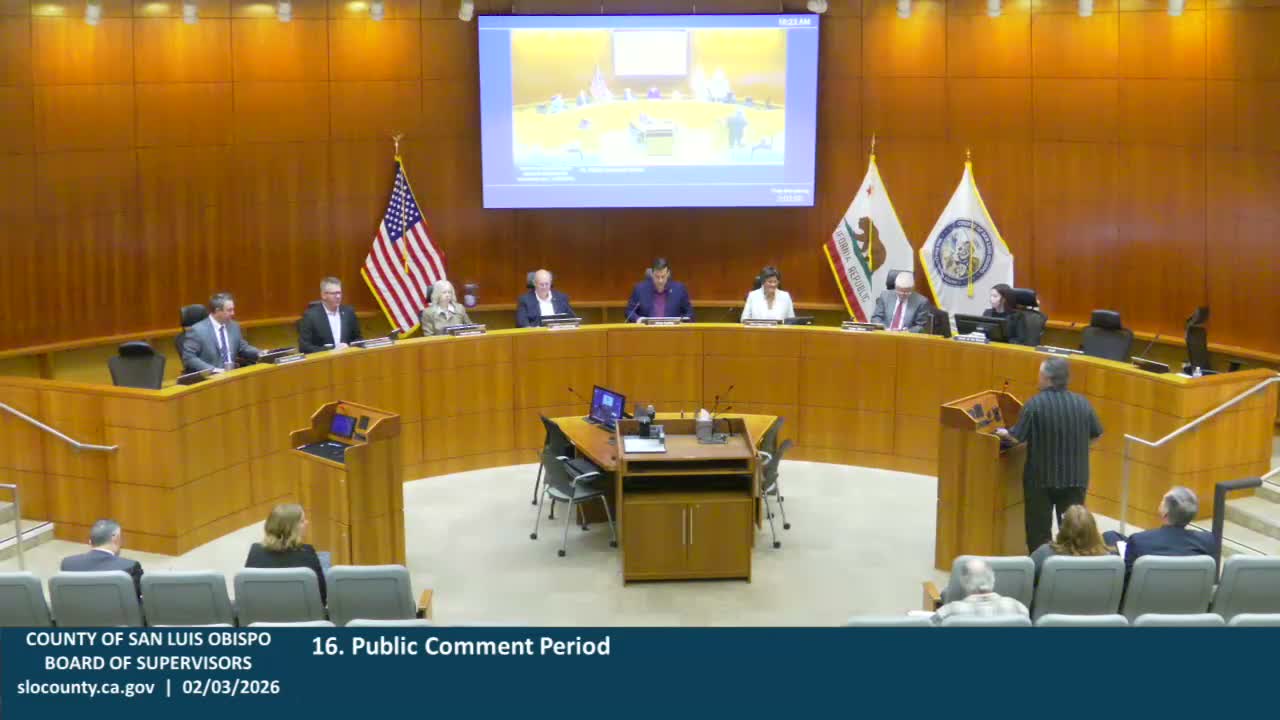
Public commenters at the Feb. 3 San Luis Obispo County Board of Supervisors meeting used the general public‑comment period to press the board for faster, more transparent action after a recent Truth Act forum and to urge limits on local cooperation with Immigration and Customs Enforcement (ICE).
Supporters of local limits and additional oversight emphasized alleged misinformation in the sheriff’s report at the Truth Act forum, requests for a clear public pathway to submit documentary evidence and calls for whistleblower protections. Diana Kaiser said she was “extremely dissatisfied and scared” about local interactions with ICE and questioned statements attributed to the sheriff about turning people over “without due process.”
Other speakers framed the issue differently: Gary Kirkland said he supports ICE and the sheriff’s work to enforce federal law and criticized calls to prohibit ICE from county properties. Several commenters asked the board to keep working groups and the public engaged and to accelerate the timetable for a subcommittee formed at the forum to report back; former supervisor Jim Patterson and others urged holding public hearings as information emerges.
Board response and next steps: Chair Paulding told members the board will provide details about how the public can participate in the Truth Act subcommittee and said staff will work to provide office hours and avenues for submitting evidence and records. The board clarified the subcommittee’s review timeframe (the chair noted a 60‑day timeframe for reporting back, not 90 days as some speakers had stated). Several supervisors said they wanted more public engagement and indicated staff will share the radio interview transcript and other materials when provided.
The county did not take immediate action to change protocols; several speakers urged formal policy changes and public hearings. Board and staff comments emphasized next steps to provide public engagement opportunities and to receive documentary material submitted by residents.