
Fire and police chiefs outline 2025 year‑end numbers; city sees crime declines and public‑safety investments
Get AI-powered insights, summaries, and transcripts
Subscribe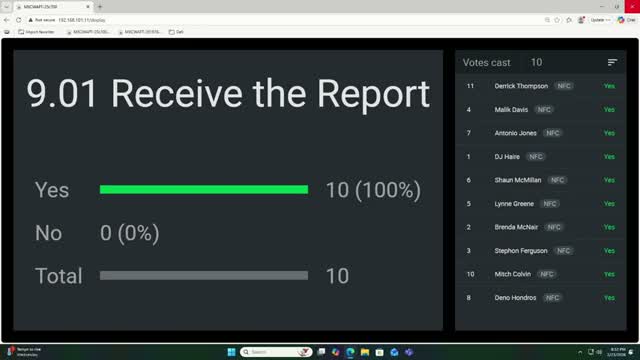
Summary
Fire Chief Kevin Dove and Police Chief Brian delivered annual reports showing decreases in overall crime but increases in some violent and juvenile incidents; the fire department responded to nearly 29,700 calls in 2025 and emphasized smoke‑alarm outreach after three fire fatalities without working alarms.
Fayetteville’s fire and police chiefs presented their 2025 year‑end reports to the City Council on Feb. 23, reporting mixed trends in public safety and a series of operational priorities going into 2026.
Fire Chief Kevin Dove reported that the department responded to 29,617 calls for service in 2025; medical rescue calls made up 64% of those responses. Dove highlighted operational achievements including a reduced backlog in the fire marshal’s office after new hires, a firefighter cancer‑prevention program that added a decontamination washer and diesel particulate filters on apparatus, and increased community risk reduction work that resulted in thousands of home safety interactions and smoke alarm installations. He also noted three civilian fatalities at structure fires where no working smoke alarms were present and urged residents to accept free smoke alarms and education (FFD hotline 910‑433‑1116).
Police Chief Brian reported that overall Part 1 crime was down about 7.2% year‑over‑year, with declines in many property crime categories and a 12% reduction in motor vehicle theft after a targeted task force. The department recorded higher juvenile contacts and flagged that some violent crime metrics increased; homicide solving rates remain high (chief said the department’s clearance rate exceeded national averages). Chief Brian also reported increased traffic enforcement and ShotSpotter activity, which produced hundreds of alerts and multiple weapons recoveries.
Council members pressed both chiefs on travel times, speed enforcement, school resource officer coverage and partnerships to address juvenile incidents. The chiefs outlined steps including targeted traffic enforcement operations, continued recruitment and training (police vacancies dropping from higher numbers to 23 active vacancies at the time of the report) and expanded community programs to reduce fire and life‑safety risks.
Both chiefs asked council to receive the reports; council accepted them and directed staff to follow up on technical questions about staffing and enforcement tools.