Get Full Government Meeting Transcripts, Videos, & Alerts Forever!
Get email alerts on the Committee Governance topic
No spam. Unsubscribe anytime.
San Mateo County Ag Advisory Committee seeks clearer role, schedules special retreat and tightens meeting procedures
Summary
After a consultant survey flagged confusion about the committee's role and meeting processes, county staff proposed clearer agenda steps, packet changes and a special retreat to improve collaboration; members agreed to poll dates for a longer session to address training, respect and Brown Act compliance.
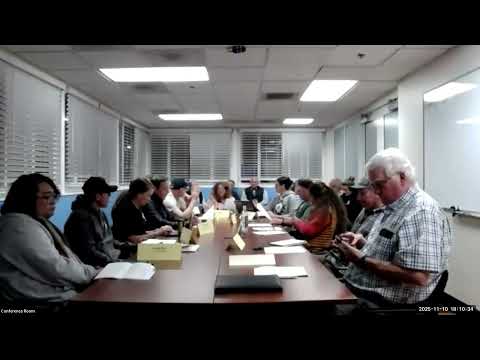
The San Mateo County Agricultural Advisory Committee voted on Nov. 10, 2025, to pursue a special retreat and to adopt clarified meeting procedures after a consultant's survey found members want clearer roles, better meeting management and stronger collaboration with county staff.
Debbie Schechter, the consultant who led the committee survey, told members the top themes included a shared interest in supporting local agriculture, a need to clarify the AAC's role in county policy and project review, and repeated requests for improved meeting procedures and training. She said county staff largely agreed with the findings and recommended a focused retreat to discuss roles, expectations and mutual respect.
The retreat proposal would be a longer meeting (Schechter suggested about three hours with a meal) held before the committee's regular January session; members asked staff to circulate a poll with several date options. "We want a session where the county and the AAC can really talk about the role, get some clarity and perform it more effectively," Schechter said during her presentation.
Sophie Matier, assistant director of Planning and Building, reviewed procedural changes staff will implement to make meetings more consistent. Future agendas will list each step for an item (presentation, clarifying questions, public comment, committee discussion and motion/vote if needed), and staff will provide a script to the chair to help manage those steps. Matier also said staff will provide mailed meeting packets on request that include the agenda, staff reports and key attachments while excluding lengthy technical appendices that can swell packet size.
Legal counsel Brian Pettit reiterated that the chair has discretion to manage requests to move items from consent to the regular agenda, but a motion and majority vote can resolve disputes. Pettit warned that deliberating on matters not agendized could violate the Brown Act and recommended using the retreat and future agendas to address items requiring committee discussion.
Members raised specific procedural concerns: hybrid meeting logistics, staff presence at in-person sessions, recordings that continue after adjournment, and how to ensure remote participants are heard. Matier acknowledged the feedback, said the county intends to continue offering a hybrid option for public participants while encouraging in-person member attendance, and agreed to review how recordings are edited so that postadjournment discussion is not posted unedited.
The committee asked staff to circulate date options for the retreat and to provide training material on parliamentary procedure and Brown Act basics. The presentation and survey will be posted with meeting materials; members said they expect the retreat to address concrete steps for improving respect and information flow between the committee and the county.