
Committee Hears Broad Support for K–4 Structured Literacy Bill, Questions on Funding and Certification
Get AI-powered insights, summaries, and transcripts
Subscribe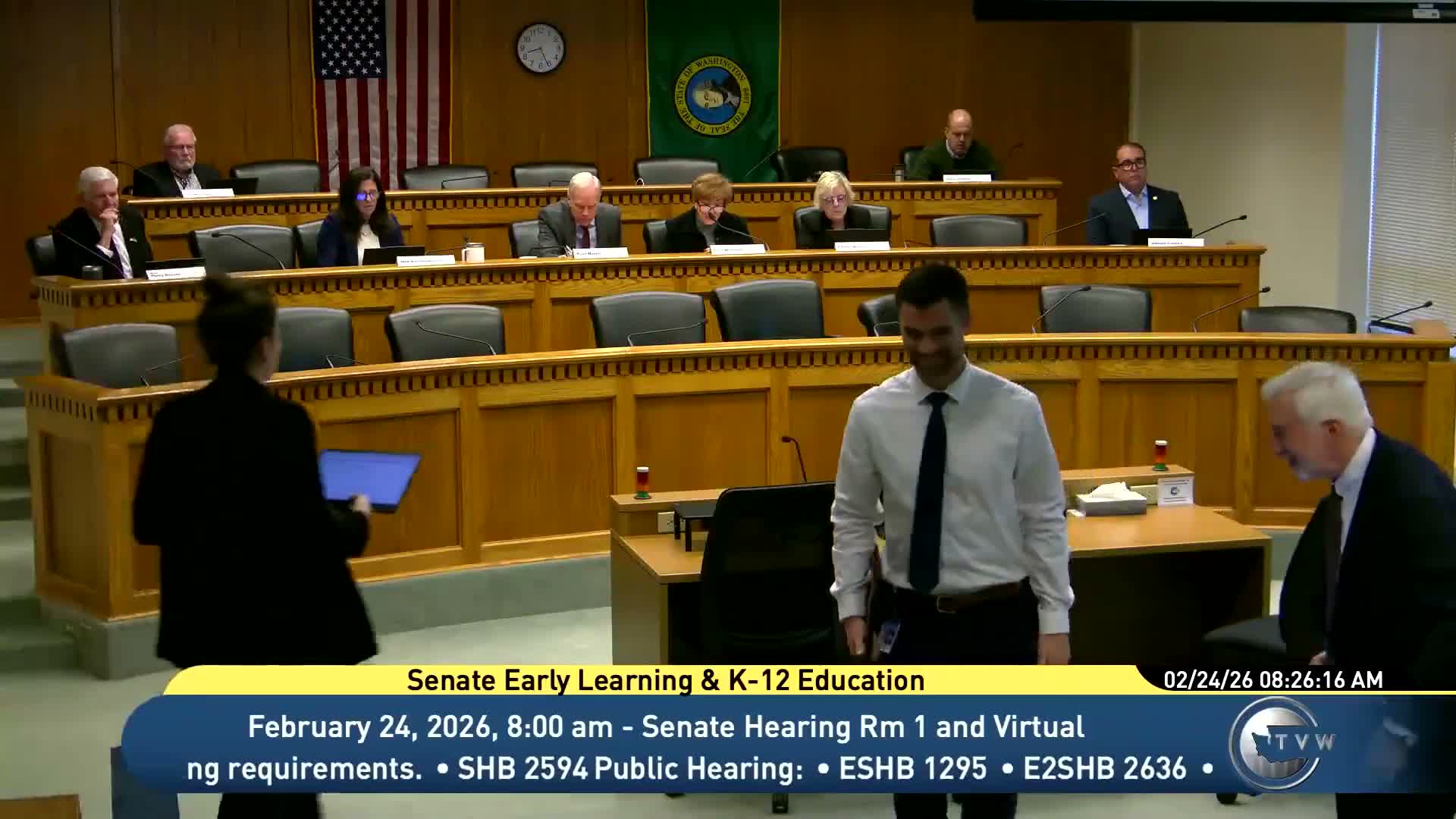
Summary
The Early Learning K–12 Education Committee heard hours of testimony in support of ESHB 12-95, which would require evidence-aligned literacy curricula and K–4 comprehensive programs when districts update curriculum. Supporters cited improved district results and equity; educators and unions raised concerns about implementation costs and added certificate requirements.
The state Early Learning K–12 Education Committee on Feb. 25 heard extensive testimony in favor of engrossed substitute House Bill 12-95, legislation that would require school districts that update literacy curricula after 2027 to adopt evidence-aligned materials and implement comprehensive K–4 literacy programs.
Elena Becker, committee staff, summarized the bill’s main provisions: districts that update literacy curricula must meet five criteria for evidence alignment; adopted curricula must be paired with comprehensive programs addressing language comprehension, phonological awareness, orthographic knowledge, family engagement strategies and screening for at‑risk readers; the Professional Educator Standards Board (PESB) must revise endorsement standards, and teacher preparation programs must incorporate those standards within two years of adoption. Becker said the fiscal note on the most recent substitute shows nonzero but indeterminate costs.
Supporters said the bill is curriculum‑agnostic but sets minimum evidence-based expectations. "This bill does not promote a product or curriculum. It simply highlights the components of effective instruction and the foundational literacy skills that have been proven to be essential for proficient reading," said Sarah Buto, parent‑founder of Decoding Dyslexia Washington. Gina Vincent, assistant director of teaching and learning for Puyallup School District, described adopting evidence‑aligned curricula, adding coaching and job‑embedded support and reported that a second‑grade cohort’s growth on an early literacy assessment exceeded national averages and that 70 percent of that cohort were no longer considered at‑risk as of Feb. 13.
Student and family testimony framed literacy as an equity issue. "No student should have their future depend on whether their parents can afford that bridge," said Andrew Schwint, a 17‑year‑old student with dyslexia who testified in favor.
Several presenters urged attention to teacher preparation and to the practical costs of broad implementation. "There are some very effective clock‑hour training programs ... but they can't replace the work of having coaches and interactive teams working together in a school building, which is what's been successful in so many programs," said a longtime educator testifying for the bill. The Washington Education Association signaled support for evidence‑based instruction but asked the committee to reconsider Section 4, which would require teachers with a literacy‑related endorsement to complete 10 hours in literacy renewal; the WEA noted educators already must complete other clock‑hour renewal requirements and warned about cumulative burdens.
Several witnesses recommended safeguards and evaluation. Jennifer Miller, a retired educator, urged the inclusion of a sunset clause or a review timeline "to allow for review and adjustment if outcomes do not meet expectations." Advocates and researchers, including Dr. Julie Walter (Gonzaga University), cited implementation science and argued statewide coherence helps proven practices reach classrooms.
The hearing drew multiple panels of testimony — parents, district leaders who described measurable gains after adopting structured programs, university researchers, and advocacy groups representing families of students with dyslexia. Committee members asked about whether aspects of the bill would extend to older students who have slipped through early grades; sponsors said the bill is a first step focused on K–4 but could inform later efforts.
Next steps: the committee paused public testimony after multiple panels and proceeded with hearings on other bills. No formal committee vote on ESHB 12‑95 was recorded in the hearing transcript.