
Portsmouth EDA hears SBDC results and private accelerator pitch amid active grant programs
Get AI-powered insights, summaries, and transcripts
Subscribe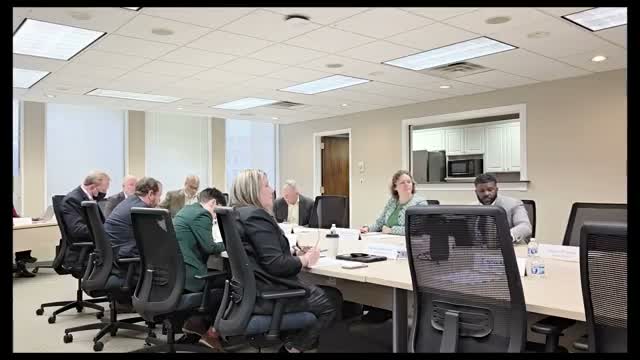
Summary
EDA heard detailed results from the Hampton Roads SBDC on Portsmouth outcomes and success of a local Procurement Contracting Institute cohort; a private firm also pitched the Uplift capital-accelerator model. Staff reported grant program allocations and disbursements across multiple EDA programs.
The Portsmouth Economic Development Authority on Feb. 17 received two substantive presentations on small-business support and an update on EDA grant programs.
Julie (identified in the record as executive director of the Hampton Roads Small Business Development Center) described SBDC services and outcomes for Portsmouth: over five years the SBDC served 176 Portsmouth businesses, supported roughly $13 million in capital formation, reported five new business starts, 168 jobs created or retained, and nearly 1,000 hours of one-on-one advising. She highlighted a local Procurement Contracting Institute (PCI) cohort in which 16 businesses completed an eight-week program; survey results showed 92% made new business connections and 85% were awarded contracts or gained contract leads.
EDA staff presented grant-program metrics: the Smart Start Business Development Grant has an annual allocation of $100,000 (30 applications year-to-date with 21 awards and $42,000 awarded; $32,000 dispersed and $58,000 remaining); the Smart Start Business Acceleration Grant has $50,000 allocated (8 applications, 4 awards; $13,529.85 awarded); and the Property Investment Grant operates at an application level of $350,000 (31 applications, 29 awards, approximately $162,378.39 disbursed to date). Staff said the property investment grant will reopen on July 1.
A representative of AGH Advisory Services described the Uplift program—an eight-week cohort focused on knowledge, social capital and financial capital that the firm has run in Virginia Beach and elsewhere—and offered a tailored model for Portsmouth. The presenter cited aggregate outcomes from past cohorts (for example, 67% of participants reporting revenue increases) and gave examples of participant wins. Board members asked about bilingual services and geographic eligibility; staff and the presenter said bilingual support can be arranged and program requirements can be tailored for municipality preferences.
Why it matters: the SBDC and accelerator programming are tied to the EDA’s goals for business retention, local contracting and workforce development. The grant-program updates show available and committed funds that the EDA can leverage to support future cohorts and one-on-one advising.
Provenance: SBDC presentation and Q&A begin at SEG 668 and continue through SEG 1049; the Uplift/capital-accelerator presentation begins at SEG 1096 and continues through SEG 1473. Grant statistics are discussed at SEG 580–632.