
Glen Abbey residents urge Alpharetta to treat pickleball noise as a zoning and health issue
Get AI-powered insights, summaries, and transcripts
Subscribe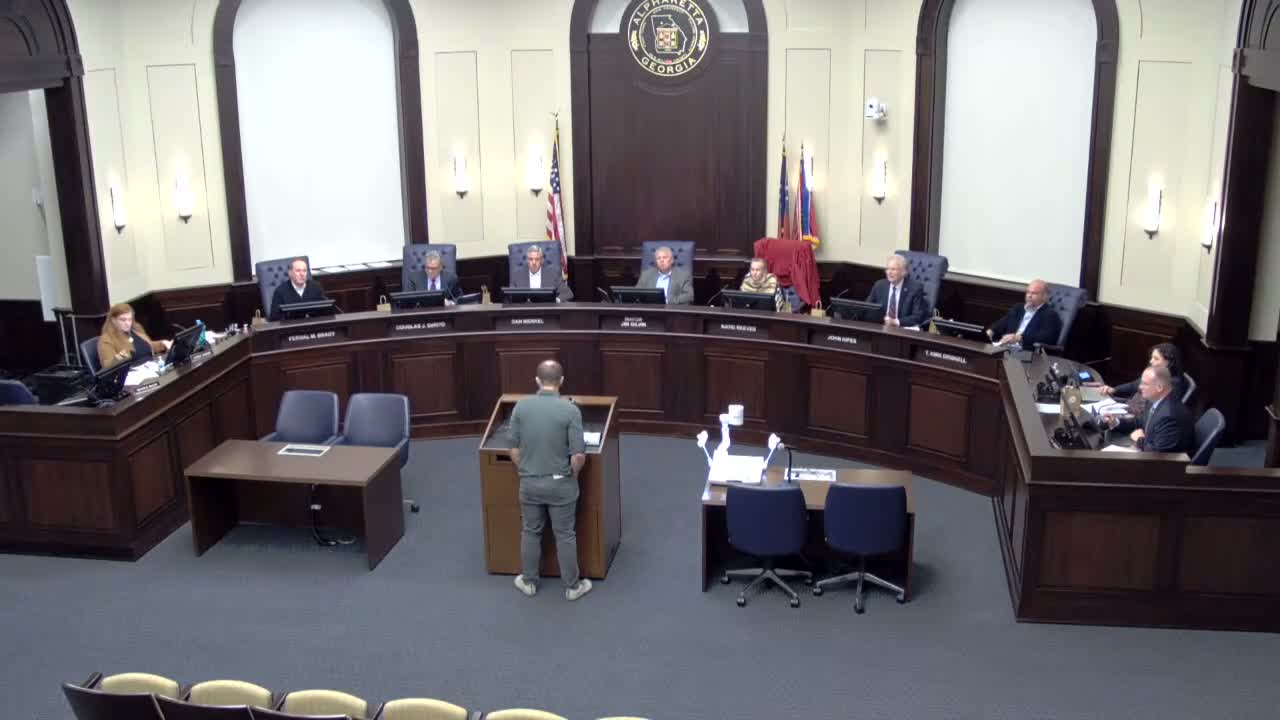
Summary
Multiple Glen Abbey homeowners described sharp, high‑frequency 'popping' noise after tennis courts were converted to permanent pickleball courts, reporting sleep disruption and loss of private outdoor enjoyment; residents urged council to consider setbacks, conditional use permitting and acoustical impact studies. Council said staff and city attorney will explore options but warned retroactive restrictions are legally complicated.
At the end of the meeting residents from the Glen Abbey neighborhood urged the council to address noise from newly converted pickleball courts that sit roughly 100–250 feet from adjacent homes.
Matt Peter, who said he researched mitigation options, asked the council to adopt a proactive code update establishing a 250‑foot minimum setback for "high impact noise sports" and a conditional use process for facilities within 500 feet of homes. "Distance is the, really, the only reliable mitigation," he said, summarizing experience in other municipalities.
Multiple neighbors described sleep disruption and changes they had to make inside their homes. Beth Shellhouse told the council her family had relocated an infant's bedroom to the basement because of the noise and asked for noise impact assessments and mitigation requirements for conversions from tennis to pickleball. "The pickleball noise... awakens our sleeping baby," she said.
Matt and Cammy Christiansen, who said they both play and appreciate the sport, framed their ask as a zoning and measurement problem: they requested conditional zoning that would require site review and setbacks and asked the city to revise noise standards to account for high‑frequency impulsive sounds that decibel averages miss. "Pickleball noise is not background noise... it is a constant series of sharp, repetitive pops," Matt Christiansen said, noting experts recommend setbacks from 250 to 800 feet.
Mayor and councilmembers acknowledged the problem and asked the city attorney and police to review options. The mayor cautioned that retroactive ordinances restricting uses built under earlier rules can expose the city to legal challenges, and said the city will explore practicable solutions and next steps with staff and legal counsel.