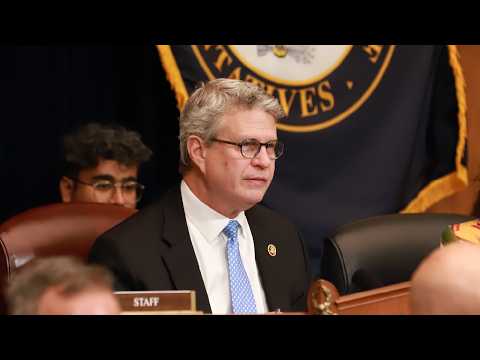
Committee opening highlights alleged AI chip smuggling to China, introduces 'Chip Security Act'
Get AI-powered insights, summaries, and transcripts
SubscribeSummary
A committee member cited recent reporting alleging illegal smuggling of advanced NVIDIA chips to China, raised concerns about intellectual‑property theft and black markets, and introduced the Chip Security Act to bolster export enforcement and supply‑chain security.
A committee member opened a House Committee on Foreign Affairs hearing by urging stronger enforcement against alleged smuggling of advanced U.S. AI chips to China and by introducing the Chip Security Act.
The speaker, whose name is not provided in the transcript, cited a Reuters report alleging that DeepSeek’s latest AI model was trained on illegally smuggled NVIDIA Blackwell chips and said recent reporting and intelligence suggest persistent black markets and theft of U.S. technology. “This chip smuggling story is just one example of how China’s AI ambitions are living off of stolen American technology,” the speaker said.
The speaker referenced multiple reports and figures to underscore the scope of the problem: an assertion that Huawei smuggled components from Taiwan Semiconductor Manufacturing Company (TSMC) in 2024 sufficient to make the equivalent of about 1,500,000 advanced chips; a Financial Times figure the speaker said showed more than $1,000,000,000 in NVIDIA chips smuggled into China in a three‑month span; and that U.S. detection of at least one case came after a tech blog alerted the Bureau of Industry and Security (BIS).
The speaker framed the issue as an urgent national‑security and export‑control problem and said Assistant Secretary Peters — identified in the transcript as the BIS official responsible for export enforcement — is tasked with cracking down on violators. The speaker also noted the administration requested a 77% increase to BIS’s budget (which the speaker said the House supported) and that the Senate approved a 23% increase.
Quoting testimony from a recent confirmation hearing, the speaker cited Lieutenant General Joshua Rudd: “China is aggressively seeking to acquire advanced AI chips to accelerate its development of AI‑enhanced weapons,” attributing the characterization to Rudd’s confirmation record as presented in the transcript.
On legislation, the speaker said, “I introduced the Chip Security Act,” and described it as a bill to “scale up best security practices, encourage innovative technologies, and directly support the Trump administration’s AI action plan recommendations” so that firms cannot rely on black markets to acquire chips. The transcript does not record any committee vote or further procedural action on the bill during this excerpt.
The opening remarks reiterated the committee’s intent to partner with BIS and Congress to tighten export enforcement and supply‑chain security. The speaker closed by stressing the urgency of enforcement action to prevent further technology transfer to adversaries.
What’s next: the transcript excerpt ends after opening remarks and the speaker’s description of the bill and enforcement priorities; no committee vote or formal adoption of the Chip Security Act is recorded in these segments.