Get Full Government Meeting Transcripts, Videos, & Alerts Forever!
Get email alerts on the Wmata Funding topic
No spam. Unsubscribe anytime.
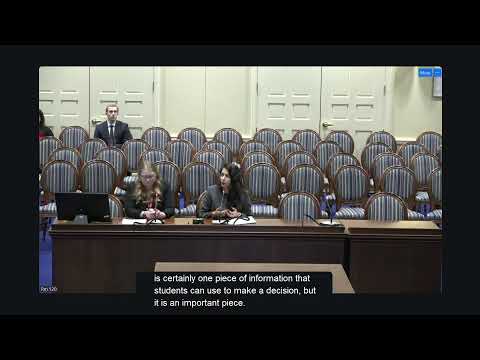
Lawmakers hear regionwide case for another $150 million-plus for WMATA capital needs
Summary
Supporters told the Appropriations Committee HB 386 would sustain Metro's capital program through a revolving bond program and targeted investments (notably signaling). WMATA, regional planning bodies and unions urged a favorable report while answering questions about automation and workforce protections.
Delegate Moore Corman presented HB 386, the Maryland Metro Funding Modification Act of 2026, asking the committee to update the state’s dedicated capital funding for WMATA. He said the 2018 flat-dollar contribution has lost value to inflation and that updated capital support is needed to keep the system’s capital program operating beyond debt service.
Charlie Scott, representing WMATA, said the authority has rebuilt reliability and seen ridership rebound, and that static dedicated funding of $5.5 billion in capital leaves an increasing share dedicated to debt service; HB 386 would support a revolving bond program to sustain the capital program. He urged the committee to give the bill a favorable report.
Regional stakeholders, including the Metropolitan Washington Council of Governments, the Coalition for Smarter Growth, and the Amalgamated Transit Union Local 689, testified in support. They highlighted economic and environmental benefits, job impacts (WMATA employs about 9,000 Maryland residents), and the DMV Moves regional planning process, which recommended new capital funding and stronger reporting and transparency. The bill as presented would increase Maryland’s dedicated funding by a stated increment in testimony (sponsors cited a $150,000,000 increase and an annual 3% escalation in some descriptions).
During questioning, delegates asked about automation and workforce impacts. WMATA said modernization of the rail signaling system could, over many years, allow more automated operations and potentially operate trains without onboard operators, but stressed this would be a multi‑decade implementation accompanied by a workforce transition plan developed with ATU to avoid adversely affecting current employees. WMATA also said station manager positions were not expected to be broadly eliminated; operational changes at low-use times and multiple-entrance stations could reduce staffing at specific entrances.
Committee members praised recent reliability gains and asked that any personnel changes be the subject of conversations with unions and staff. The committee took no vote on the bill during the hearing and concluded testimony after panelists answered questions and a virtual witness closed remarks.