Get Full Government Meeting Transcripts, Videos, & Alerts Forever!
Get email alerts on the Grants And Medicaid topic
No spam. Unsubscribe anytime.
Board reviews grant offsets and explores Medicaid billing for special‑education services and transportation
Summary
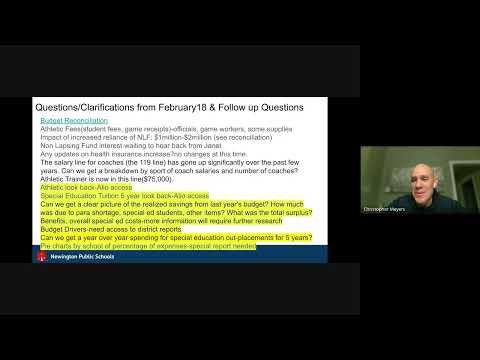
Staff told the board that roughly 53.3 positions are offset by grants (Open Choice, seed grant, Title I, Perkins) and that additional offsets (IDEA, excess cost, Medicaid reimbursements) total about $1.855M; staff said they are exploring Medicaid billing for special‑education transportation but face operational hurdles tied to the random moment study.
Staff presented grant offsets to the proposed FY26–27 budget and described several funding lines that reduce the district’s operating ask. The superintendent said certified teacher salaries include offsets from Open Choice, the two‑year seed grant (entering year two), Title I and Perkins; staff reported roughly 53.3 positions are offset by grants totaling about $2.7 million.
The business office also identified additional program offsets: an Effective School Solutions offset from IDEA of $100,000, a Medicaid reimbursement offset (posted at roughly $55,000 for services billed through a vendor), and an excess‑cost grant applied to outplacement of roughly $1.7 million; together those program offsets totaled about $1.855 million as presented to the board.
Board members asked technical questions about Medicaid billing, and the superintendent clarified the process: the district bills through an outside vendor (Kinney Associates) and the state takes a portion. Staff said they are exploring whether transportation can be billed; Mariela explained that Medicaid transportation billing has two parts (billing and participation in the random moment study) and that bus drivers’ schedules and communication patterns create operational challenges. She said the district is considering a pilot and consulting other districts before expanding transportation billing.
Board members acknowledged the programs' importance (school‑based health center, Nor'easter Academy) and discussed whether to include one‑time funding in the operating ask or to rely on non‑lapsing funds until grant awards are certain. Staff committed to running simulations and returning with updated estimates and feasibility findings.