Get Full Government Meeting Transcripts, Videos, & Alerts Forever!
Get email alerts on the Athletics topic
No spam. Unsubscribe anytime.
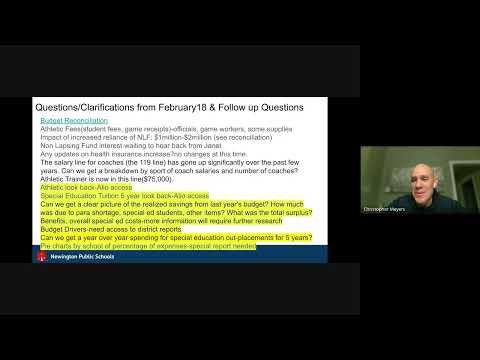
Athletic director: participation fees fund officials, security and program costs; trainer and stipends drive salary increases
Summary
Athletic Director Mr. Myers told the board that participation fees and gate receipts flow into the student activities (athletic) fund and pay for officials, security and supplies; converting an athletic trainer to a salaried role and contractual stipend steps were cited as main drivers of recent increases in coach salary lines.
The Newington athletic fund, AD Chris Myers told the board Feb. 23, is part of the student activities fund: participation fees and gate receipts are used to cover officials, game workers, security, equipment and other costs that the board does not directly fund.
"None of the fees go to boosters," Myers said, explaining that concession stands are run by boosters but ticket/participation fees remain in the athletic department to pay officials, additional coverage and other operating costs. He said districts vary on which sports are ticketed and that Newington currently charges for football, wrestling and basketball.
Board members pressed for clarity on the distribution of revenue, the equity of charging for some sports and detailed coach stipend math. The superintendent and Myers explained coach stipends follow the negotiated contract with four steps on the coaching scale and that a recent change — bringing an athletic trainer on as a salaried district employee rather than a contracted service — materially increased the salary line.
The board asked staff to provide a breakout of coach stipends and the coaching salary scale as a follow‑up so members could evaluate whether charging patterns or stipend structures should change in future negotiation cycles.