Get Full Government Meeting Transcripts, Videos, & Alerts Forever!
Get email alerts on the Elections topic
No spam. Unsubscribe anytime.
Board approves $85,000 supplemental allocation to Ohio Elections Commission; director outlines legal and operational obligations
Summary
The Controlling Board approved a supplemental allocation for the Ohio Elections Commission to cover outstanding legal bills, rent, mailing and audit costs; Executive Director Phil Richter detailed pending legal matters and itemized several expenses when pressed by board members.
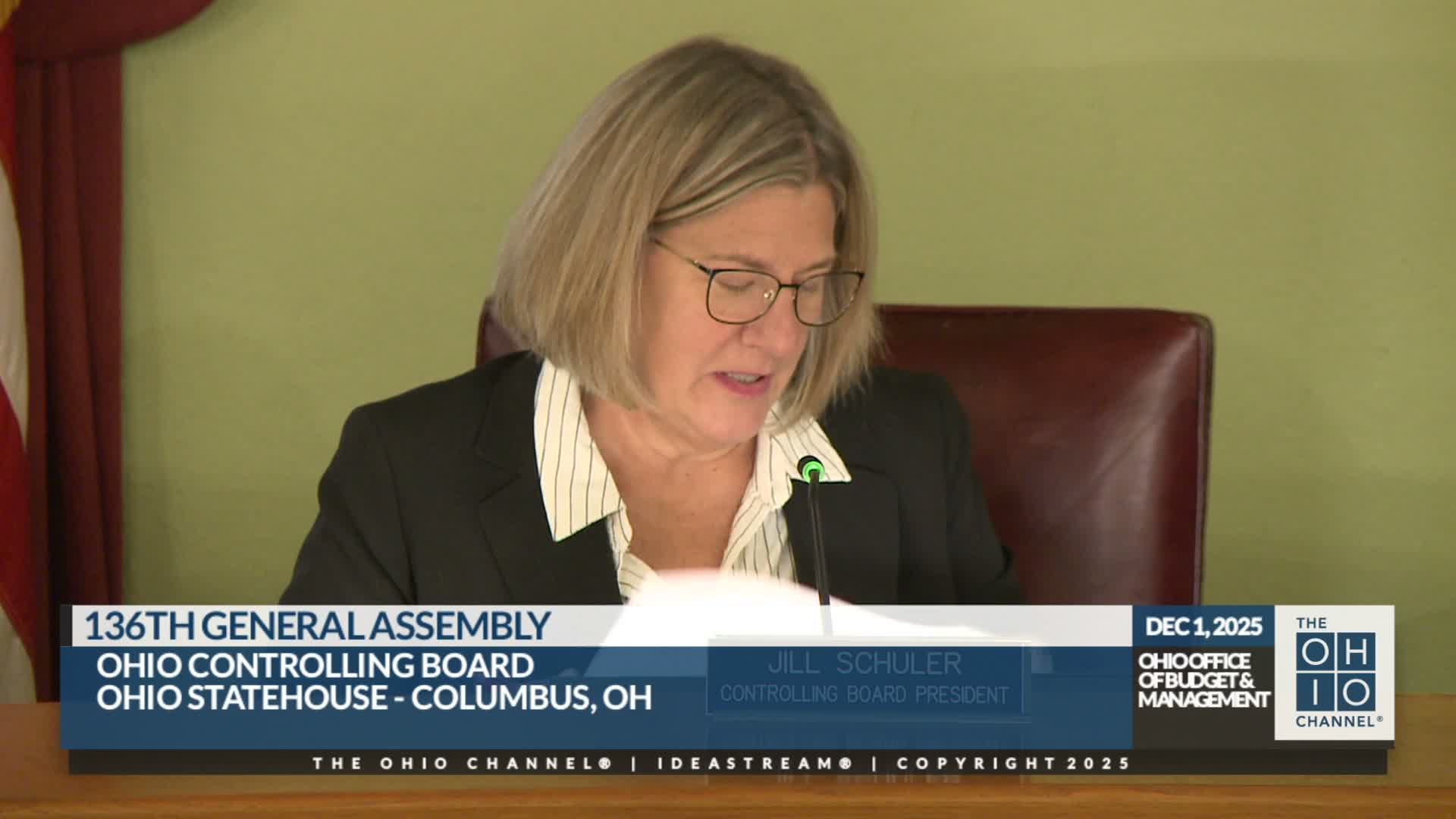
The State Controlling Board on Dec. 1 approved a supplemental appropriation to the Ohio Elections Commission to meet outstanding obligations as the commission winds down operations.
Phil Richter, executive director of the Ohio Elections Commission, told the board the funds would cover legal bills, rent, mailing costs and other Department of Administrative Services charges. Richter said two legal matters required outside counsel: one challenging Ohio's corporate contribution statute (described on the record as "statute 30 five-nine-nine-zero-three") and another involving a challenge to a scheduled commission hearing.
When Representative Stewart and others asked for an itemized breakdown, Richter provided numbers on the record: an audit bill of approximately $13,650, mailing costs around $15,000 over three periods, rental costs roughly $7,000'$8,000 and additional obligations including subpoena fees, storage costs (~$1,200) and a small outstanding ethics bill (~$450). Richter said he had reached out to the Office of Budget and Management in August and had been instructed to file the request about one month prior to the meeting.
Board members pressed whether the money might have paid bonuses or salaries; Richter said the commission is not able to pay bonuses and that payroll was being covered by prior transfers, with an approximately $26,000 deposit planned at the time of the meeting.
The board approved the item without objection.
What happens next: the Elections Commission will use the appropriation to pay outstanding obligations and any remaining funds are anticipated to transfer to the Secretary of State's office after Jan. 1, per Richter's testimony.