
Georgia Senate committee advances bill to recognize gold and silver as legal tender amid debate over depository, fees and cybersecurity
Get AI-powered insights, summaries, and transcripts
Sign Up Free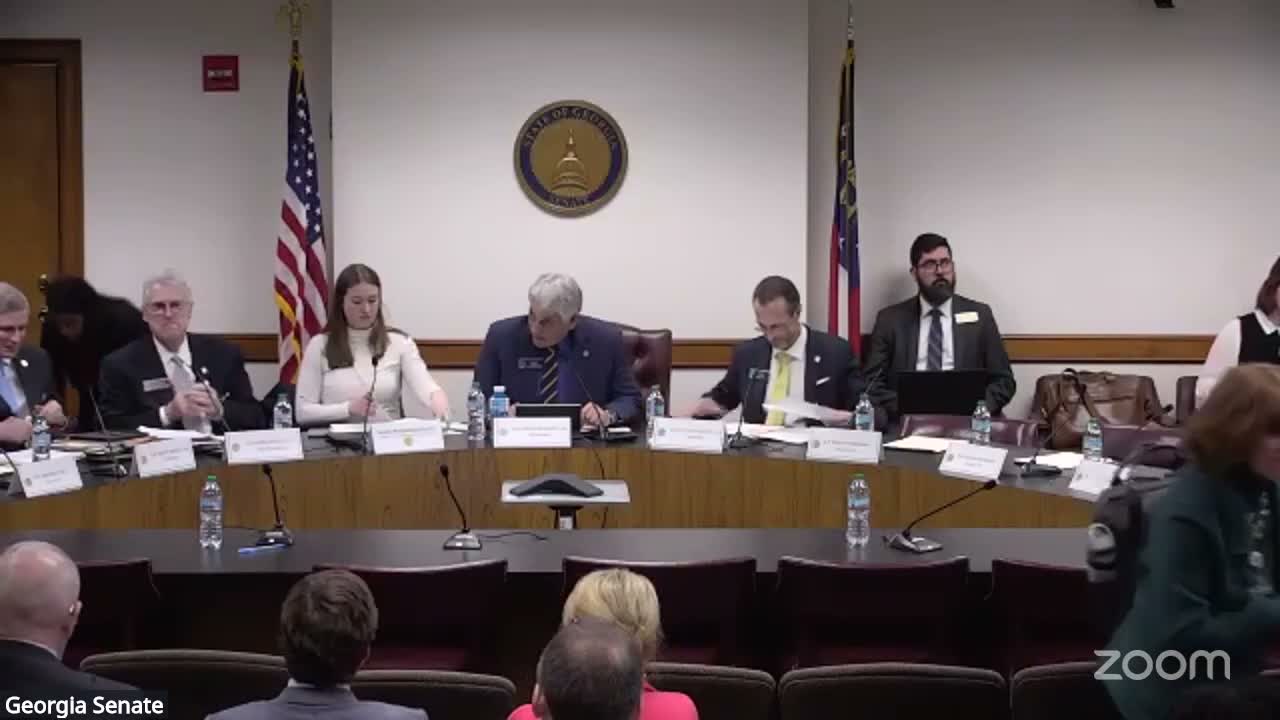
Summary
A Georgia Senate committee voted 5–3 to advance a bill that would recognize gold and silver as legal tender and enable fintech-backed transactional accounts tied to physical bullion; supporters said it expands access and hedges inflation, while vendors and experts warned state-run vaulting, unclear fees and cybersecurity merit clarification.
A Georgia Senate committee voted 5–3 to move a bill that would recognize gold and silver as legal tender and enable electronic, fintech-style transactions backed by physical bullion, advancing the measure to the rules committee for further consideration.
Proponents told the committee the proposal would broaden access to precious metals and give residents a new payment option. "This bill really kinda is economic freedom for for people that could not participate in the process," an unidentified proponent said in committee testimony, arguing fintech can let people buy fractional gold in small denominations and use it for everyday purchases.
Supporters framed the change as rooted in a constitutional claim, citing "Article 1 Section 10" as the basis for states to recognize gold and silver as legal tender. The proponent also told senators an RFP process would select private vendors for storage and transactional services and said a fiscal note in the file ‘‘shows no cost to the state’’ because users would pay storage and transaction fees.
Committee members repeatedly pressed for specifics on fees, custodial responsibility and tax treatment. Senator Jones asked how recurring transaction costs would be allocated and which vendors would benefit; the sponsor said vendors would be chosen through RFPs and that transactional fees might be lower than typical credit-card fees because the products would function more like asset-backed debit transactions.
Opponents and outside witnesses urged caution. Robert, representing the Sound Money Trade Organization, said he supports legal-tender recognition but warned against the state operating a bullion depository: "I don't believe that this would be a revenue neutral bill at all with the depository in there," he told the committee, arguing state participation could crowd out private vaulting firms and create unexpected liabilities. He also raised cybersecurity concerns and recommended that any state-related digital infrastructure meet GovRAMP-like standards.
Benjamin Schafer of Citizens for Sound Money echoed those concerns and urged that the state avoid becoming a market participant: "I am against the depository being run by the state of Georgia because if you do that, the state of Georgia will have to become a participant and competitor in the private market for vaulting," Schafer said, while also endorsing legal-tender recognition itself as a policy option.
Industry and advocacy witnesses defended operational feasibility while acknowledging unanswered questions. Mike Carter of NSIC said the system would operate on existing payment rails: "This runs on the rails of Mastercard," and that vendor contracts should back hacked accounts. Brian Allen, vice chair of the Libertarian Party of Georgia, argued the measure would give Georgians an inflation hedge, saying, "Since the Federal Reserve was established in 1913, the United States dollars lost over 96% of its value."
The committee recorded a roll-call-style show of hands for the motion to pass the bill: five members voted in favor and three opposed. The chair announced the bill "moves to rules," noting that floor amendments and House action could still change the measure's substance.
Next steps: the bill proceeds to the rules committee, where lawmakers may amend language on depository structure, vendor requirements, fee allocation and cybersecurity standards. The committee record includes references to procurement via RFP, potential vendor partners (witnesses mentioned firms such as Brink's and fintech services like Glint), and a fiscal note that committee speakers characterized as showing no direct cost to the state.