Committee advances bill to make forestry tax credits transferrable to spur mill investment
Loading...
Summary
The House Ways & Means Committee passed substitute House Bill 1085 by voice vote, a measure that would make existing job and investment tax credits expressly transferrable for forestry manufacturing. Sponsors said the change aims to attract investment and help restart or replace aging mills after a wave of closures.
A House Ways & Means committee advanced substitute House Bill 1085 on a voice vote after a presentation and limited questions. The bill would make existing job and investment tax credits explicitly transferrable for forestry manufacturing, authorizing the use of those credits as a financing tool to attract investment to lumber and pulp operations.
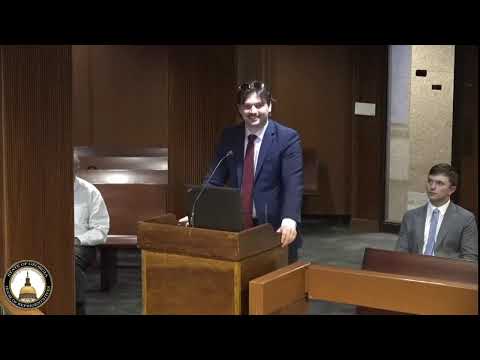
The bill’s presenter said HB1085 is “the most efficient and the most expeditious way to attack the real crisis that we have in our timber industry across the state,” noting longstanding mill closures and declining demand. He argued that making credits transferrable, a mechanism used successfully in the film industry, could encourage new investment or acquisition of existing facilities.
Representative Frey asked whether the credits would apply to acquiring currently vacant mills and the presenter said acquisition could qualify if the activity counts as qualifying investment; the presenter cautioned that some older mills are so aged that industry may prefer to build new facilities instead of retrofitting old sites. The exchange focused on whether a purchase of an existing facility would constitute the “new investment” the statutory framework requires; the presenter said that, under the current statutory framework, acquisitions could qualify depending on the nature of the investment.
The committee moved to a voice vote and the chair announced the bill passed. The transcript records a voice vote with members saying “Aye” and no recorded opposition in the committee minutes.
The bill now moves to the floor (or the next legislative step designated by the sponsor); the transcript did not record a roll-call tally or identify a formal mover or seconder on the record.
Provenance: Transcript discussion and vote on HB1085 begin with the bill’s introduction and presentation, followed by Representative Frey’s questions and the voice vote recorded in the committee record.