
Bi‑State outlines hiring push and operational fixes as ridership rises and reliability lags
Get AI-powered insights, summaries, and transcripts
Subscribe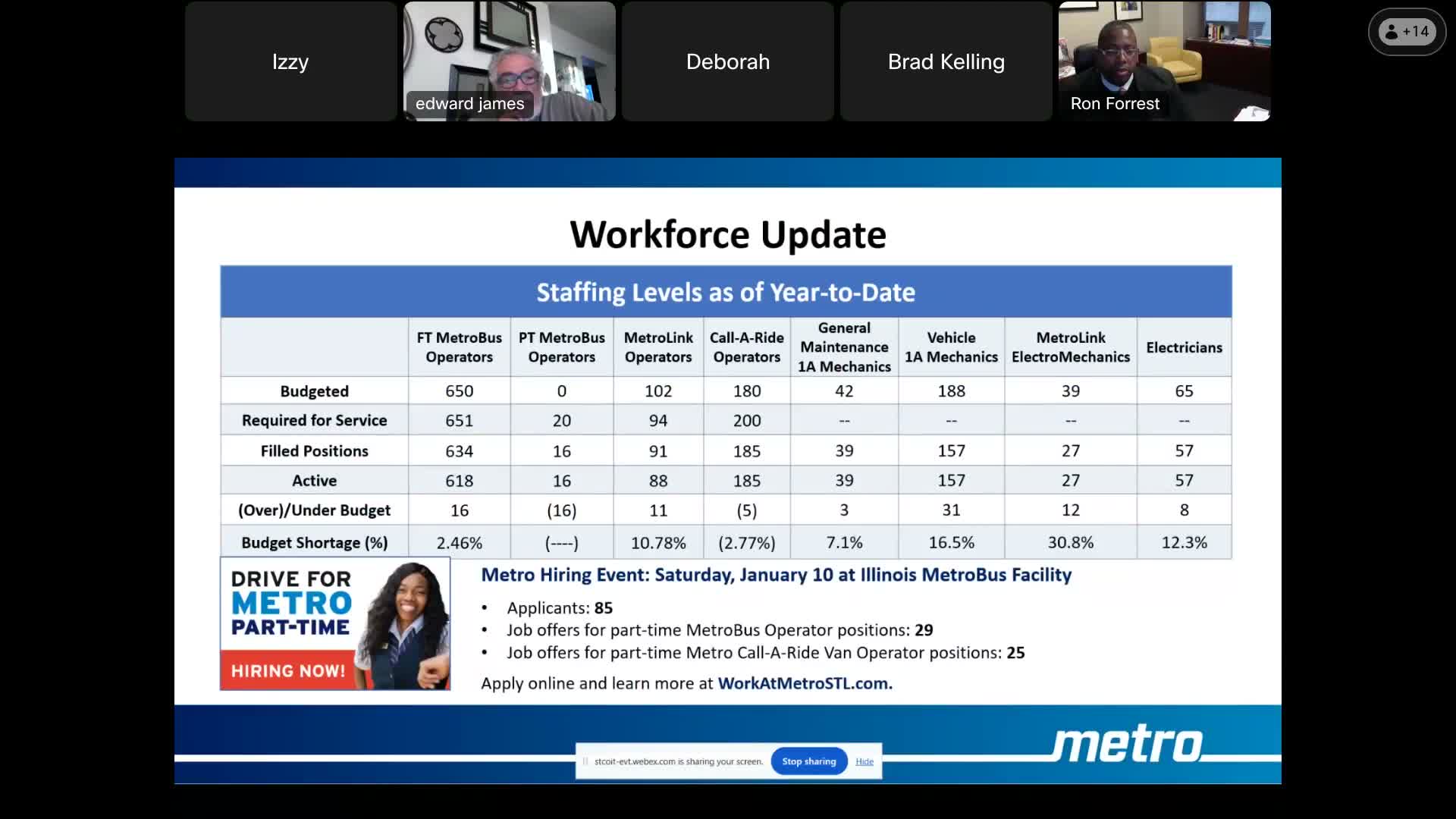
Summary
Bi‑State reported ridership increases (system +6%, Colorado service +33%) and a strategy to expand part‑time operator recruitment to reduce missed trips; maintenance staffing is down by 54 mechanics and on‑time performance for demand services is about 84–85% (target 90%).
Bi‑State Development Agency officials told the commission the system is recovering ridership while facing persistent staffing and reliability challenges.
Ron Forrest, chief operating officer, said Metrobus has 640 of 650 budgeted operators (16 part‑time), with 618 active field operators because some budgeted positions are on long‑term leave. He said a recruiting shift toward part‑time hires produced 29 part‑time offers at a recent event and that the agency aims to double the part‑time workforce before the June 2026 service change.
Forrest said Metrolink has 91 of 102 budgeted operators and expects a February class of 12 operators; however, that training will draw from the Metrobus pool and temporarily reduce bus operator counts. He also reported the maintenance workforce is short by about 54 mechanics, and the agency is pursuing apprenticeship and technical‑school hiring pathways pending Department of Labor approval to grow the maintenance pipeline.
Agency leadership said systemwide ridership is up more than 6% year over year; Colorado service (a suburban/on‑demand service in the transcript labeled "Colorado") is up roughly 33%, and Via microtransit trips are up more than 19%. Forrest noted the agency averages about 98% of scheduled service completion but that equates to roughly 30 partially or fully missed trips per day, which materially affects riders.
Call‑a‑ride demand has doubled to more than 40,000 trips per month; the agency reported trip denials remain at zero but on‑time performance for that service hovers around 84–85% (goal 90%). Forrest said dispatch and routing software limitations are a key constraint and that an RFP is being developed to procure better routing tools; staff are also evaluating zoned microtransit with distance caps as a possible service‑design option.
Commissioners asked for exit‑interview data on operator attrition and for a summary of part‑time benefits; Forrest agreed to provide a benefits summary and said staff will work to add exit data into recruitment analytics prior to the June service change.