Get AI Briefings, Transcripts & Alerts on Local & National Government Meetings — Forever.
Subcommittee hearing highlights foster care shortfalls, hospital overstays and DHS data gaps
Loading...
Summary
The Health and Social Services Subcommittee reviewed DLS findings showing foster care shortfalls and increased hospital admissions for youth in care, pressed DHS for missing reports and data, and received DHS commitments to provide follow-up and adjusted deadlines for some deliverables.
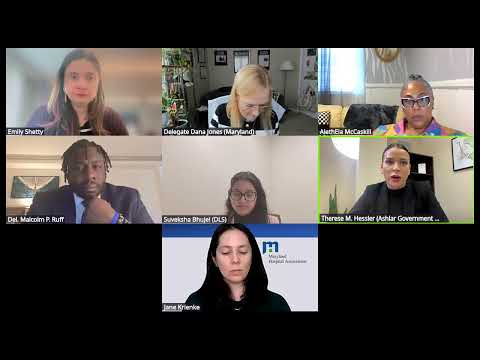
The Health and Social Services Subcommittee on Appropriations examined the Department of Human Services’ Social Services Administration budget and several data gaps on Feb. 25 during a virtual hearing.
The Department of Legislative Services (DLS) told the subcommittee the SSA allowance rises by $25.4 million (3.1%) to $841.8 million but flagged projected foster care shortfalls and reporting inconsistencies. DLS estimated an $18.6 million shortfall in fiscal 2026 and $17.4 million in fiscal 2027 for foster care maintenance payments and recommended restricting specified general funds pending submission of several reports, including monthly child welfare data and a Medicaid state plan amendment (SPA) if submitted.
DLS also presented performance data showing reductions in some child-safety metrics but large increases in spending for purchased institutional placements: purchased-institution costs rose 36.4% in FY25 and an additional 10.4% in FY26, DLS said. The presentation noted 93 children experienced hotel placements between Oct. 2024 and Sept. 2025 and that reporting improvements may explain part of the increases in hospital admissions.
DHS witnesses disputed some DLS recommendations and described data limitations. Roman Napoli, DHS chief financial officer, said a revised JCR (closeout) was submitted to DLS with corrected figures and objected to imposing a fund restriction tied to a Medicaid SPA because, he said, "there is no SPA in development nor a plan to pursue this type of SPA" and that the fiscal and federal landscape currently makes SPA approval unlikely.
Dr. Algiers Studstill, executive director of the Social Services Administration, said DHS has implemented corrective actions, including conducting background checks for care providers and halting hotel placements after a youth’s death. Studstill described kinship-placement increases — a 33% rise representing roughly 330 additional children — and said family-finding software identified more than 4,300 potential kin connections.
Subcommittee members pressed DHS for follow-up data and written responses. Members asked for: a full accounting of hospital-overstay cases and where youth placed in hotels were ultimately located; a breakdown of vacancies and abolished positions in child welfare; and updated cost documentation for hotel and one-on-one services. DHS committed to provide the requested information, but in several cases requested later due dates (for example, FY26 actuals for hotel and one-on-one service costs, proposed due date Dec. 15, 2026) to reflect budget closeout timing.
The hearing closed with the subcommittee scheduling written follow-ups. No formal votes were recorded at the hearing; DLS recommendations were presented for committee consideration.
The subcommittee adjourned with DHS agreeing to submit the data requested and to provide status updates on audit corrective actions and other deliverables.