Get Full Government Meeting Transcripts, Videos, & Alerts Forever!
Get email alerts on the Homelessness Policy topic
No spam. Unsubscribe anytime.
Port Jervis council adopts law banning camping, says enforcement will prioritize services
Summary
The Port Jervis Common Council adopted Local Law No. 4 of 2025, prohibiting camping and sleeping on public property except with permission of city officials. Supporters cited public-safety and park-use concerns; a church leader urged the city not to "make it a crime to be homeless."
The Port Jervis Common Council voted April 14 to adopt Local Law No. 4 of 2025, a measure that prohibits camping, sleeping, pitching tents and storing personal belongings on public property in the city except with permission from city officials.
The measure, summarized by Councilmember Jason Vicarello, also covers campers, recreational vehicles and “spirit vans” when they occupy public streets or other city property. After a public hearing, the council voted to adopt the law; the motion carried.
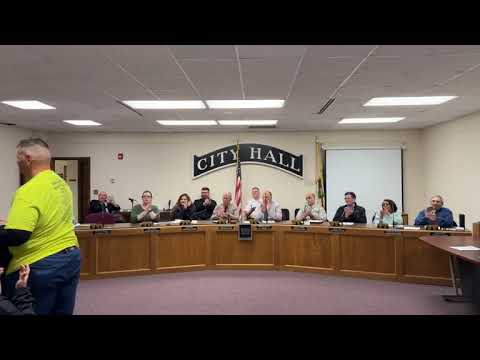
At the public hearing, Peter Tomaszewski, a Port Jervis resident and president of the St. Peter’s church council, urged caution and cooperation with community service providers. Tomaszewski said the congregation runs a winter warming station and asked the council to avoid criminalizing people who are homeless. “Before you make it a crime to be homeless,” he said, the city should discuss humane, low-cost alternatives and coordinate off‑season shelter options.
Council members and the city’s corporate counsel responded to those concerns during debate, saying the law’s intent is not to authorize mass sweeps or automatic arrests. Corporate counsel emphasized that, when officers encounter people in need, the department’s first order is to try to get them help or shelter, not to immediately ticket or remove them. “That’s not the intent,” a council speaker said in describing enforcement protocols.
City officials said the ordinance includes room for exceptions under extreme circumstances (for example, when a spouse must remain with a hospitalized family member) and that enforcement would be exercised with discretion. Council members also noted complaints from residents about camping on trails and in parks, saying the measure aims to preserve safe public use of those areas.
The law takes effect following adoption by the council; city staff did not specify an implementation timeline or enforcement penalties beyond references to amended fines under the municipal code. Council members invited local churches and nonprofits to coordinate with the city on shelter and support options.
The council adopted the law after the public hearing and discussion; further code committee work on related sections (including fines and soliciting/peddling codes) was scheduled for future meetings.