Get Full Government Meeting Transcripts, Videos, & Alerts Forever!
Committee advances bill tightening qualifications, background checks for sheriffs and chiefs amid constitutional concerns
Summary
The committee adopted a complex striking amendment and reported second substitute Senate Bill 59-74 out of committee (6–3). Debate centered on standardizing background checks, WSP role, LEOSA exceptions for volunteers, training, and whether the measure is constitutional for elective offices.
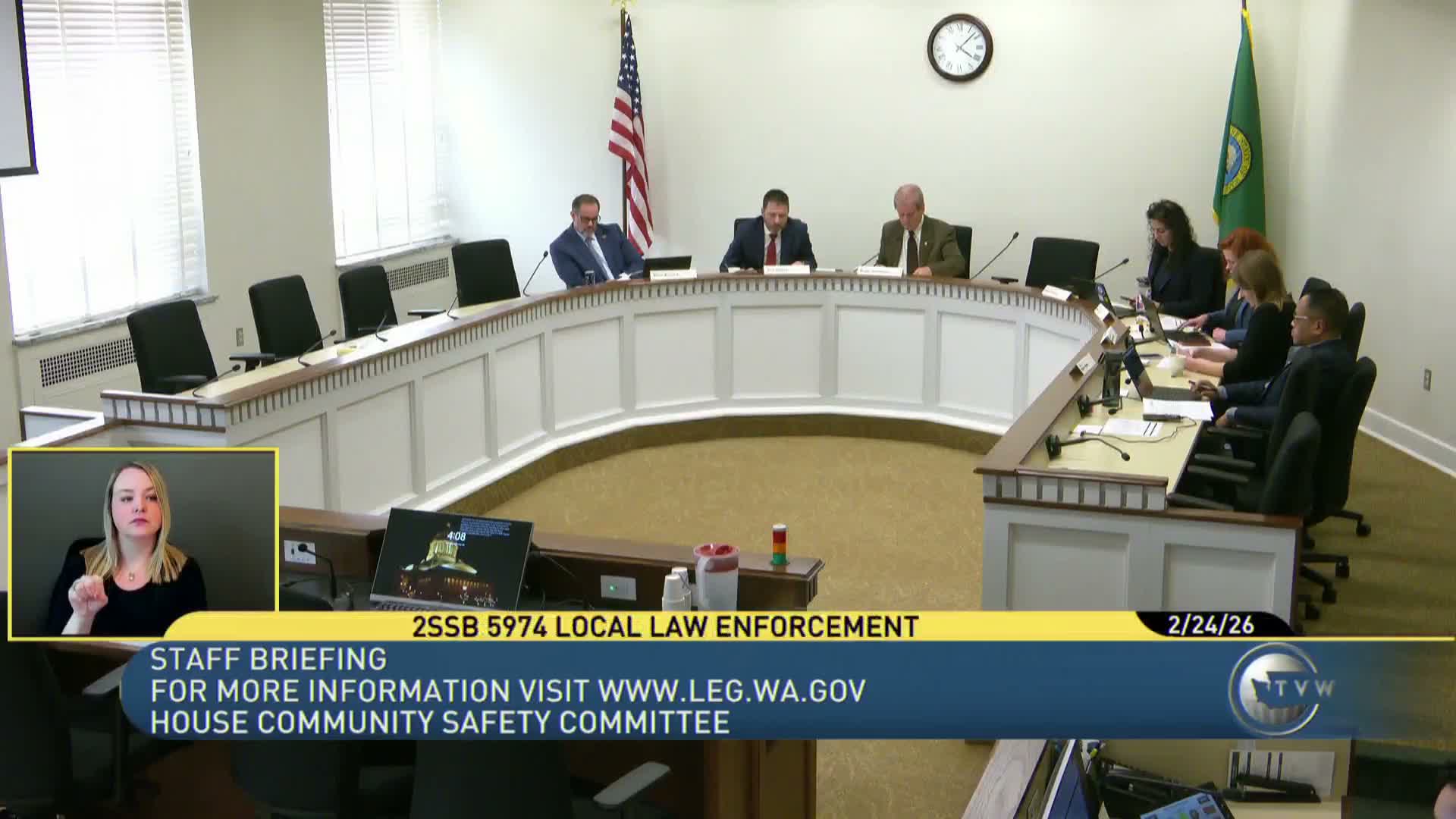
Second substitute Senate Bill 59-74, debated extensively in the House Community Safety Committee on Feb. 24, would change eligibility and certification requirements for sheriffs, police chiefs and marshals, address specially commissioned officers and volunteers, and require state-level steps for certain background investigations.
The striking amendment and a package of follow-up amendments were intended to standardize background investigations, require fingerprint-based checks and clarify timing for checks of candidates seeking election as sheriff.…
Already have an account? Log in
Subscribe to keep reading
Unlock the rest of this article — and every article on Citizen Portal.
- Unlimited articles
- AI-powered breakdowns of topics, speakers, decisions, and budgets
- Instant alerts when your location has a new meeting
- Follow topics and more locations
- 1,000 AI Insights / month, plus AI Chat