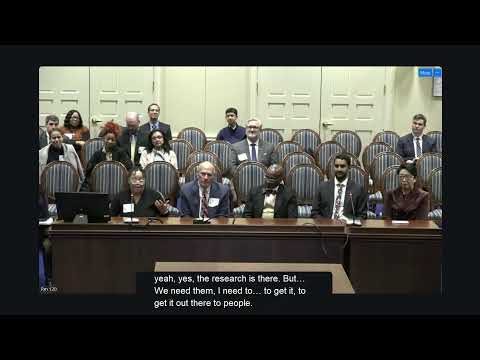
Lottery, sports wagering and illegal online gaming draw questions during FY27 budget review
Loading...
Summary
Analysts and agency leaders told the subcommittee the Maryland Lottery and Gaming Control Agency’s FY27 allowance is roughly $135 million, sports wagering and mobile betting continue to grow, and the agency is pursuing legal and regulatory action against unlicensed online gaming platforms.
Department of Legislative Services analysts and agency officials briefed the Education and Economic Development Subcommittee on the Maryland Lottery and Gaming Control Agency’s FY27 operating budget and related policy issues including sports wagering revenue distribution, stadium financing, and illegal online gaming.
Elizabeth Bridal (DLS) summarized the FY27 allowance at about $135,000,000, noting that roughly 90% of the agency’s budget is special funds primarily from lottery revenues, that personnel costs are rising, and that three major contracts account for a large share of spending. DLS highlighted that distributions of lottery and casino revenues go to multiple state priorities — including the general fund, the Blueprint for Maryland’s Future, and supplemental stadium financing that supports debt service for Orioles and Ravens stadium projects.
Bridal flagged sports wagering as an area of ongoing growth driven by mobile betting; she said mobile sports betting tax increases enacted in 2025 shifted a portion of revenue to the general fund. She also told the committee that DLS recommends concurring with the governor’s allowance.
Agency director John Martin described the Lottery and Gaming Control Agency’s revenue contributions — roughly $1.6 billion to state causes in recent reporting years — and updated the panel on sports wagering license renewals, responsible‑gaming efforts, and enforcement against illegal online gaming platforms. Martin said the commission has issued cease‑and‑desist letters to operators the agency believes are operating without Maryland licenses, including prediction markets and platforms that facilitate contracts on sporting events; he cited firms such as crypto.com and robinhood.com as examples of services the agency has evaluated in its enforcement work.
Committee members asked technical questions about distinct stadium‑related funds managed by the Maryland Stadium Authority (for example, a sports and entertainment events fund capped at $10 million and a separate stadium financing fund tied to debt service). Members also pressed staff about the scope of legal remedies if the attorney general prevails in litigation against illegal gaming platforms.
Why it matters: Lottery and gaming revenues fund education and other state priorities; the growth of mobile sports wagering changes revenue flows and has prompted regulatory and legal responses to unlicensed operators. The agency’s regulatory and enforcement choices will shape how online betting is integrated into Maryland’s fiscal framework.
The agency did not face public witnesses during this session; staff said they would follow up on technical questions about particular funds and legal remedies.