
House committee advances bill requiring ingredient disclosure on menstrual products
Get AI-powered insights, summaries, and transcripts
Subscribe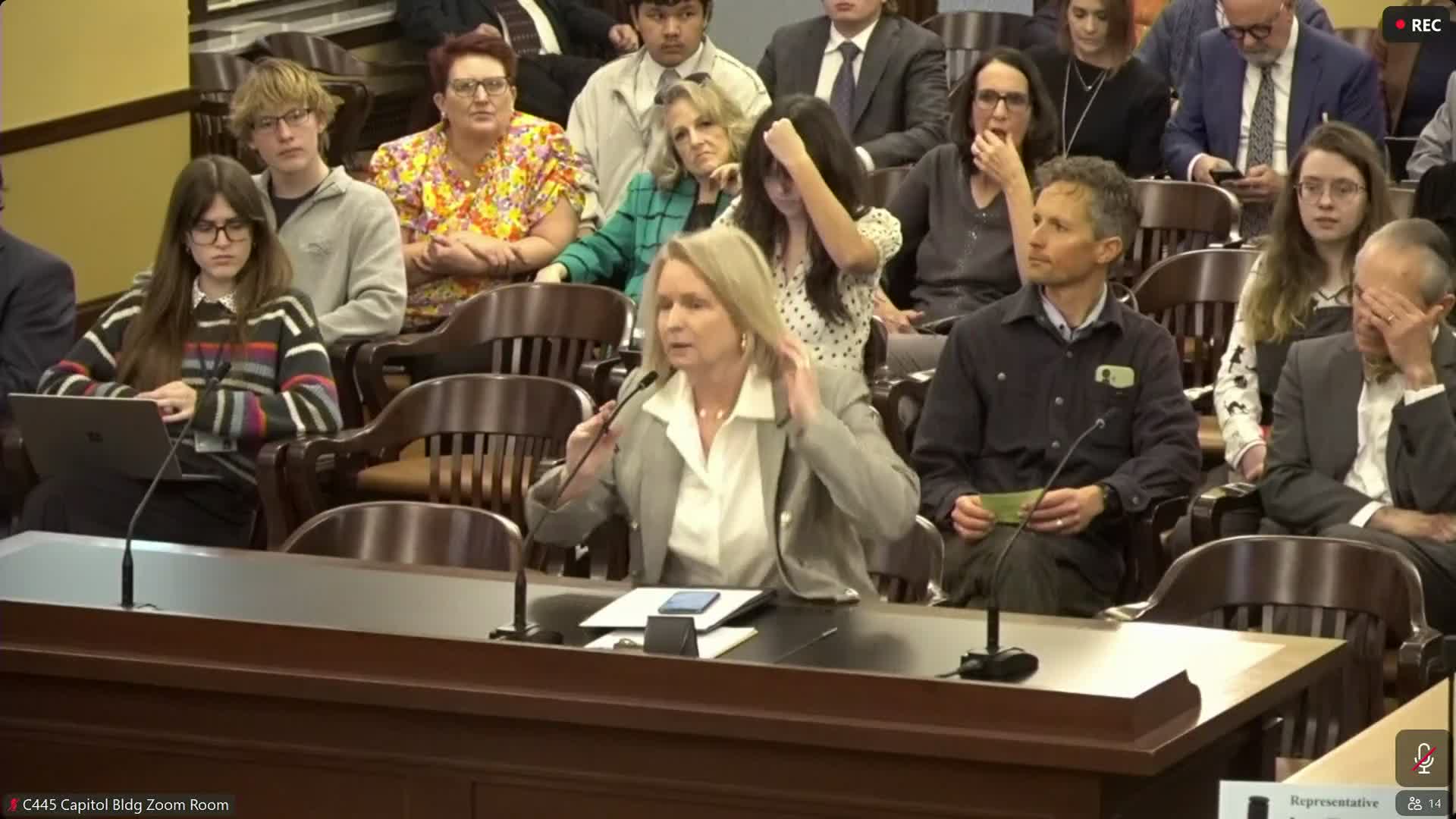
Summary
HB 442 would require manufacturers selling menstrual products in Utah to list intentionally added ingredients and specified chemicals (dioxin, lead, cadmium, arsenic, PFAS) on packaging; the committee adopted a second substitute and recommended the bill favorably after questions about testing, liability and enforcement.
SALT LAKE CITY — The House Business, Labor and Commerce Committee on the House side advanced House Bill 442, a transparency measure that would require manufacturers of menstrual products sold in Utah to list intentionally added ingredients and certain specified chemicals on product packaging.
The sponsor told the committee the bill is aimed at informed consumer decision‑making, noting users may be exposed over many years to small amounts of chemicals that can accumulate. The second substitute requires manufacturers to list intentionally added ingredients and to disclose identified chemicals — including dioxin, lead, cadmium, arsenic and per‑ and polyfluoroalkyl substances (PFAS) — in a clear, legible and conspicuous place on the outside of packaging and to order ingredients by predominance by weight. The bill allows manufacturers to link to additional information online and does not ban products or create new manufacturing standards; enforcement is assigned to the Division of Consumer Protection within the Department of Commerce, which may make rules and may impose administrative fines (the draft includes fines cited at $2,500 per violation in some sections and $5,000 in others, which sponsors said reflect different drafting sources).
Committee members pressed the sponsor on implementation details, including how often manufacturers would be required to test products, whether testing must use certified third‑party laboratories, and whether trace, unintentionally present chemicals would trigger penalties. Representative Ivory and other members said the bill’s current drafting left ambiguity about whether unintentionally present trace contaminants would subject manufacturers to fines; industry witnesses asked for clearer carve‑outs for unavoidable environmental contaminants and for alignment with other states’ enforcement approaches.
Industry testimony came from the Center for Baby and Adult Hygiene Products (BHP), represented by Edwin Borbon, who said BHP represents manufacturers responsible for roughly 85% of the North American market for absorbent personal‑hygiene products and that the association was “opposed unless amended.” Borbon urged clearer language distinguishing intentionally added ingredients from unavoidable environmental trace contaminants, alignment of enforcement provisions with existing state standards, and a longer implementation window for labeling changes. Public commenters who urged support included Lindsay Lake and Delaine England, who framed the bill as a transparency and safety measure for long‑term users.
The sponsor said the second substitute extended the implementation date to December 2027 and that the Division could adopt rules to clarify testing cadence and variances. After debate and public comment, the committee adopted the second substitute and voted 11–2 in favor of recommending the bill (Representatives Ivory and Chair Kyle registered no votes). The sponsor said he would work with interested members to refine drafting on laboratory testing standards and penal thresholds.
Next steps: the bill will move from committee for further floor consideration; sponsors and committee members signaled interest in additional technical fixes and potential rulemaking guidance to address testing frequency and liability concerns.