Get Full Government Meeting Transcripts, Videos, & Alerts Forever!
Get email alerts on the Smart Freeway Pilot topic
No spam. Unsubscribe anytime.
RCTC begins baseline data collection for I‑15 smart freeway pilot in Temecula
Summary
RCTC reported construction is complete and baseline traffic data collection is underway for the I‑15 Temecula Smart Freeway pilot; ITS installations (23 detection sites) were finished in December 2025 and system testing concluded in January 2026. The pilot operation will follow a three‑month baseline period and run two years beginning after May 2026.
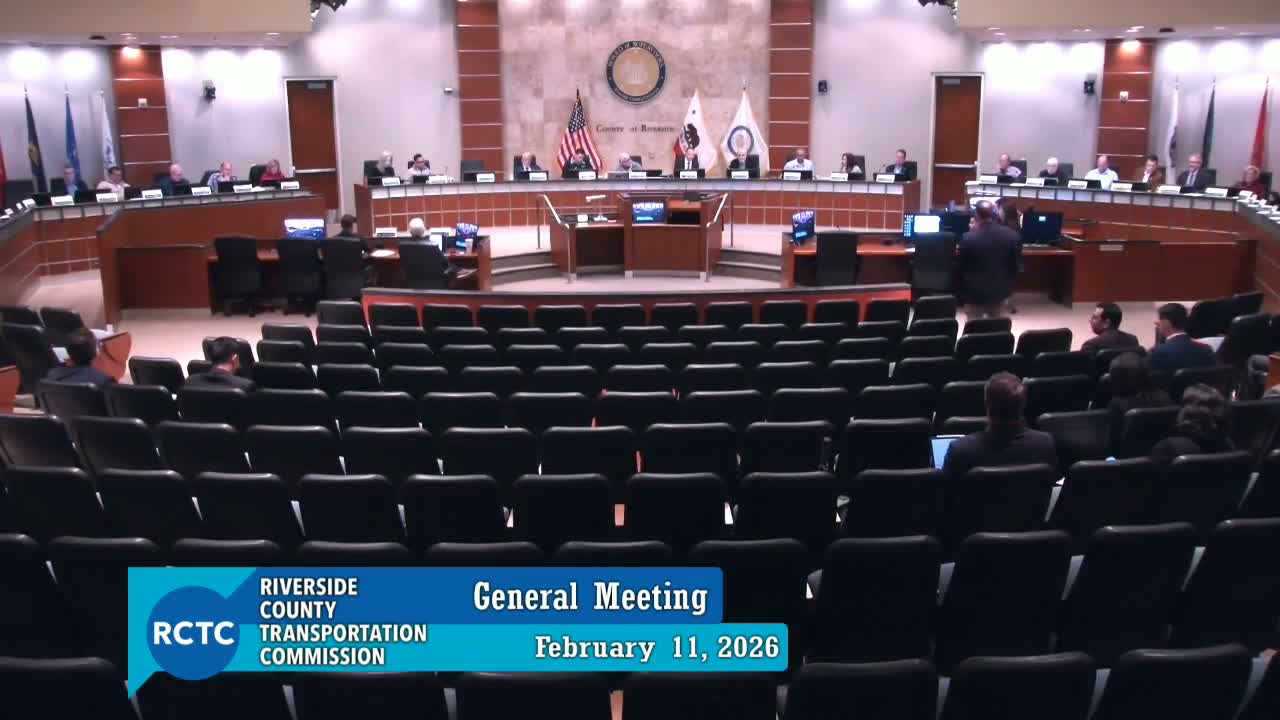
The Riverside County Transportation Commission received a status update Feb. 11 on the Smart Freeway pilot project along northbound I‑15 in the Temecula area. John Terrazio, senior capital project manager, said civil work was completed in August 2025, ITS equipment was installed in December 2025, and system testing and commissioning were completed in January 2026.
Terrazio said the project includes 23 vehicle detection locations, ramp meters at Temecula Parkway and Rancho California Road, equipment cabinets and dynamic signs, and uses the Streams software platform developed by Transmax to coordinate an adaptive ramp‑metering system. "Once constructed, the system will be operated for a two‑year pilot project period to test and evaluate its effects on traffic through the section of the I‑15 corridor," Terrazio said.
This month the project moved into a baseline data collection period: staff will collect existing traffic data over roughly three months (baseline expected to wrap up in May 2026) to compare against pilot operations. The official pilot period will follow baseline collection, run for two years, and conclude in May 2028, at which point staff will prepare a final report comparing performance to baseline KPIs (vehicle throughput, corridor productivity, ramp queue lengths, speed and other measures). Data and regular KPI reports will be posted to the commission’s project website during the pilot.
Commissioners thanked staff and flagged local bottlenecks they expect the system to address; staff said they are coordinating with Caltrans and cities to assess extending similar systems to other corridors (including the I‑10) after pilot results are available.