Get Full Government Meeting Transcripts, Videos, & Alerts Forever!
Get email alerts on the County Budget topic
No spam. Unsubscribe anytime.
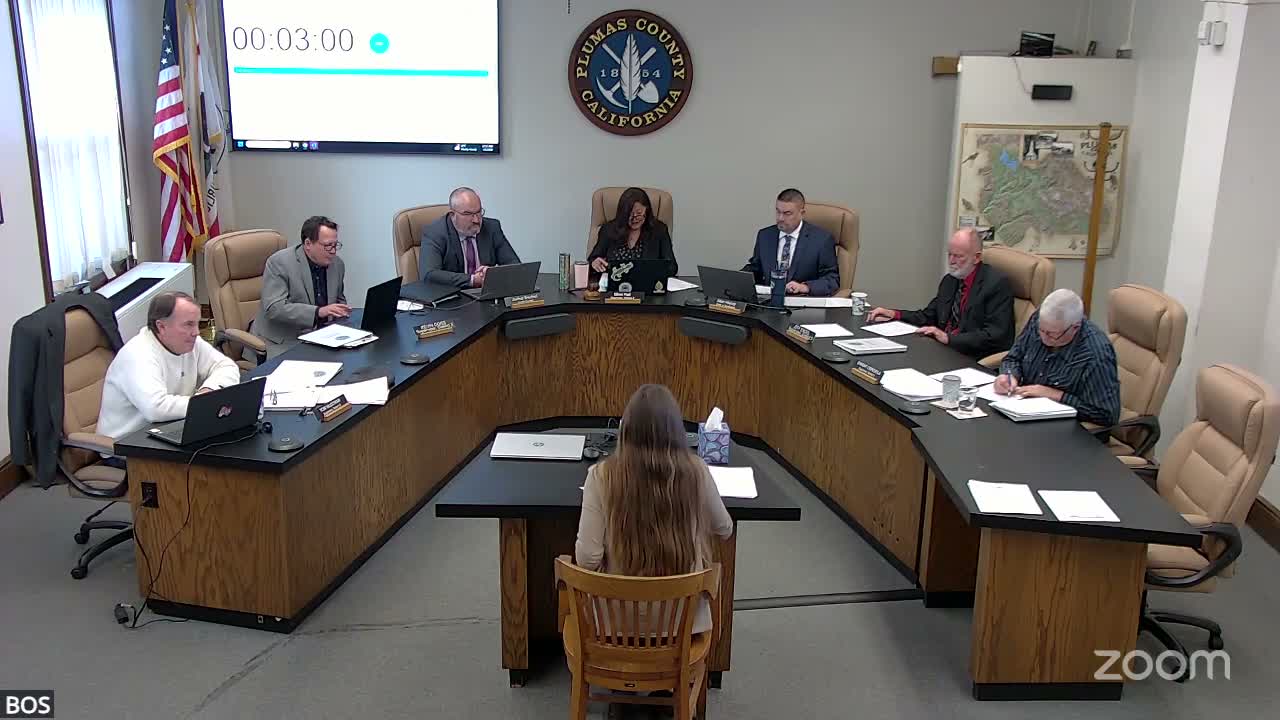
Plumas County supervisors vote to place 1% transactions tax on June ballot to shore up county budget
Summary
The Plumas County Board of Supervisors voted unanimously Jan. 6 to place a time-limited 1% transactions and use tax on the June 2, 2026 ballot, estimating about $3 million annually to address structural budget gaps and recruitment/retention pressures for county staff.
Plumas County’s Board of Supervisors voted Jan. 6 to place a 1% countywide transactions and use tax before voters on the June 2, 2026 consolidated ballot.
Board members said the measure is intended as a temporary revenue source to address persistent structural budget deficits driven largely by rising employee wages and benefits. The board’s memo estimated preliminary revenue of about $3,000,000 annually from the 1% increase.
“About a dollar on every $100 that you spend,” the board chair said in explaining the measure’s effect and why the county is seeking additional ongoing revenue to stabilize staffing and benefits costs. The board’s proposal sets the measure for a 12‑year term and specifies administration of the tax by the California Department of Tax and Fee Administration.
During public comment, callers raised concerns and alternatives. Josh Hart, a Portola resident and wildfire-policy advocate, urged the county to pursue nonregressive revenue sources and argued the county had not exhausted alternatives such as revising timber tax exemptions or taxing second homes. A public commenter noted the regressive effect of sales taxes on low-income households.
Supervisors defending the proposal said the county faces long‑term pressures — rising wages, retirement and health costs, and declines in other revenue streams — and that modest local increases in sales tax were common in neighboring counties. Supervisor McGowan said the measure would not solve every fiscal challenge but would provide time for multi‑year planning, fee reviews and economic development work intended to reduce reliance on the tax.
The board also discussed procedural thresholds: placing the measure on the ballot required approval by four of five supervisors; once on the ballot the ordinance would require a simple majority of votes cast to pass as a general tax. The board voted by roll call to place the measure on the June ballot and to adopt the ordinance language.
If approved by voters, the tax would be collected from taxable transactions in the county, and roughly half of incremental receipts are typically paid by nonresidents, the chair noted, reducing the burden borne solely by local households. The county clerk’s office will post legal notices and information about how and when arguments for and against the measure may be submitted.