Get Full Government Meeting Transcripts, Videos, & Alerts Forever!
Get email alerts on the Pack Fire topic
No spam. Unsubscribe anytime.
Mono County ratifies local health and emergency declarations as Pack Fire recovery work begins
Summary
Following the fast-moving Pack Fire that destroyed dozens of structures, the Mono County Board of Supervisors ratified local health and emergency declarations, set up a local assistance center for Friday, Nov. 21, and directed staff to coordinate state and nonprofit partners for debris, public-health, and rehousing support.
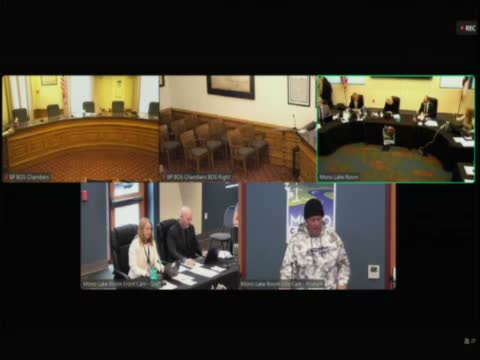
The Mono County Board of Supervisors unanimously ratified a pair of emergency measures on Nov. 20, 2025, to speed county response and recovery after the fast-moving Pack Fire.
The board approved a local health emergency — issued over the weekend by Mono County Public Health Officer Dr. Tom Boo — to facilitate coordination with state agencies including Cal OES, the Department of Toxic Substances Control and CalRecycle and to streamline emergency procurement tied to hazardous ash and debris in burned homes. The board also ratified a separate proclamation of local emergency issued on Nov. 13, which aligns the county’s emergency and health declarations for administrative purposes and triggers 60‑day renewals and state coordination.
The declarations follow several days of emergency operations and mutual-aid firefighting. Incident management team commander Todd Hopkins reported the fire at about 1,974 acres and 83% contained as of the briefing; officials said they expected full containment around Nov. 21 pending weather and snowfall. Fire managers reported 31 structures destroyed and five damaged; no lives were reported lost.
County officials announced a Local Assistance Center (ALAC) to be staffed Friday, Nov. 21, 9 a.m.–7 p.m. at the Crowley Lake Community Center. The ALAC will provide consolidated access to county and state recovery services, including public-health guidance, environmental health testing and well-disinfection assistance, building‑inspection and permitting information, and social‑service referrals. County environmental health manager Jill Carney warned that ash and burned soils can concentrate hazardous materials from household contents and urged residents to use PPE — long sleeves, gloves and N95 masks — and to call the county for free well testing and disinfection help at (760) 924-1830.
Sheriff Abraham and local fire chiefs praised the rapid mutual-aid response from neighboring agencies and volunteer firefighters. The sheriff said county search-and-rescue and law enforcement partners, California Highway Patrol and adjacent county agencies joined the operation. “Although properties were lost, no lives were lost,” the sheriff told the board, adding the Forest Service is leading a cause investigation because the origin was on federal land.
Board members and emergency staff acknowledged that warning and notification systems did not reach every household; some residents told the board they received no direct outreach. Supervisors directed staff to build redundancies in the county’s notification and outreach plan, consolidate direct-contact lists (assessor records plus community-provided numbers) and use door-to-door and proactive outreach in addition to automated alerts. County staff said they are working with the sheriff’s office and Genesys (the county’s notification provider) to ensure multiple staff can send warnings and that the county will produce a clear 24/72‑hour expectation timeline for residents during incidents.
Officials warned residents that clearing debris before it is evaluated by experts could risk forfeiting eligibility for later state-funded assistance; Dr. Boo said premature debris removal may affect eligibility for free state debris-removal programs. County staff said they will seek to coordinate state contractors and agencies on hazardous‑materials assessment and debris pathways and to provide a one-stop assistance site where affected residents can ask about insurance, replacement benefits, permit waivers and housing options.
The next procedural step is that the board will return within 60 days to extend or update the declarations as needed; county staff said they will present options for fee waivers for rebuilding permits and a list of available recovery services at the ALAC.
What’s next: the board directed staff to finalize ALAC operations and outreach today and to coordinate with state partners, non-profit housing organizations and the sheriff’s office on direct contact with impacted households. The county also plans a multiagency community meeting with state representatives to explain debris processes, insurance and recovery timelines.